7 Anime Fan Restaurants in Osu Beyond Maid Cafés
 gotowp
You've got your cosplay outfit planned. You've mapped out the anime shops along Osu Shopping Street. And yes, you've already looked up a maid café or two. But when the topic turns to lunch — specifically, what you'll photograph, caption, and share — the planning gets harder.
"Just another ramen place" doesn't cut it when your followers are used to seeing the best of your Japan content. "We found a cute café" is fine, but it's not the post that stops someone mid-scroll. You want a dish that makes people ask, "Wait — what is that?" You want the food story that holds up years later, the one you tell at dinner parties long after the trip is over.
The good news: Osu, Nagoya's most wonderfully chaotic district, has exactly that kind of place. The key is knowing where to look beyond the obvious.
Who This Is For
- ✅ Anime fans and cosplay enthusiasts spending time in Osu who want their food content to match the uniqueness of their trip
- ✅ Travelers who've already covered the maid café circuit and want something visually striking and story-rich to share
- ✅ Anyone building a Japan travel feed who wants at least one food moment that genuinely surprises their followers
- ✅ Visitors who care about what's behind the dish — the ingredients, the craft, the concept — not just how it looks
- ✅ Solo diners, friend groups, and couples exploring Osu's subculture scene who want lunch to be as memorable as the rest of the day
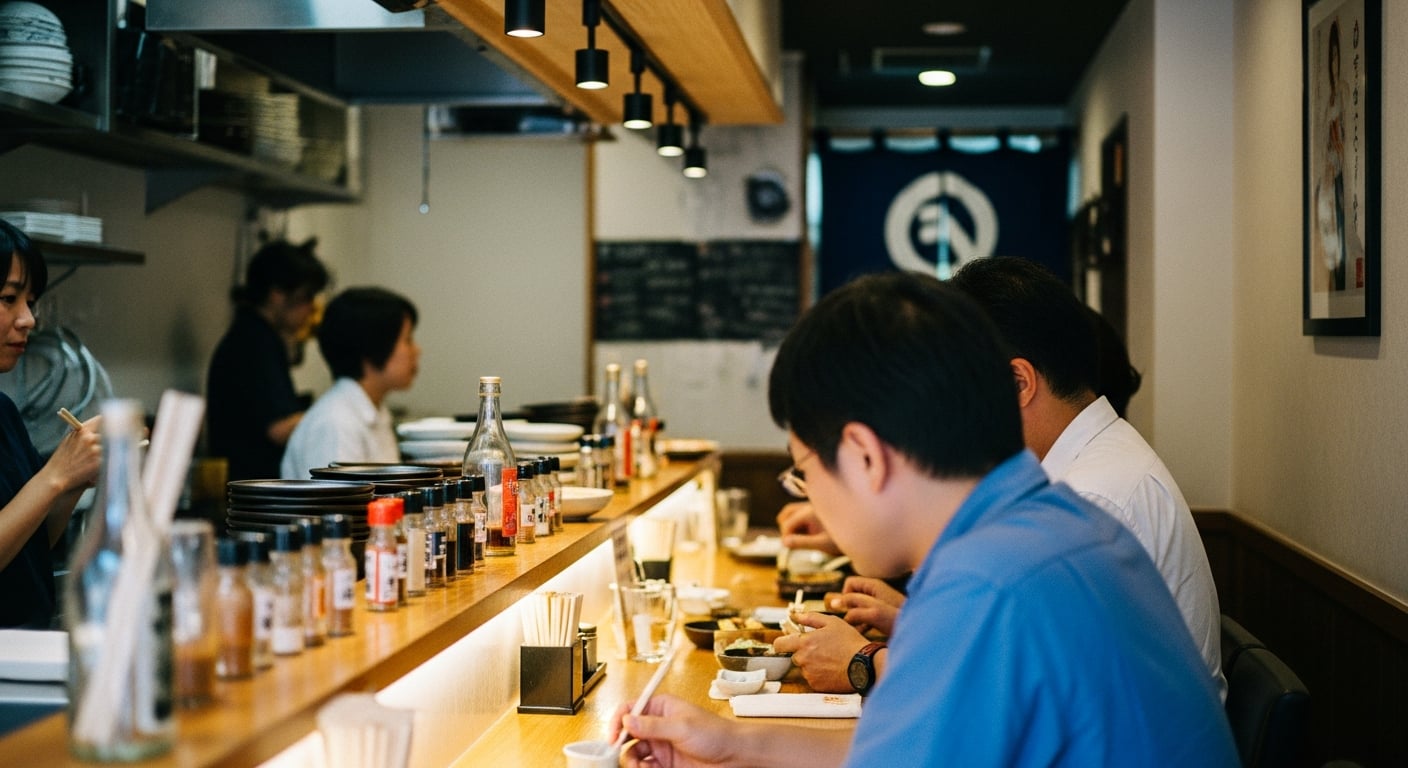
Why Osu Is Uniquely Positioned for Memorable Food Moments
Osu has long been Nagoya's counterculture district — a neighborhood where a 400-year-old Buddhist temple (Osu Kannon) sits around the corner from a retro gaming shop, and where you can browse vintage electronics and stop for Taiwanese scallion pancakes in the same afternoon. That same creative energy extends to its food scene.
Unlike Akihabara in Tokyo, which has become almost entirely tourist-facing, Osu retains a genuinely local character. The restaurants here tend to be owner-operated, concept-driven, and deeply invested in doing one specific thing well. For travelers who've already posted "sushi in Tokyo" and "matcha in Kyoto," Osu offers something rarer: a neighborhood where you can find a dish that nobody in your social circle has seen before.
The World Cosplay Summit uses this district as its home base for a reason. Osu tolerates — and actively celebrates — originality. That extends to its restaurant concepts.
You're building a day in Osu around content that actually stands out — but knowing which restaurant to prioritize when you're only there for a few hours takes a bit more than a quick search. Itadaki's monthly business calendar (Saturday, Sunday, Monday, Tuesday only, lunch hours) changes each month, and an irregular closure on the wrong day can derail the plan. The Instagram schedule lets you confirm your exact visit date before committing to the trip.
What Makes a Restaurant Worth Posting About (It's Not Just the Plating)
Here's something worth sitting with before you finalize your Osu lunch plans: the posts that generate the most engagement from Japan trips aren't always the most expensive meals. They're the ones where the dish has a story your followers can actually feel.
A bowl of Kobe beef at a hotel restaurant looks beautiful in a photo. But "I ate wagyu at a hotel restaurant in Osaka" doesn't travel the way a story does. Compare that to: "This beef comes from one of only three farms in Japan that raise this specific breed — only 300 are produced each year — and it's fed on leftover sake lees from a craft brewery. And the restaurant that serves it invented an entirely new category of Japanese cuisine." That's a caption. That's a conversation starter.
The most share-worthy food experiences combine three things: visual impact, genuine rarity, and a narrative that someone else can retell. All three together is what transforms a lunch into a travel story.
Inside Osu's Most Conceptually Distinct Dining Spots
Osu's restaurant scene rewards wanderers — but when you're working with a limited trip schedule, a little direction goes a long way. Here's a lens for thinking about what's actually worth your time.
1. The inventor's table — restaurants built around a concept that didn't exist before
These are rare. Most restaurants adapt; very few invent. In Osu, Itadaki — The Original Rare Wagyu Gyudon sits in this category. Founder Masayuki Goto spent years running bars and sourcing directly from Aichi farmers before asking a question that no one in Japan had answered: why was there no premium version of the gyudon? Every other donburi had its elevated interpretation — oyakodon, katsudon, kaisendon — but the beef bowl had been left entirely to fast food chains. Goto changed that in 2022, creating what has since been recognized by NHK and seven other major Japanese broadcasters as the originator of the "Rare Wagyu Gyudon" culinary concept.
2. Ingredient-story restaurants — where the sourcing is as interesting as the dish
Osu has several spots where the provenance of ingredients is central to the menu, not a footnote. These restaurants give you something to talk about: where the thing came from, why it's rare, what makes this version different from anything you'd find elsewhere.
3. Process restaurants — where watching or participating in how the dish is prepared is part of the experience
From hand-pulled noodles to tableside preparations, Osu has a handful of places where the how is as compelling as the what. These translate beautifully to video content.
4. Subculture-crossover concepts
Uniquely Osu: places that draw equally from Japanese tradition and contemporary subculture aesthetics, creating visuals that don't exist anywhere else in Japan.
5. The neighborhood specialist
Every block in Osu has at least one restaurant that's been doing one specific thing for years, for a deeply local clientele. These are often the hardest to find but the most rewarding — the kind of place where locals are quietly pleased you discovered it.
6. The Taiwanese and multicultural dining corridor
Osu has one of Nagoya's most concentrated international food scenes, with Taiwanese, Chinese, and Southeast Asian options woven through the shopping street. For anime fans who want to double down on the district's Asian subculture energy, this is fertile ground for discovering dishes not widely available elsewhere in Japan.
7. The destination lunch — where you travel to the dish
Some restaurants in Osu have quietly earned a reputation among serious food travelers for being worth a dedicated visit. Not because they're featured in guidebooks, but because word of mouth — and Instagram — spreads fast when a dish is genuinely unlike anything else.
✓ Key Takeaways
- Osu's food scene rewards curiosity — the most memorable dining experiences here tend to be owner-operated, concept-driven, and built around genuine rarity rather than brand recognition.
- The most shareable food content combines visual impact with a story worth retelling. Look for restaurants where the dish, the ingredient, and the concept all hold up under scrutiny.
- Going beyond maid cafés in Osu doesn't mean abandoning the subculture energy — it means finding places where that same spirit of originality extends to what's on the plate.
The five-step eating ritual and the Horai Wagyu story are the kind of content that needs to be experienced in the right order — and that starts with actually securing a seat. Horai Wagyu is capped at 10 bowls per day, and peak lunch hours on Osu sightseeing days fill quickly. A Tabelog reservation locks in your bowl and your story before you even board the train to Nagoya.
The Dish That Started a New Category — and Why It Photographs Differently
If you're visiting Osu and you want one food experience that checks every box — visually stunning, conceptually unique, story-rich — Itadaki's Rare Wagyu Gyudon deserves serious consideration.
The presentation alone is striking: thinly sliced wagyu arranged over a bowl of steaming Aichi-grown rice, a golden Nagoya Cochin egg yolk placed at the center, accompanied by shiso leaves, pickled radish, and a set of complimentary condiments in small dishes. It photographs like fine dining. It arrives in a traditional Japanese ceramic bowl. It's the kind of plate where your camera comes out before your chopsticks do.
But here's what makes it truly shareable: the story holds up at every level of scrutiny.
The wagyu used in the signature bowl — Horai Wagyu from Okumikawa, Aichi — is one of Japan's most rare cattle breeds. Out of approximately 500,000 wagyu raised in Japan annually, only 300 Horai Wagyu are produced each year, across just three farms. These cattle are fed on sake lees from Horaisen Sora, a premium local craft brewery — a feeding method that creates a distinctive flavor profile unlike anything you'd find from Kobe or Matsusaka beef.
And then there's the eating ritual. Itadaki's menu includes a five-step visual guide — in English — showing exactly how to separate the egg, place the yolk on the beef, mix the components at different stages, and finish with wasabi for a clean final note. As one guest described it:
"The five-step eating guide made the dish even more enjoyable and memorable."
Guest review, Itadaki
That guide turns a bowl of wagyu into a choreography. Each step reveals a new flavor. And for content creators, each step is a frame worth capturing.
The "rare" texture — a soft, almost silky mouthfeel — is achieved through Itadaki's proprietary two-stage cooking technique, which heats the beef to over 70°C at the core, fully meeting Japan's Ministry of Health, Labour and Welfare food safety standards. It's the technical achievement that makes this dish both possible and impossible to replicate elsewhere.
The dish is limited to 10 bowls of Horai Wagyu per day. If you're planning your visit around it, reservation via Tabelog is strongly recommended. When filling in the notes field, copy and paste this phrase to request Horai Wagyu: 鳳来牛希望. For walk-in visitors, the Mikawa Beef Rare Gyudon is always available — equally crafted, equally Aichi, and prepared with the same two-stage cooking technique.
Itadaki is a 4-minute walk from Yabacho Station Exit 4 on the Meijo Subway Line — making it straightforward to reach from virtually anywhere in central Nagoya. For anime fans spending a day in Osu, it fits naturally into the flow: explore the shopping street and Osu Kannon Temple in the morning, sit down for lunch at Itadaki, then continue through the subculture shops in the afternoon. If you're curious how this kind of specialty restaurant fits into Osu's broader food landscape, our article on 5 reasons Itadaki works as a cosplayer's lunch destination in Osu goes deeper on the neighborhood context.
One more detail worth knowing: Itadaki is open only on Saturdays, Sundays, Mondays, and Tuesdays (and public holidays, from 9:00), for lunch service only — 11:00 to 15:00. Irregular closures happen, so checking the monthly business calendar on Instagram before your visit is always a good idea. Cosplay is welcome at the restaurant; guests in costume have dined here comfortably.
Making It a Story Worth Telling for Years
Osu is, at its core, a district that rewards people who dig a little deeper. The maid cafés are real and fun — but they're the first layer. The second layer is where the district gets interesting: the specialist restaurants, the independent concepts, the dishes invented in this specific neighborhood that you genuinely cannot find anywhere else.
If you're building a Japan travel narrative — one that goes beyond the Golden Route and gives you something original to share — Osu offers that in abundance. The key is choosing experiences where the visual and the story are inseparable. Where your followers' first question is "What is that?" and your answer takes more than one sentence.
A bowl of rare wagyu, sourced from three farms, limited to ten servings a day, prepared using a technique that didn't exist before 2022, in a district that still surprises even repeat visitors to Japan — that's a story. And it tastes exactly as good as it sounds.
For our complete menu, access details, and store information, visit our official page at https://itadaki8.com/english/
You came to Osu for experiences that go beyond the obvious — and a bowl of rare wagyu invented at this address, limited to 10 servings a day, with a story about 300 cattle and a sake brewery, is exactly that kind of experience. Securing your reservation now means the most share-worthy lunch of your Japan trip is already confirmed.