A Day at Itadaki: Welcoming Para Games Athletes' Families
 gotowp
You've arrived in Nagoya with your family to cheer on an athlete you love. The competition schedule is packed, the city is buzzing, and somewhere between venue visits and hotel check-ins, you want a meal that actually feels like Japan — not another international hotel buffet. But then comes the hesitation: you've seen "rare wagyu gyudon" on someone's Instagram, you've written down the name of a place in Osu, and now you're staring at the menu translation on your phone wondering: Is rare beef actually safe? What does "rare-style" even mean? Will my kids be okay eating this?
These are real questions, and we hear them often — especially from visitors who've traveled from countries where food safety guidelines firmly advise against undercooked beef. Before the 2026 Asian Para Games bring thousands of athletes' families to Nagoya from across Asia and beyond, we wanted to share how those conversations actually unfold when guests arrive at Itadaki, and what they tend to tell us after the meal.
Who This Is For
- ✅ Families traveling to Nagoya for the 2026 Asian Para Games who want an authentic local lunch experience
- ✅ Visitors who are curious about rare wagyu but worried about food safety before ordering
- ✅ Anyone wondering whether a specialty wagyu restaurant in Osu is suitable for groups with children
- ✅ Travelers who want honest, practical information before committing to a lunch reservation
- ✅ Guests who've read that Horai Wagyu is only available in 10 bowls a day and want to know how to plan their visit
"Is This Actually Safe?" — The Question Every New Guest Asks
Let's address this directly, because it's the question that matters most.
In many Western countries — the United States, the UK, Australia, most of Europe — public health authorities advise that beef should reach a certain internal temperature before it's considered safe to eat. The concern is real: E. coli, salmonella, and other bacterial risks are genuine reasons why "undercooked beef" has a cautious reputation. So when visitors see the words "rare wagyu," the instinct to pause is completely reasonable.
Here's what we want you to know about how the dish is actually prepared at Itadaki.
Founder Masayuki Goto developed a proprietary two-stage cooking technique specifically to solve this tension. The beef is heated to over 70°C at the core — the threshold that fully meets Japan's Ministry of Health, Labour and Welfare food safety standards. This isn't a workaround or a loophole. It's a carefully engineered cooking method that took time and precision to develop, and it's the reason Itadaki has been featured on eight major Japanese television programs, including NHK, as the originator of a genuinely new culinary concept.
The result is a texture that resembles rare beef — silky, tender, with the marbled fat of Horai Wagyu still intact — but one that has been fully and safely cooked through a controlled process. Goto holds a Certified Food Sanitation Supervisor license from Japan's Ministry of Health, Labour and Welfare, and the restaurant operates under a Licensed Restaurant Operator permit from the Aichi Prefecture Public Health Center. Every bowl that leaves Itadaki's kitchen is prepared according to these standards, every single service day.
For families arriving from countries where this style of preparation is unfamiliar, we want that context to be clear before you sit down — not discovered mid-meal.
The food safety question is answered — but the Para Games schedule is tight, and Itadaki's business days don't follow a standard weekly pattern. Our monthly calendar, including any irregular closures during the Games period, is posted before each month begins. A quick check now saves the frustration of arriving on a closed day.
What Athletes' Families Have Said After Their Visit
Para Games events bring an extraordinary mix of people to a city: support staff, coaches, parents, siblings, partners — many of whom are visiting Japan for the first or second time, navigating an unfamiliar city while keeping one eye on a competition schedule. Lunch, in that context, needs to work for everyone at the table.
What we hear most often from these guests isn't about the beef itself — it's about the overall experience of feeling genuinely welcomed in a specialty restaurant that could easily have felt intimidating. The English-language menu (available in English, Simplified Chinese, and Korean) and the visual five-step guide to enjoying the dish take most of the guesswork out of the meal. Guests who are uncertain about rare-style preparation can read exactly what the cooking process involves, in their own language, before deciding what to order.
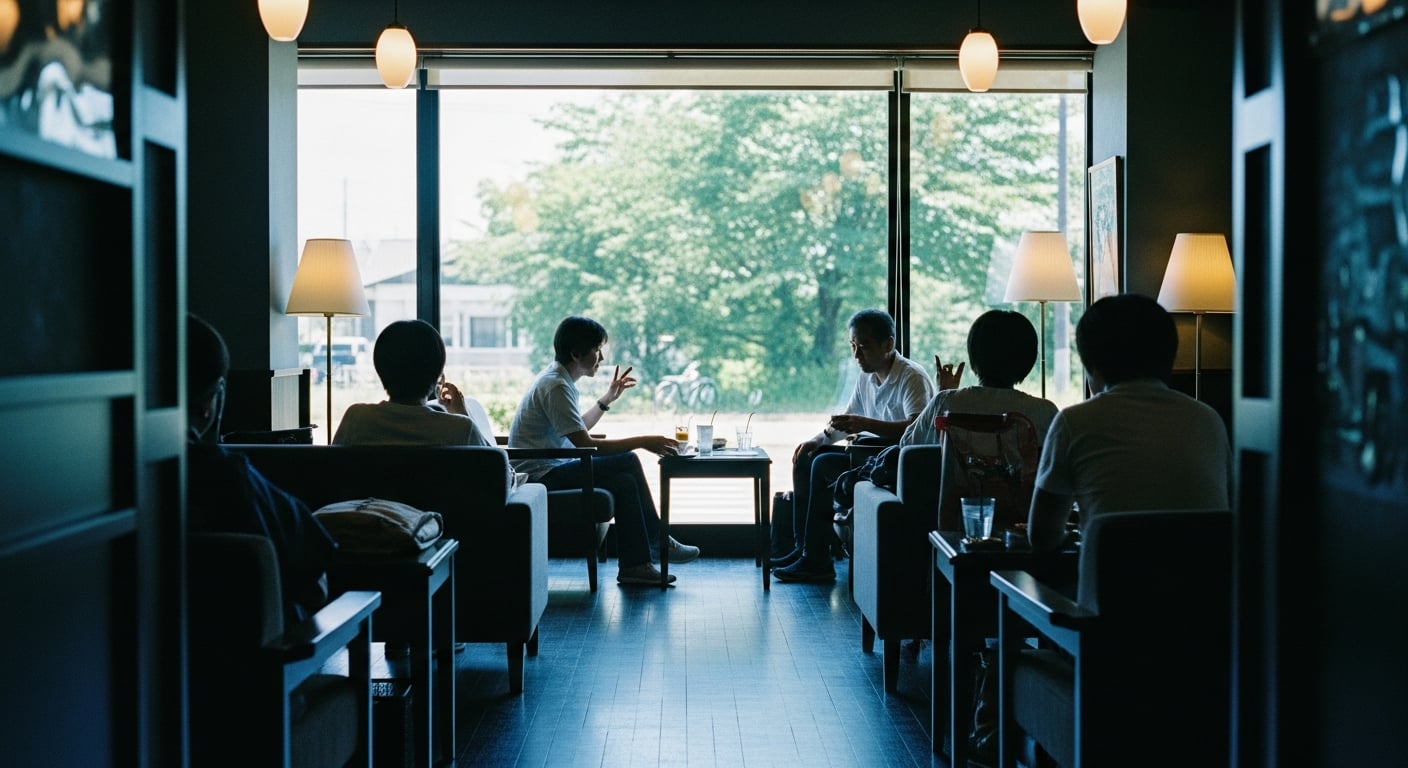
And for the children at the table — Itadaki's sofa seating makes the space unusually comfortable for family groups. The sofa table for five people has welcomed guests traveling with infants, young children, and everything in between. There's no dedicated children's menu, but the Fumoto size (Mikawa Beef, 100g beef with 200g rice, ¥1,800) is frequently what parents order for younger guests.
"The lunch was the highlight of my Nagoya trip — I'm telling all my friends about it."
Guest feedback, via Itadaki
That kind of response — spontaneous, specific, and shared forward — is what we hear when a meal lands the way it's intended. Not just as food, but as an experience worth carrying home.
✓ Key Takeaways
- Itadaki's rare-style wagyu is heated to over 70°C at the core, fully meeting Japan's food safety standards — the "rare" texture is achieved through a proprietary two-stage technique, not by serving raw beef.
- The multilingual menu (English, Simplified Chinese, Korean) and five-step eating guide make the experience accessible for international guests, including those unfamiliar with Japanese culinary traditions.
- The sofa seating and welcoming atmosphere make Itadaki a practical choice for family groups, including those traveling with young children.
You now know how the two-stage cooking technique works and why Horai Wagyu is limited to 10 bowls a day — which means you also know that walking in during the Para Games peak without a reservation is a real risk. Securing your bowl in advance via Tabelog takes just a few minutes, and you can request Horai Wagyu in the notes field using the phrase above.
The Ingredients Behind Every Bowl — Why Sourcing Matters to Food Safety
Food safety isn't only about cooking technique. It begins with where the beef comes from and how it's raised.
Itadaki uses only two beef varieties, both sourced directly from Aichi Prefecture farms. Horai Wagyu comes from Okumikawa, produced by just three farms raising only 300 heads annually — out of approximately 500,000 wagyu cattle in Japan. These cattle are fed on sake lees from Horaisen Sora, a renowned local premium sake, which gives the beef a distinctive flavor profile that sets it apart from better-known wagyu brands. Mikawa Beef, always available for walk-in guests, comes from the Mikawa region of Aichi, raised on okara feed with lactic acid bacteria gut management for digestive health.
Both breeds are raised under rigorous quality control. Goto sources directly from these farms — not through wholesalers — as a commitment that began during the COVID-19 pandemic, when he watched small Aichi farmers struggle with unsold harvests and decided that the restaurant he was building would be structurally tied to their success.
For guests who want to understand exactly what they're eating — where it came from, how it was raised, how it was cooked — that story is part of every bowl. It's also why the dish tastes the way it does.
If you're planning your visit around the Para Games schedule and want to understand more about accessibility options and what to expect in the Osu area, our full guide on wheelchair accessibility at Itadaki for Asian Para Games spectators covers the practical details — including staircase access to the second floor and what to plan in advance. And if you're looking at the broader picture of dining options near the competition venues, this inside look at how Osu district is preparing for Para Games visitors may be useful context as you build your itinerary.
Planning Your Visit During the Para Games Period
Itadaki operates on a limited schedule: open for lunch service only (11:00–15:00) on Saturdays, Sundays, Mondays, and Tuesdays. On public holidays, doors open at 9:00 and close at 15:00. The restaurant is closed Wednesdays, Thursdays, and Fridays. Last order is 30 minutes before closing.
During peak event periods, Horai Wagyu — limited strictly to 10 bowls per day — tends to sell out during the first hour of service. For families visiting Nagoya specifically during the Asian Para Games or Asian Para Games 2026, we strongly recommend reserving in advance via Tabelog Online. When making your reservation, copy and paste this phrase into the notes field to request Horai Wagyu: 鳳来牛希望
Walk-in guests who arrive at opening (11:00, or 9:00 on public holidays) have the best chance of trying Horai Wagyu without a reservation. If it has sold out, Mikawa Beef Rare Gyudon is always available and prepared with the same two-stage cooking technique — an equally considered dish at a different price point.
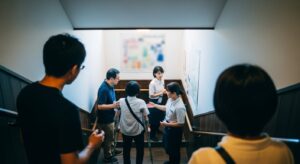
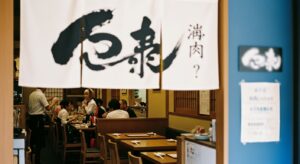
Itadaki is a four-minute walk from Yabacho Station Exit 4 on the Meijo Subway Line, and within easy walking distance from Sakae, Kamimaezu, and Osu Kannon stations. From Nagoya Station, the journey takes approximately ten minutes by subway. The restaurant is on the second floor — look for the sign reading 元祖レア牛丼 頂 at street level and follow the staircase up. For those with strollers, staff may be able to assist depending on conditions at the time, though assistance cannot be guaranteed. Read our full day-at-Itadaki overview for what to expect during the Aichi Nagoya 2026 Games period, including how to plan around the lunch-only service format.
A Meal Worth Telling People About
Major sporting events create memories — the competition, the crowd, the city itself. But the meals shared in between often become the part of a trip that gets retold most vividly. A bowl of rare wagyu gyudon in a quiet second-floor restaurant in Osu, with your family, on a visit to Japan you might not have planned a year ago: that's the kind of story that travels well.
Goto named the restaurant "Itadaki" — from itadakimasu, the expression of gratitude spoken before every meal in Japan. The philosophy behind that name shapes everything from the sourcing decisions to the way the multilingual menu is written. Every guest who sits down at Itadaki, whether they came specifically for wagyu or simply followed a recommendation from a friend, is welcomed into that same spirit of genuine hospitality.
We hope to welcome you — and your family — during your time in Nagoya.
For our complete menu, access details, and store information, visit our official page at https://itadaki8.com/english/
The Para Games window in Nagoya is short, and Itadaki's lunch-only, limited-availability format means availability fills quickly around event dates. If this bowl has made it onto your family's itinerary, the next step is locking in your seats before the schedule fills.
Reserve Your Rare Wagyu Experience for the Para Games Period