7 Facts About Japan's Rarest Wagyu That Only Locals Know
 gotowp
You've spent weeks planning your Japan trip. You've read every food blog, bookmarked every wagyu restaurant, and finally decided: Nagoya is where you'll find something nobody back home has tried. Then you arrive — and the dish you came for is already sold out.
That moment of disappointment is something Masayuki Goto, founder and owner of Itadaki in Osu, Nagoya, has witnessed too many times. "Guests sometimes travel from Tokyo just for our Horai Wagyu," he says, "and when it's gone, it's really gone. There's no way to make more — that's not marketing, that's just the truth about this beef."
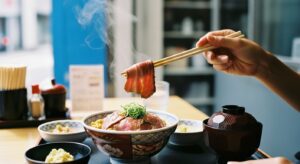
Goto spent 18 years in the food and beverage industry before launching Itadaki in April 2022. As the founder of MAX'S BAR since 2008, he had built relationships with Aichi Prefecture's local farmers long before it was fashionable. When the pandemic hit those farmers hard, he didn't look away — he built a restaurant around them. The result was something that had never existed before: the Rare Wagyu Gyudon, Japan's first premium beef bowl built on an entirely new culinary concept.
The centerpiece of that concept is Horai Wagyu — and most visitors, even seasoned Japan travelers, know almost nothing about it. Here are seven facts that Goto himself shares with guests who ask why this beef is so different from everything else they've encountered.
Who This Is For
- ✅ Wagyu enthusiasts who want to discover rare Japanese beef beyond Kobe and Matsusaka
- ✅ Travelers planning a Nagoya stop and wondering whether to reserve in advance
- ✅ Visitors on a tight itinerary who cannot risk arriving to find a sold-out dish
- ✅ Foodies curious about what makes Horai Wagyu genuinely scarce — not just a marketing label
- ✅ Anyone heading to Shirakawa-go or Takayama who wants a memorable Nagoya lunch before the journey
Fact 1: Only 300 Heads Are Raised in All of Japan Each Year
Japan raises approximately 500,000 wagyu cattle annually. Horai Wagyu accounts for just 300 of them — produced by only three farms in the entire country, all located in the Okumikawa region of Aichi Prefecture. That's not a figure that fluctuates with demand. It's a fixed ceiling determined by the land, the farming families, and the feed itself.
Goto has a direct supply partnership with those farms — a relationship built over years, not negotiated over email. "When I started Itadaki, I didn't want to source from a distributor," he explains. "I wanted to understand how this beef was raised. You can taste the difference between a farmer who cares and one who doesn't."
Fact 2: The Cattle Are Fed on Sake Lees from One of Aichi's Finest Breweries
What makes Horai Wagyu distinct isn't just its rarity — it's the diet. The cattle are fed on sake lees from Horaisen Sora, a premium sake brewery in Okumikawa. This feeding method produces a marbling pattern unlike most wagyu: it combines delicate fat distribution with lean meat character that holds up under Goto's two-stage cooking technique.
"Most wagyu you encounter outside Japan is bred for maximum fat," Goto says. "Horai Wagyu has something more interesting — a balance. The lean has flavor. The fat doesn't overpower it." It's this balance that makes the rare preparation at Itadaki work so well: the beef needs to have enough structure to deliver texture at a near-raw stage, and Horai Wagyu does exactly that.
Fact 3: It's Served Rare — and That's Actually Safe
This is where many international visitors pause. Rare beef from a bowl restaurant? Goto understands the hesitation completely, and he designed Itadaki's cooking method specifically to address it.
Itadaki's proprietary two-stage cooking technique heats the beef to over 70°C at the core — fully meeting Japan's Ministry of Health, Labour and Welfare food safety standards. The process was developed under Goto's direction and is certified under his Certified Food Sanitation Supervisor qualification (Japanese Ministry of Health, Labour and Welfare). What guests experience as "rare" is the result of a precise, repeatable technique that has been refined over years — not a shortcut.
"Rare-style wagyu exists in Japan because the technique exists to make it safe," Goto explains. "That's the whole premise. Without that foundation, there's no restaurant."
✓ Key Takeaways
- Horai Wagyu is produced by just 3 farms in Japan — 300 heads annually out of 500,000 total wagyu cattle. Scarcity here is real, not manufactured.
- The rare preparation at Itadaki fully meets Japan's food safety standards through a proprietary two-stage cooking technique developed by Goto himself.
- The unique sake-lees feeding method creates a flavor and texture balance that distinguishes Horai Wagyu from most wagyu served outside Japan.
Fact 4: There Are Only 10 Bowls Available Per Day — And They Do Sell Out
This is the fact that matters most if you're planning a visit. Itadaki limits Horai Wagyu to 10 bowls per day. Not because of kitchen constraints — because that's how much can be sourced responsibly while maintaining the quality and the farm relationships Goto has spent years building.
During peak hours — especially on weekends and public holidays — those 10 bowls can be gone before noon. Walk-in guests arriving at 12:30 on a Saturday have, more than once, heard the words: "Horai Wagyu has sold out for today."
Goto is candid about this: "I'd rather a guest know in advance and plan accordingly than arrive disappointed. That's why we recommend reserving through Tabelog." For guaranteed availability, advance reservation via Tabelog Online is strongly recommended. Reservations can be made in English on the Tabelog website. When booking, copy and paste the following phrase into the notes field to request Horai Wagyu specifically: 鳳来牛希望 (read: Hōrai-gyu kibō — meaning "Horai Wagyu, please").
If you're visiting without a reservation, arriving at opening time — 11:00 — gives you the best chance. Itadaki's second signature offering, the Mikawa Beef Rare Gyudon, is always available for walk-in guests and is prepared using the same two-stage cooking technique. It's a genuinely exquisite dish in its own right — not a fallback, but a different experience worth having.
Fact 5: Everything in the Bowl Comes from Aichi Prefecture
Goto made a decision early on that most restaurant operators never consider: every single ingredient on the plate would come from Aichi Prefecture. Not just the beef. The rice (Aichi no Kaori), the egg (Nagoya Cochin from Yamada Poultry Farm), the pickles (Atsumi Ichō-zuke from Atsumi Peninsula), the shiso leaves (Aikei No.1 from Toyohashi), the white soy sauce base for the signature sauce (from Hekinan City), the miso soup (Hatcho miso and soybean miso from Okazaki) — all of it traces back to the same prefecture.
"I wanted the bowl to tell a complete story about Aichi," Goto says. "Not a dish where you swap in premium beef but everything else is generic. That would miss the point entirely."
"Perfect lunch during our Nagoya stay before our Shirakawa-go trip the following day."
— Guest review
That kind of comment captures exactly what Goto had in mind. Itadaki sits naturally at the intersection of Nagoya's city energy and the deeper Aichi countryside that stretches toward Okumikawa and beyond — the same landscape where Horai Wagyu is raised. Guests heading north to Shirakawa-go the next morning aren't just eating lunch; they're beginning a journey through Central Japan's food culture in the most literal sense.
Fact 6: The Dish Is Experienced in Five Steps — and There's a Guide
First-time visitors occasionally feel uncertain about how to approach the bowl. Goto anticipated this and developed a five-step visual guide, printed in English, Simplified Chinese, and Korean, included with every order.
The steps unfold deliberately: separate the Nagoya Cochin egg, placing the white into the miso soup and the yolk atop the beef; taste the wagyu first in its purest form; mix the yolk in for a silkier bite; layer in condiments like pickled ginger, dried nori from Mikawa Bay, chirimen jako (dried whitebait from Minamichita), and Itadaki's original 8-spice blend; finish with wasabi for a clean finish. Each step changes the flavor and texture, and guests who follow the guide typically find themselves pausing between bites in a way that doesn't happen with an ordinary meal.
"The guide isn't just for foreign guests," Goto notes. "Japanese guests use it too. The dish has its own logic, and the guide helps people engage with it properly rather than just eating quickly."
Fact 7: The Restaurant That Invented This Dish Is in Osu — Not Tokyo, Not Kyoto
Nagoya is often described as underrated by repeat Japan visitors, and Osu is arguably its most underrated district. The 1,200-shop Osu Shopping Street, Osu Kannon Temple, and the surrounding neighborhood draw a lively mix of locals, subculture enthusiasts, and travelers who've moved beyond the Golden Route. It's here — on the second floor of a building four minutes' walk from Yabacho Station Exit 4 on the Meijo Subway Line — that Goto opened Itadaki in April 2022.
He didn't choose Osu by accident. The neighborhood's character — traditional and unconventional at the same time — mirrors exactly what Itadaki is: a Japanese beef bowl tradition reconceived without apology. The restaurant has since been featured on eight major Japanese TV programs including NHK, and is recognized as the originator of the Rare Wagyu Gyudon culinary concept.
The name Itadaki itself comes from the expression "itadakimasu" — the gratitude spoken before every meal in Japan. It reflects Goto's core belief: that food is a gift from farmers, land, and craft, and deserves to be treated accordingly at every step from farm to bowl.
Planning Your Visit: What You Need to Know
Itadaki is open for lunch only (11:00–15:00) on Saturdays, Sundays, Mondays, and Tuesdays. On public holidays, hours begin at 9:00. Wednesday through Friday are closed. Last order is 30 minutes before closing. Irregular closures may apply — the monthly business calendar is posted on Instagram.
The restaurant is located at 4-1-20 Osu 2F, Naka-ku, Nagoya. From Nagoya Station, the easiest route is the Higashiyama Line to Sakae, then transfer to the Meijo Line and exit at Yabacho (Exit 4) — approximately 10 minutes total. Look for the sign reading 元祖レア牛丼 頂 at street level and take the stairs to the second floor.
For anyone with a specific date in mind and a genuine interest in Horai Wagyu, reserving ahead makes all the difference. The experience — the beef, the bowl, the five-step ritual, the story behind every ingredient — is worth planning around. If Nagoya is one day of your itinerary, make this lunch count.
For our complete menu, access details, and store information, visit our official page at https://itadaki8.com/english/
Ready to secure your Horai Wagyu bowl? Reserve Your Rare Wagyu Experience via Tabelog — remember to paste 鳳来牛希望 in the notes field to request Horai Wagyu. And to stay updated on our monthly schedule and any irregular closures, Check Our Monthly Schedule on Instagram before you travel. We look forward to welcoming you to Osu.