Why My Third Japan Trip Was All About Nagoya
 gotowp
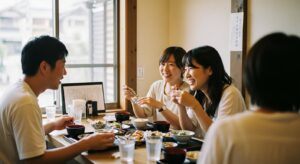
A guest walked into Itadaki a few months ago and, halfway through her bowl, looked up and said something I still think about: "This is my third trip to Japan, and I've never made it to Nagoya before. I don't know why it took me this long."
She'd done Tokyo twice. Kyoto twice. Osaka, Hiroshima, Nara — all checked off. On this trip, she'd added three days in Nagoya before heading to Shirakawa-go, and she'd found Itadaki through a rabbit hole of research the night before. She almost didn't come. Not because she wasn't curious — but because she was genuinely worried about one thing.
"Rare wagyu," she said. "I wasn't sure if it was actually safe."
That conversation stuck with me. Because I've heard it more times than I can count — from first-timers, from seasoned Japan travelers, from people who've eaten everything from street food in Bangkok to sea urchin in Hokkaido. Raw or near-raw beef is a specific kind of unfamiliar. And unfamiliar deserves an honest answer, not a sales pitch.
So this article is my attempt to give you that honest answer — and to explain why, for a growing number of repeat visitors, Nagoya has quietly become the most interesting stop on the Japan map.
Who This Is For
- ✅ Repeat Japan visitors who've already covered the Golden Route and want to go deeper
- ✅ Anyone curious about rare wagyu but uncertain whether it's safe to eat
- ✅ Travelers planning a Nagoya stop before or after Shirakawa-go, Takayama, or Gifu
- ✅ Wagyu enthusiasts looking beyond Kobe and Matsusaka for their next discovery
- ✅ Anyone who wants to understand what makes Nagoya worth a dedicated visit

The Question Everyone Asks Before They Come
Let me address this directly, because I think you deserve a straight answer before anything else.
In the United States, the United Kingdom, Australia, and much of Western Europe, health authorities recommend cooking beef to a minimum internal temperature — typically 63°C to 71°C — specifically to eliminate risks from E. coli, salmonella, and other pathogens. That guidance is real, it's evidence-based, and it makes sense in those food systems. If you grew up with that understanding, skepticism about "rare beef" is completely reasonable.
Here's what's different at Itadaki.
Our signature preparation uses a proprietary two-stage cooking technique that was developed specifically to achieve a rare-style texture while heating the beef to over 70°C at the core — fully meeting Japan's Ministry of Health, Labour and Welfare food safety standards. This isn't a workaround or a loophole. It's a precise technical method that took real development time to perfect, and it's the reason Itadaki exists as a concept at all.
I hold a Certified Food Sanitation Supervisor qualification issued by Japan's Ministry of Health, Labour and Welfare, and Itadaki operates under a Licensed Restaurant Operator certification from the Aichi Prefecture Public Health Center. Food safety isn't a background consideration here — it was the first design constraint we built the entire cooking method around.
What you experience at Itadaki isn't "undercooked beef" in any conventional sense. It's a dish engineered to feel rare because of how wagyu's exceptional fat structure responds to carefully controlled heat — not because safety corners were cut. The two concepts are not in conflict. That's the whole point of what we built.
Why Horai Wagyu Changes the Equation
There's another part of the safety story that often gets overlooked in discussions about rare beef preparation: the quality and traceability of the source ingredient itself.
Itadaki uses only two beef sources, both from Aichi Prefecture: Horai Wagyu from the Okumikawa region, and Mikawa Beef from Aichi's Mikawa region. Both are raised under rigorous quality control by farms we work with directly.
Horai Wagyu is extraordinary by any measure — only 300 heads are raised annually across just three farms in Japan. These cattle are fed on sake lees from Horaisen Sora, a renowned local premium sake brewery, which contributes to their distinctive flavor profile: a combination of delicate marbling and genuine lean-meat character that you rarely find in heavily marbled wagyu. The extreme scarcity isn't a marketing angle. It's simply a reflection of how carefully and slowly these animals are raised.
Mikawa Beef, our always-available second signature, is raised on okara feed with lactic acid bacteria gut management — a feeding method that produces exceptionally clean, lean beef from the uchimomo cut. Both sources give us full supply chain visibility in a way that would be impossible with commodity beef.
When you combine direct-sourcing traceability with our two-stage cooking technique, the result is something you genuinely cannot replicate at home or find at a standard restaurant. It's a culinary achievement, not a gamble.
✓ Key Takeaways
- Itadaki's rare wagyu is cooked to over 70°C at the core using a proprietary two-stage technique — fully meeting Japanese Ministry of Health food safety standards.
- Only directly-sourced Aichi Prefecture wagyu is used: Horai Wagyu (300 heads/year) and Mikawa Beef — both raised under strict quality control.
- The "rare" experience comes from wagyu's unique fat structure responding to precise heat — not from undercooking.
What Nagoya Offers That Nowhere Else Does
Back to that guest — the one on her third Japan trip.
After she finished her bowl, she said something that I've been repeating to people ever since: "The lunch was the highlight of my Nagoya trip — I'm telling all my friends about it."
I think what she was really describing wasn't just the food. It was the specific feeling of discovering something that didn't exist on any list she'd read before. That feeling is increasingly hard to find in Japan's most visited cities, where every "hidden gem" has been written about in seventeen different travel blogs and has a two-hour queue on weekends.
Nagoya is different. Not because it lacks sophistication — the city is home to some of Japan's most underappreciated culinary traditions, from Hatcho miso to Nagoya Cochin to the white soy sauce produced in Hekinan City that forms the base of our signature "magic sauce." Nagoya is different because it hasn't been flattened by over-tourism yet. The Osu district, where Itadaki is located, is genuinely a neighborhood where locals eat, shop, and gather — not a preserved museum of the past, but a living, slightly chaotic, genuinely interesting place.
Osu Kannon Temple stands at one end of a covered shopping arcade that runs past vintage clothing stores, anime shops, Taiwanese restaurants, and the occasional maid café. It's loud and quiet in equal measure, depending on which street you turn down. Itadaki sits above one of those streets — second floor, stairs up from the sign that reads 元祖レア牛丼 頂 (pronounced "Ganso Rea Gyudon Itadaki").
We're a 4-minute walk from Yabacho Station Exit 4 on the Meijo Subway Line. From Nagoya Station, the journey takes about 10 minutes: Higashiyama Line to Sakae, transfer to the Meijo Line, get off at Yabacho. Straightforward once you know it.
How to Experience It Without Stress
If you're planning your first visit, here's what I'd want you to know in advance.
Our menu is fully printed in English, Simplified Chinese, and Korean — with photos, prices, and ingredient explanations. There's also a five-step visual guide titled "How to Enjoy Rare Gyudon" that walks you through exactly how to separate the Nagoya Cochin egg, when to add the yolk, and how to use the complimentary tabletop condiments — pickled ginger from Inazawa, dried nori from Mikawa Bay, chirimen jako from Minamichita, and our original 8-spice blend. You don't need Japanese to navigate the meal. The experience is designed to be intuitive.
The one thing I do recommend planning ahead: if you want to try Horai Wagyu specifically, please reserve in advance via Tabelog Online. We limit it to 10 bowls per day — not as a theatrical scarcity device, but because that's genuinely how much we can serve while maintaining quality. When you make your reservation, copy and paste the following into the notes field: 鳳来牛希望 (this tells us you'd like Horai Wagyu). Reservations can be made in English on the Tabelog platform.
If you're walking in without a reservation, our Mikawa Beef Rare Gyudon is always available — prepared with the same two-stage technique and the same commitment to Aichi ingredients. It's not a consolation option. It's the second pillar of everything we do.
"The lunch was the highlight of my Nagoya trip — I'm telling all my friends about it."
Guest, repeat Japan visitor
A Bowl That Carries a Story
I started Itadaki in 2022 because I believed that gyudon — Japan's humble beef bowl — deserved a version that reflected the same craft and sourcing philosophy as the best kaisendon or katsudon. That belief hasn't changed. What has changed is the number of guests who arrive having already wrestled with the safety question, done their research, and decided to trust what they found.
Every ingredient in the bowl comes from Aichi Prefecture. The rice is Aichi no Kaori, grown here. The miso soup is made with Hatcho miso from Okazaki. The pickles are Atsumi Ichō-zuke from the Atsumi Peninsula. The egg is from Yamada Poultry Farm's Nagoya Cochin hens. Nothing is sourced for convenience. Everything is here because it belongs here.
That's what I mean when I say this is a culinary journey, not just a meal. And it's why, for guests on their third Japan trip — finally making it to Nagoya — it tends to land differently than they expected.
We're open Saturday, Sunday, Monday, and Tuesday, 11:00–15:00 (last order 14:30). Irregular closures do occur, so please check our monthly business calendar before you visit.
For our complete menu, access details, and store information, visit our official page at https://itadaki8.com/english/
If Horai Wagyu is on your list, the best way to make sure it's waiting for you is to reserve ahead. We'd love to be the meal you tell your friends about.
Reserve Your Rare Wagyu Experience
And to stay up to date on which days we're open each month:
Check Our Monthly Schedule on Instagram