My Nagoya Lunch Story: Before the Takayama Bus Journey
 gotowp
Here's a number that surprised me when I first heard it: over 60% of foreign visitors who travel from Nagoya to Takayama or Shirakawa-go say they skipped lunch in Nagoya entirely — not because they weren't hungry, but because they didn't know where to go, didn't want to get lost, or simply assumed they'd "eat something at the bus terminal."
That gap between "arriving in Nagoya" and "boarding the highway bus" is, in my experience, one of the most underused windows of time in any Japan itinerary. Because here's what that window actually looks like: the Nagoya–Takayama highway bus departs from Meitetsu Bus Terminal, right next to Nagoya Station. Most travelers arrive at Nagoya Station from Tokyo by Shinkansen in the morning, check their bags into a coin locker, and then... wait. Sometimes two hours. Sometimes three.
That window is exactly where a meal at Itadaki was born to fit.
This is the story of what changes when you fill that window with something worth remembering.
✅ This article is for you if:
- ✅ You're traveling from Nagoya to Takayama, Shirakawa-go, or Hida region and have a few hours before your bus
- ✅ You want a meaningful lunch that tells a story — not just something to fill the time before departure
- ✅ You've tried Kobe or Matsusaka beef and are curious what else Japan's wagyu world has to offer
- ✅ You're looking for a restaurant in Osu that welcomes international visitors with an English menu and a genuine atmosphere
- ✅ You want your Nagoya stopover to feel like a destination, not a layover
Before: A Transit City with No Lunch Plan
Nagoya has a reputation — unfair, I think — as a "pass-through city." Travelers arrive from Tokyo, spend a night or a morning, then continue southwest toward Kyoto or north toward the Japan Alps. The city often appears in itineraries as a logistical connector rather than a culinary destination in its own right.
The result? Many visitors board their Takayama-bound bus slightly underwhelmed. They've eaten a convenience store onigiri near Nagoya Station. Or they've grabbed something from a chain restaurant in the underground mall. Nothing wrong with that, of course — but nothing particularly memorable either.
I think about this often when guests arrive at Itadaki and mention they're catching the afternoon bus to Takayama. Some of them tell me they almost didn't come. The Osu district felt like a detour. They weren't sure if we'd have an English menu. They worried we'd be full.
That hesitation is completely understandable. But I'm always glad when they decide to make the walk.
The Detour That Became the Highlight
Itadaki is a four-minute walk from Yabacho Station (Exit 4, Meijo Subway Line). From Nagoya Station, the journey takes roughly ten minutes total: Higashiyama Line to Sakae, transfer to the Meijo Line, off at Yabacho. Straightforward enough, even with luggage stored at the station.
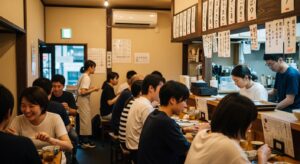
What greets you on arrival is not what most visitors expect from a gyudon restaurant. Upstairs from street level, past the sign that reads "元祖レア牛丼 頂," the space is calm, thoughtfully designed, and genuinely welcoming. Eighteen seats, sofa-style tables, no background noise competition. A printed menu in English sits waiting at the table before you've even had a chance to ask.
And then the bowl arrives.
What we serve at Itadaki is something we call Rare Wagyu Gyudon — a concept that didn't exist anywhere in Japan before we opened in April 2022. The idea was simple, and yet somehow it had never been done: take Japan's humblest comfort food, the beef bowl, and reimagine it as a fine-dining experience using ultra-rare Aichi wagyu prepared in a signature rare style.
Our most sought-after offering features Horai Wagyu from Okumikawa, deep in Aichi's forested interior. Only three farms in Japan raise this breed. Only 300 heads are produced each year — out of roughly 500,000 wagyu cattle raised annually across the country. These animals are fed on sake lees from Horaisen Sora, one of Aichi's finest local breweries, which contributes to a flavor profile that is genuinely unlike any wagyu I've tasted elsewhere.
We limit Horai Wagyu to 10 bowls per day. When it's gone, it's gone. For travelers heading to Takayama, the timing actually works well — arriving at our 11:00 opening gives you the best chance of securing one.
✓ ここまでのポイント
- The gap between arriving in Nagoya and boarding the Takayama bus is a genuine opportunity — typically 2–3 hours that most travelers don't plan for
- Itadaki is a 10-minute subway ride from Nagoya Station and a 4-minute walk from Yabacho Station — practical even for travelers with luggage stored at the station
- Horai Wagyu is limited to 10 bowls per day; arriving at or near our 11:00 opening significantly improves your chances
After: What Guests Carry With Them on the Bus
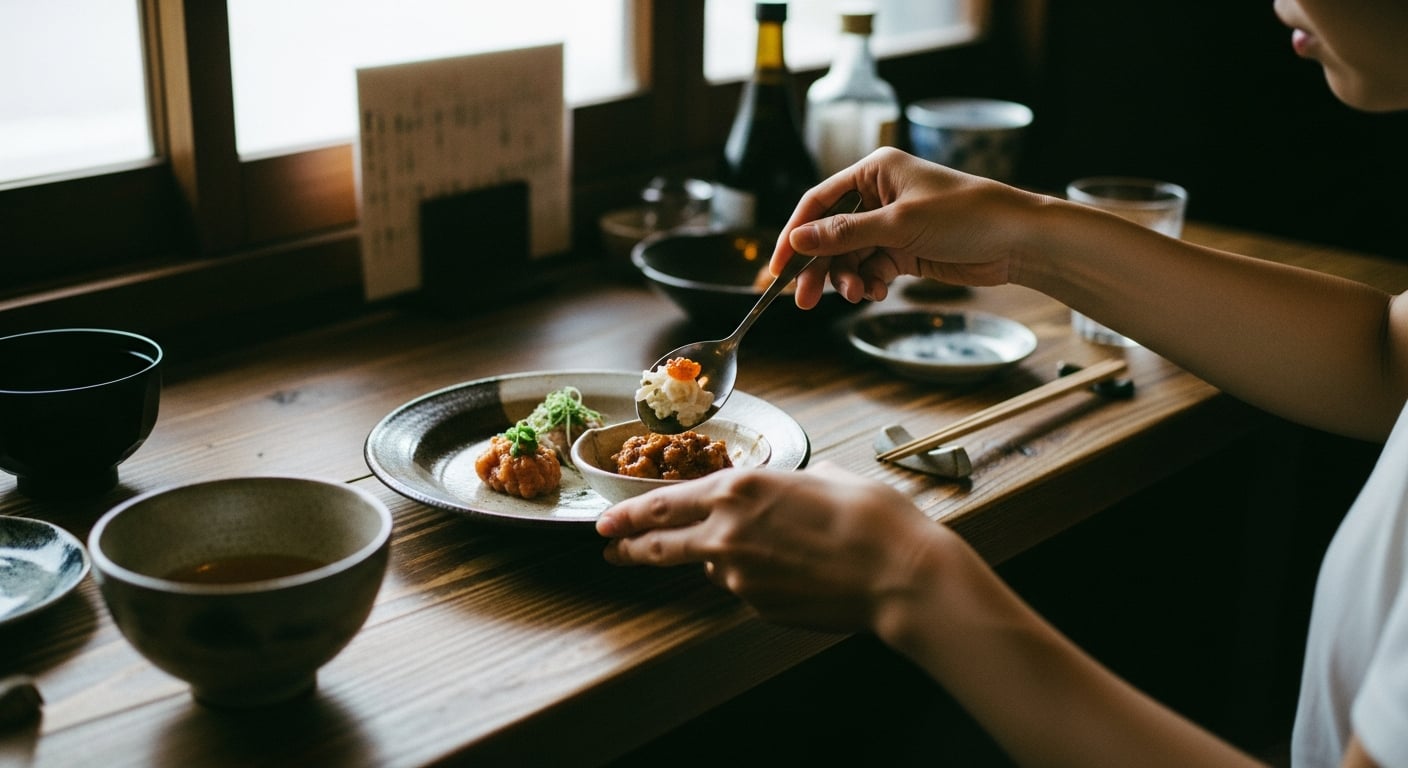
The meal at Itadaki unfolds in five steps, guided by a visual instruction card in English included with every bowl. First, you separate the Nagoya Cochin egg — white into the miso soup, yolk resting atop the beef. Then you taste the wagyu in its purest form: the rare texture, the clean marbling, the gentle richness that comes from a life well-raised. From there, you mix, you add condiments, you explore. Pickled ginger from Inazawa. Dried seaweed from Mikawa Bay. Chirimen jako from Minamichita. Wasabi at the finish.
It takes perhaps twenty to twenty-five minutes. And then you sit with it for a moment.
What I notice most in guests who are catching the afternoon bus is how the energy in the room shifts after the bowl is finished. Something has settled. The rush of the Shinkansen, the logistics of luggage, the slightly anxious feeling of a new city — it's been replaced by something quieter. A meal that asked for your attention and rewarded it.
"Perfect lunch during our Nagoya stay before our Shirakawa-go trip the following day. The wagyu was incredible and the whole experience felt so intentional."
"I've had Kobe beef and Matsusaka beef, but Horai Wagyu at Itadaki was on another level. And I had no idea Nagoya had something like this."
That second comment is one I hear often in different forms. Nagoya surprises people. Aichi Prefecture has a depth of culinary identity — wagyu, miso, rice, seafood from Mikawa Bay, eggs from Nagoya Cochin farms — that rarely makes it into mainstream travel coverage. One of my quiet goals with Itadaki has always been to change that, one bowl at a time.
A Note on Food Safety — Because It Matters
Some guests arrive having done their research, and a few mention that they were initially hesitant about rare-style beef. That's a completely fair concern, especially for visitors from countries where undercooked beef raises legitimate public health flags.
I want to be transparent about this, because honesty is part of how we operate. Our rare wagyu is not raw in the way that concerns food safety authorities. It's prepared using a proprietary two-stage cooking technique — developed specifically for Itadaki — that heats the beef to over 70°C at the core. This fully meets Japan's Ministry of Health, Labour and Welfare standards. The "rare" quality you experience comes from the technique and the nature of the wagyu itself, not from undercooking.
I hold a Certified Food Sanitation Supervisor qualification, and our kitchen follows precise, consistent procedures every single service. The sensation of rarity is real. The safety is also real. Both things are true at once, and that's the achievement we're most proud of.
Planning Your Osu Lunch Before the Bus
If you're building this into your itinerary, here's how it typically works smoothly:
Store your luggage at Nagoya Station coin lockers before heading out (there are plenty near the Shinkansen exits). Take the Higashiyama Line from Nagoya to Sakae, transfer to the Meijo Line, and get off at Yabacho — the whole journey is around ten minutes. Walk four minutes to Itadaki, arriving at or shortly after our 11:00 opening. After your meal, you can return to Nagoya Station in the same ten minutes, retrieve your bags, and be at the Meitetsu Bus Terminal with time to spare before your departure.
If you're hoping to try our Horai Wagyu — the ultra-rare Aichi wagyu limited to 10 bowls per day — I'd recommend making a reservation in advance through Tabelog Online. In the notes field, paste this phrase to request Horai Wagyu: 鳳来牛希望. If you prefer to walk in, our Mikawa Beef Rare Gyudon is always available and prepared with the exact same two-stage technique.
We're open for lunch only: Monday, Tuesday, Saturday, Sunday, and public holidays, from 11:00 to 15:00 (last order at 14:30). On public holidays, we open at 9:00. Irregular closures can happen — please check our monthly schedule on Instagram before you visit, especially if your travel dates fall close to a holiday.
The Osu district itself is worth arriving slightly early for. Osu Kannon Temple is a five-minute walk from Itadaki. Hisaya-odori Garden Flarie — a free-admission urban garden just three minutes from Yabacho Station — is lovely for a short stroll before or after the meal. The main Osu Shopping Street runs through the neighborhood if you have time to explore.
The Takayama mountains will be waiting. But Nagoya deserves its own chapter in your journey — not just a transit point, but a city that offers something genuinely rare, if you know where to look.
We'd be glad to be part of your story.
For our complete menu, access details, and store information, visit our official page at https://itadaki8.com/english/
Ready to reserve your spot before the bus? Reserve Your Rare Wagyu Experience through Tabelog Online — and don't forget to add 鳳来牛希望 in the notes if you'd like Horai Wagyu.
Not sure of your exact travel dates yet? Check Our Monthly Schedule on Instagram to confirm we'll be open on the day you're passing through Nagoya. We look forward to welcoming you.