Why I Now Recommend Nagoya Lunch to Every Shirakawa-go Visitor
 gotowp
You've booked your Shirakawa-go day trip. The bus is sorted, the camera bag is packed, and you're already picturing those snow-dusted gassho-zukuri farmhouses against a winter sky. But here's the question most visitors never think to ask: what do you do with the morning before you leave Nagoya?
I hear versions of this all the time. "We had a few hours before heading out — we just wandered around the station." Or: "We grabbed something quick at a convenience store and got on the bus." Or, most painfully: "We didn't really eat anything good in Nagoya. We were saving ourselves for Shirakawa-go."
I understand that instinct completely. When you're traveling through Japan on a tight itinerary, Nagoya can feel like a layover rather than a destination. And Shirakawa-go — a UNESCO World Heritage Site — carries so much weight on the itinerary that everything before it can get treated as filler time.
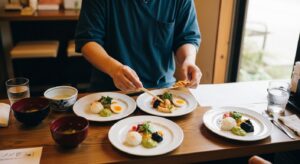
But after four years of welcoming visitors here at Itadaki, I've started gently pushing back on that idea. Because what I've watched happen, again and again, is this: guests arrive at our little second-floor spot in Osu, sit down for what they expect will be a quick lunch, and leave forty-five minutes later saying something like — "That was the best meal of our entire trip."
That's the moment I became someone who recommends a Nagoya lunch to every single Shirakawa-go visitor I meet.
This article is for you if:
- ✅ You're planning a Shirakawa-go or Takayama day trip from Nagoya and want to make the most of your morning
- ✅ You're curious about rare wagyu gyudon but have questions about safety, reservation, or what to expect
- ✅ You want a memorable, story-worthy lunch experience that doesn't derail your travel schedule
- ✅ You're a repeat Japan visitor looking for a genuine local discovery beyond the Golden Route
- ✅ You're a food enthusiast who wants to try an Aichi ingredient you can't find anywhere else in the world

How Itadaki Became Part of the Shirakawa-go Story
When I opened Itadaki in Osu in April 2022, I had a very specific vision: a small, unhurried lunch restaurant where every ingredient on the table came from Aichi Prefecture, and where the star of the show — the wagyu — was prepared in a way nobody had done before.
The name Itadaki comes from itadakimasu, the Japanese expression of gratitude we speak before every meal. It's a word that holds the whole philosophy of this place — that food is a gift from the farmers who raise it, the land that sustains it, and the hands that prepare it. That's not a slogan. It shapes every decision we make, from which farms we work with to how we set the table.
What I didn't fully anticipate was how naturally Itadaki would fit into the rhythms of international travel through Central Japan. Nagoya is the gateway to Shirakawa-go, Takayama, and the Gifu highlands. Visitors pass through this city every day — often spending a night here, sometimes two — and increasingly, they're arriving with a hunger for something more than a transit stop.
The first time a guest told me, "We're heading to Shirakawa-go tomorrow — your restaurant was the best thing about Nagoya," I felt something I hadn't quite expected: that Itadaki had become part of someone's journey, not just their meal.
What Makes This Lunch Worth Planning Around
Let me tell you about the beef, because it's the reason this whole conversation matters.
Horai Wagyu is raised in Okumikawa — the deep mountain region of Aichi Prefecture — by just three farms in Japan. Only 300 heads are produced annually. To put that in context: there are roughly 500,000 wagyu cattle raised across Japan each year. Horai Wagyu accounts for 300 of them.
What makes these cattle distinct isn't just their scarcity. It's how they're raised. They're fed on sake lees from Horaisen Sora — one of Aichi's most respected sake breweries — which creates a flavor profile unlike anything you'll find in better-known wagyu brands. The fat is light and almost sweet. The lean meat has depth. It doesn't overwhelm you; it draws you in.
At Itadaki, this beef is served as a rare wagyu gyudon — a beef bowl in the tradition of Japan's most beloved comfort food, reimagined entirely. Our proprietary two-stage cooking technique heats the beef to over 70°C at the core, fully meeting Japan's Ministry of Health, Labour and Welfare food safety standards, while preserving a texture that feels, for all the world, like perfectly rare wagyu. It's a technical achievement we're genuinely proud of — one that took years to develop and that no other gyudon restaurant offers.
Every accompanying element — the rice, the miso soup, the pickles, the shiso leaves, the Nagoya Cochin egg — comes from Aichi Prefecture. This isn't a marketing angle. It's a commitment we made at the beginning and have never compromised on.
✓ ここまでのポイント
- Itadaki was founded on the philosophy of itadakimasu — gratitude and respect for farmers and ingredients, all sourced from Aichi Prefecture.
- Horai Wagyu is one of Japan's rarest wagyu varieties — only 300 heads raised annually across 3 farms — and is served here as a rare-style gyudon using a proprietary cooking technique that meets Japanese food safety standards.
- The restaurant naturally fits the rhythms of Nagoya-based travel, including day trips to Shirakawa-go and Takayama.
The Timing Works Beautifully — Here's Why
Most buses and highway coaches from Nagoya toward Shirakawa-go and Takayama depart in the morning — typically between 8:00 and 10:30 from Meitetsu Bus Center near Nagoya Station. That means if you're doing a day trip, you're leaving early and returning to Nagoya by early to mid-evening.
Itadaki opens at 11:00 on our regular business days (Saturday, Sunday, Monday, and Tuesday), and on public holidays we open at 9:00. Last order is 30 minutes before our 15:00 close.
For visitors spending two nights in Nagoya — one before Shirakawa-go, one after — the timing fits naturally. Many guests now come to us the day after their Shirakawa-go or Takayama trip, using the second Nagoya day for Osu sightseeing and a proper sit-down lunch. Others come the day before, framing the meal as the first chapter of their Central Japan experience.
Either way, the Osu district itself rewards the detour. Osu Kannon Temple is a five-minute walk from Itadaki. The 1,200-shop Osu Shopping Street winds through the neighborhood in all directions. And Hisaya-odori Garden Flarie — a free-admission urban garden just three minutes from Yabacho Station — is one of those quietly beautiful Nagoya spots that rarely makes it into mainstream guidebooks but consistently delights the visitors who find it.
A morning at Osu Kannon, a stroll through the shopping street, a rare wagyu lunch at Itadaki, and then the rest of your afternoon free. That's a Nagoya day worth remembering.
What Our Guests Say — Especially the Ones Headed to Gifu
"Perfect lunch during our Nagoya stay before our Shirakawa-go trip the following day."
— Guest review
"I've had Kobe beef and Matsusaka beef, but Horai Wagyu at Itadaki was on another level."
— Guest review, repeat Japan visitor
These two pieces of feedback capture something I hear often. Guests who arrive with high wagyu expectations — visitors who've already eaten Kobe beef in Hyogo or Matsusaka beef in Mie — leave genuinely surprised. Not because Horai Wagyu is "better" (that's not a comparison I'd ever make), but because it's different in ways they didn't expect. The sake lees feeding. The lean-to-fat balance. The way it interacts with our magic sauce, which is built on white soy sauce from Hekinan City, blended with wine.
And the English menu helps enormously. We print our menu in English, Simplified Chinese, and Korean, and it includes a five-step visual guide explaining exactly how to enjoy the dish — when to separate the egg, when to add the condiments, when to bring in the wasabi for the final note. For international guests who might feel hesitant about how to approach an unfamiliar dish, that guide turns curiosity into confidence.
A Practical Note on Reservations
Horai Wagyu is limited to 10 bowls per day. That number isn't a marketing device — it reflects the genuine scarcity of the ingredient. On peak days, especially weekends and public holidays, those 10 bowls can be gone before noon.
If Horai Wagyu is on your list, I'd encourage you to reserve in advance via Tabelog Online. You can make the reservation in English, and adding "Horai Wagyu request" (鳳来牛希望) in the notes field helps us prepare for you specifically. Arriving right at our 11:00 opening is also a good strategy if you prefer to walk in.
That said, our Mikawa Beef Rare Gyudon is always available for walk-in guests — prepared with the same two-stage cooking technique, using a beautiful lean cut from Aichi's Mikawa region. Starting from ¥1,800 for the standard size, it's an equally thoughtful dish in its own right.
We're located at 4-1-20 Osu, 2nd floor, Naka-ku — a four-minute walk from Yabacho Station Exit 4 on the Meijo Subway Line. From Nagoya Station, the journey takes about ten minutes: Higashiyama Line to Sakae, transfer to the Meijo Line, exit at Yabacho. Look for the "元祖レア牛丼 頂" sign at street level and take the stairs up.
The Lunch That Stays With You
Shirakawa-go will give you something extraordinary — a landscape that feels like it belongs to a different century, a quietness that's hard to find anywhere else in Japan. I hope you love every moment of it.
But I've learned, over four years of watching guests pass through Osu, that the most memorable journeys aren't built from a single destination. They're built from moments that stack — a morning temple visit, an unexpected lunch, an afternoon of wandering. The whole becomes something greater than any individual part.
That's what we hope to offer here at Itadaki. Not a meal to rush through before a bus, but a moment worth pausing for. A bowl with a story behind every ingredient. A lunch that, by the time you're boarding your coach toward the mountains, has already become one of the things you'll tell people about when you get home.
We'd love to be part of your Central Japan journey. If you'd like to secure your Horai Wagyu bowl ahead of your visit, we warmly invite you to reserve your seat below. And if you'd like to check our current monthly schedule before planning your day, our Instagram calendar is always up to date.
Reserve Your Rare Wagyu Experience
|
Check Our Monthly Schedule on Instagram
For our complete menu, access details, and store information, visit our official page at https://itadaki8.com/english/.