How First-Time Nagoya Visitors Discover Osu's Rare Wagyu
 gotowp
A guest stopped me on their way out last month and said something I've been thinking about ever since.
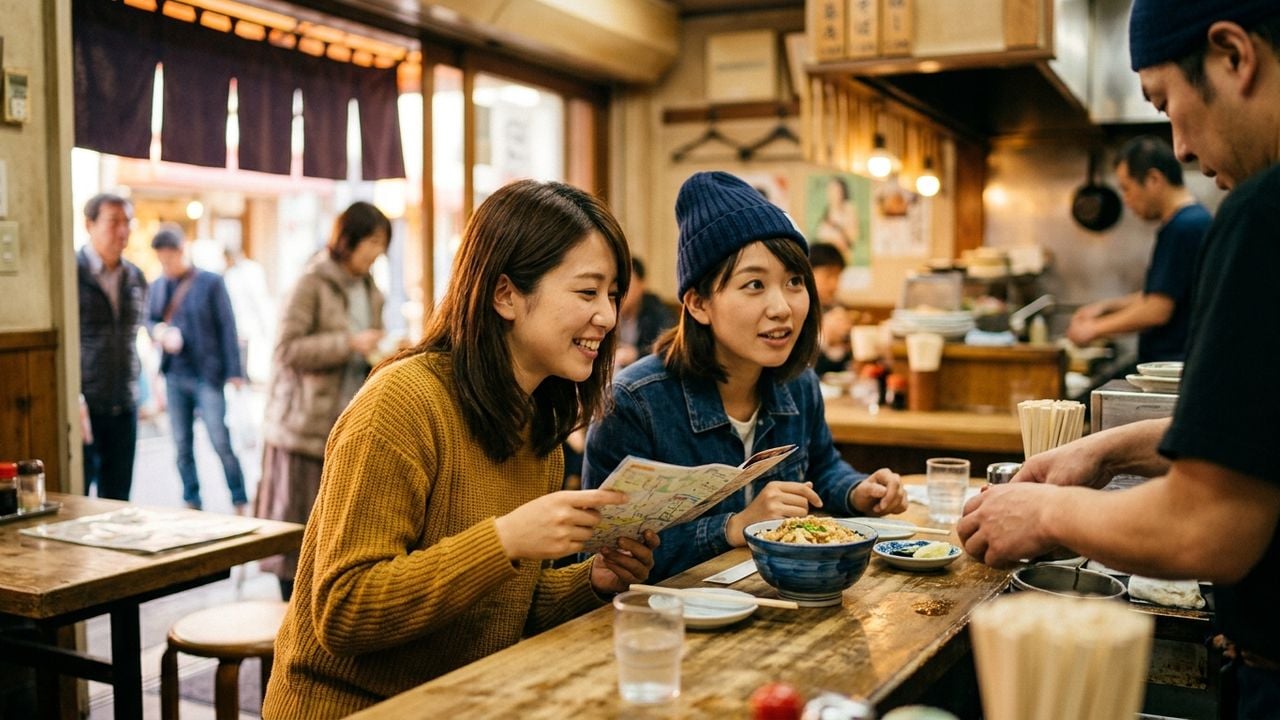
They had come to Nagoya for the first time — part of a longer Japan trip that started in Tokyo and ended in Kyoto. Nagoya was a last-minute addition, squeezed in for a single afternoon. They'd walked through Osu on a recommendation from a friend, wandered into our restaurant somewhat by chance, and ordered the Horai Wagyu bowl without quite knowing what it was.
Before leaving, they turned around and said: "I've had Kobe beef and Matsusaka beef, but Horai Wagyu at Itadaki was on another level."
What struck me wasn't the compliment — it was the look of genuine surprise. This was someone who had already eaten exceptionally well across Japan. And yet something here had still managed to catch them off guard.
That's the moment I want to talk about today.
Who This Is For
- ✅ First-time visitors to Nagoya who want at least one meal that becomes a lasting memory
- ✅ Travelers who have already tried Kobe or Matsusaka beef and are curious what comes next
- ✅ Anyone exploring Osu district and wondering where to have lunch
- ✅ Foodies who value a story and a concept, not just the name on the label
- ✅ Visitors passing through Nagoya en route to Shirakawa-go, Takayama, or Gifu
Why "Good Wagyu" Is No Longer Enough
When I first started thinking about what would become Itadaki, I kept coming back to the same question. Wagyu is beloved by travelers from around the world — and rightly so. But the conversation around it had become very predictable. Kobe. Matsusaka. Omi. These are extraordinary products, and I would never say otherwise. But they are also, by now, well-mapped territory. You know where to go. You know roughly what to expect.
What I wanted to create was something that couldn't be anticipated. Not a variation on a theme, but an entirely new category — one where the experience itself does the talking.
That's why I chose gyudon as the vehicle. Japan's beef bowl has always been the people's food — quick, filling, unassuming. No one had ever asked: what if you took the most humble format in Japanese dining and built it around one of the rarest ingredients in the country? What if the story behind the bowl was so specific, so rooted in a single place and a single farming philosophy, that you simply could not replicate it anywhere else?
That question became Itadaki. And at the center of it is Horai Wagyu — a Japanese black wagyu raised in the mountains of Okumikawa, in the deep interior of Aichi Prefecture. Only 300 heads are raised each year, across just 3 farms. The cattle are fed on sake lees from Horaisen Sora, a premium local sake. The result is a beef with a flavor profile unlike anything else in wagyu: light marbling, clean finish, a lean-meat depth that doesn't disappear under richness.
We limit it to 10 bowls a day. Not as a marketing device — but because that's what the supply honestly allows, and because freshness is non-negotiable.
You're reading this because you want more than a good meal — you want something that couldn't have happened anywhere else. Since the Horai Wagyu is limited to 10 bowls a day, our monthly business calendar is the first thing worth checking so you can plan around an actual open day. It's posted each month on our official Instagram.
How a First-Time Nagoya Visitor Ends Up Here
I've noticed a pattern over the years. First-time Nagoya visitors rarely plan to come to Itadaki before they arrive. They find us the way that guest last month found us — through Osu.
Osu is one of those neighborhoods that has a way of holding your attention longer than you planned. You come for Osu Kannon Temple, you stay for the shopping street, and then you keep walking because something keeps appearing around every corner. It's the kind of place where Osu becomes your favorite Nagoya neighborhood without you quite deciding that it would.
We're on the second floor of a building just a short walk from the temple. Not hidden, exactly — but not announced either. Guests tend to arrive mid-exploration, a little hungry, a little overwhelmed by the choices on the street below, and curious about what "Rare Wagyu Gyudon" actually means.
The answer unfolds in five steps. The raw Nagoya Cochin egg arrives on the side — white into the miso soup, yolk resting on top of the beef. You eat the wagyu first, in its purest form, before adding anything. Then the yolk. Then the condiments — pickled ginger, dried nori from Mikawa Bay, chirimen jako, the original 8-spice blend we developed in-house. Finally, wasabi, as a clean ending note.
The "rare" texture is the part that surprises people most. They assume there must be a trade-off — that rare-style preparation means some compromise on safety. In fact, our proprietary two-stage cooking technique heats every piece of beef to over 70°C at the core, fully meeting Japan's Ministry of Health, Labour and Welfare standards. The mouthfeel is rare. The preparation is precise.
✓ Key Takeaways
- Horai Wagyu — just 300 heads raised annually across 3 farms in Aichi Prefecture — is the kind of ingredient that defines a once-in-a-lifetime meal, not just a good one.
- Every element in the bowl, from the rice to the miso to the egg, is sourced from within Aichi Prefecture — making this a complete expression of a single region.
- The rare-style preparation is achieved through a proprietary two-stage cooking technique that fully meets Japanese food safety standards.
Now that you know the 10-bowl daily limit is real — and that Horai Wagyu sells out during peak hours — the next practical step is securing your bowl before your Nagoya day fills up. A Tabelog reservation takes just a few minutes and is the only way to guarantee your Horai Wagyu experience.
The Story You'll Carry Home
I've thought a lot about what makes a meal memorable long after the trip is over. It's rarely just the taste — though taste matters enormously. What makes a meal stick is the story attached to it. The specificity. The sense that this particular thing could only exist in this particular place.
Horai Wagyu is that kind of story. Out of approximately 500,000 wagyu raised in Japan each year, only 300 are Horai. Fed on the sake lees of a premium local sake, in mountain farms that have been doing this for generations, producing a beef that even experienced wagyu travelers haven't encountered before. That guest's reaction — "on another level" — wasn't hyperbole. It was the honest response of someone who thought they'd already mapped the territory, and discovered they hadn't.
"I've had Kobe beef and Matsusaka beef, but Horai Wagyu at Itadaki was on another level."
Guest from overseas, first-time Nagoya visitor
If you're building a Japan itinerary and you want one meal to be genuinely unrepeatable — not just excellent, but impossible to have again once you leave — that's the kind of experience worth seeking out. Not by price. By concept. By the specificity of the ingredient and the integrity of the craft behind it.
We're open for lunch only, Tuesday through Monday (with Wednesday, Thursday, and Friday as our regular days off), and on public holidays from 9:00 AM. The Horai Wagyu bowls go quickly on busy days — if you have your heart set on the Shinkoccho (our standard Horai Wagyu bowl, ¥2,700), a reservation through Tabelog is the most reliable way to secure one. If Horai Wagyu is unavailable or if you'd prefer to walk in, the Mikawa Beef Gyudon — also sourced entirely from Aichi, starting from ¥1,800 — is always on the menu.
We're four minutes on foot from Yabacho Station Exit 4 on the Meijo Subway Line, and easily combined with a morning at Osu Kannon Temple and a walk through the shopping street. If you're heading toward Shirakawa-go or Takayama the following day, Nagoya makes a natural base — and lunch here fits easily into that kind of itinerary, as others have found when they've used Osu as a midpoint between mountain journeys.
What "Itadakimasu" Really Means Here
The name Itadaki comes from "itadakimasu" — the expression of gratitude Japanese people say before every meal. Most travelers have heard it. But the full weight of the phrase goes deeper than a simple "let's eat." It carries respect for the farmers, the land, the craft, and the chain of care that brings food to the table.
That philosophy is why we source everything from within Aichi Prefecture. The rice, the miso, the pickles, the egg, the shiso, the seasoning, the beef — all of it comes from producers we know by name, farms we visit, people whose work we consider ourselves responsible for supporting. It started during the pandemic, when many of those farmers were struggling with unsold harvests. The idea that became Itadaki was built, in part, as an answer to that moment.
When you sit down here for the first time, without quite knowing what to expect, and you work through those five steps with a bowl that holds the story of a single mountain valley and the three farms that raise 300 cattle a year — that's what "itadakimasu" means in practice. Gratitude for something specific, made by someone, in a place that exists.
That's the experience first-time Nagoya visitors tend to carry home. Not just a great lunch. A story worth telling.
For our complete menu, access details, and store information, visit our official page at https://itadaki8.com/english/
If this is the kind of meal you came to Japan for — a story you'll still be telling a year from now, built around an ingredient that 300 head of cattle in three Aichi farms make possible each year — then the seat is there. Secure it through Tabelog before your Nagoya day is set.