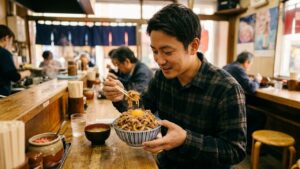
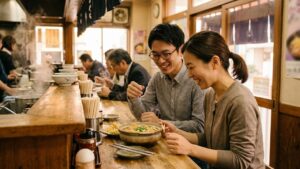
Bucket List Wagyu Experience: Why Itadaki Deserves the Trip to Japan
 gotowp
You've been planning this Japan trip for months, maybe years. You've mapped out the temples, the ryokan stays, the street food in Osaka. And somewhere near the top of that list is a meal you'll remember forever — not just because it tasted extraordinary, but because it couldn't have happened anywhere else on earth.
That's the feeling most travelers are chasing. And honestly, wagyu is where that feeling lives for a lot of people. But here's the thing: once you've had Kobe beef or Matsusaka beef at a fine dining restaurant in a major city, the next question becomes harder to answer. Where do you go from here? What's the wagyu experience that nobody else has had yet?
This article is built around that question. Specifically, it's about one ingredient — Horai Wagyu — that most people outside Japan have never heard of, and what it becomes when it's served the way it was always meant to be discovered.
Who This Is For
- ✅ Travelers who want at least one meal on their Japan trip that becomes a story, not just a memory
- ✅ Wagyu enthusiasts who have already tried the well-known brands and are ready to go deeper
- ✅ Repeat visitors to Japan who feel like they've "done" Tokyo and Kyoto and want something no guidebook has over-documented yet
- ✅ Anyone curious about what makes a single ingredient rare enough to justify a detour to Nagoya
- ✅ Foodies who believe the story behind a dish matters just as much as what's on the plate
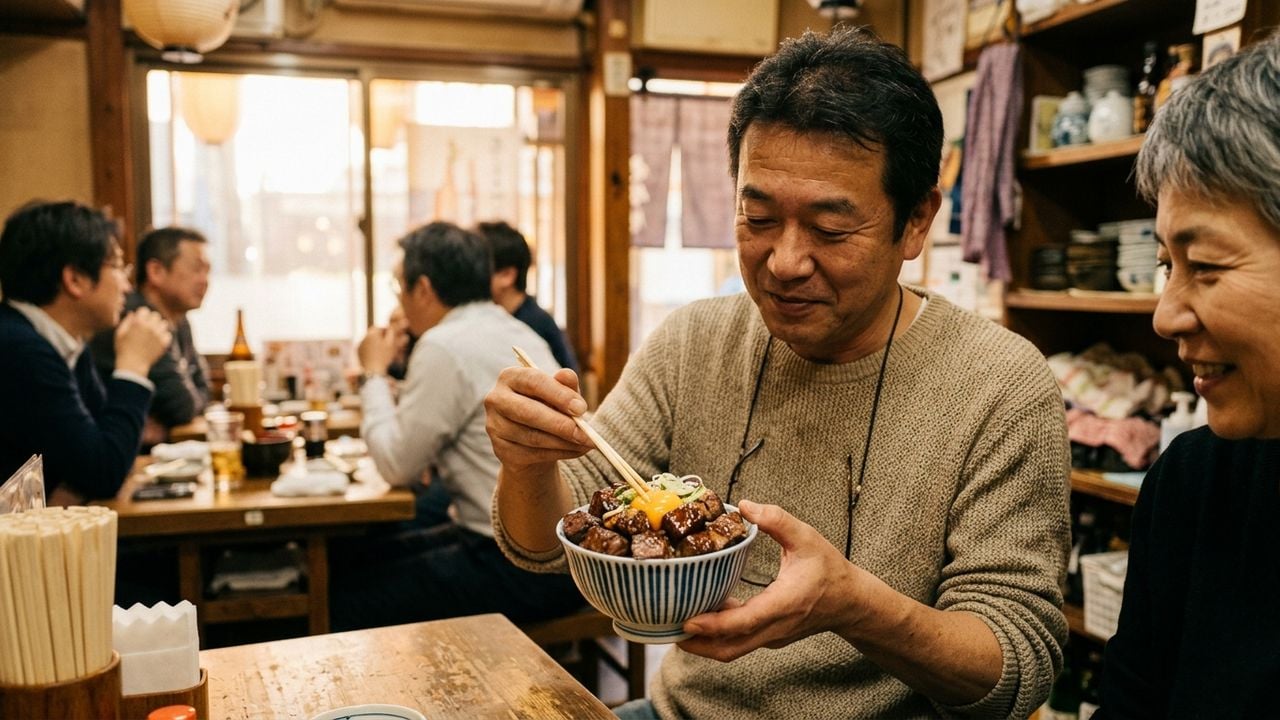
The Ingredient Most Wagyu Lovers Have Never Encountered
Japan raises approximately 500,000 wagyu cattle every year. Of those, only 300 are Horai Wagyu.
That's not a marketing number. It's a structural reality. Horai Wagyu is raised exclusively in the Okumikawa region of Aichi Prefecture, by just three farms in all of Japan. What makes these cattle distinct isn't only the lineage — it's the feed. The Okumikawa mountains are home to Horaisen, one of Japan's most respected sake breweries, and the cattle are raised on the lees of their premium "Sora" label. The result is a beef with a flavor profile unlike anything produced through conventional feeding: a balance of light marbling and genuine lean-meat character that wagyu connoisseurs find genuinely surprising.
Most wagyu in Japan is about richness, about fat. Horai Wagyu is about depth. The two are not the same experience.
If you want to understand why only 3 farms in Japan raise Horai Wagyu — and what that scarcity actually means for the flavor — that background will help you appreciate what you're eating before you even sit down.
You're reading about Horai Wagyu — 300 heads per year, 3 farms, a feeding method tied to a specific mountain sake brewery — and the natural next question is whether the restaurant will actually be open on the day you're planning to visit. Itadaki's schedule follows a fixed pattern of Saturday through Tuesday, but irregular closures do happen, and the monthly calendar lives in one place. Checking before you build your itinerary around it takes about thirty seconds.
What Happens When a Rare Ingredient Meets an Invented Culinary Concept
Horai Wagyu existed before Itadaki did. But it had never been served as a gyudon — a beef bowl — in rare-style preparation. That combination is what Masayuki Goto created when he opened Itadaki in Osu, Nagoya in April 2022.
The backstory matters here, because it shapes the dish itself. During the COVID-19 pandemic, Goto — who had been running MAX'S BAR since 2008 — watched small Aichi farms struggle with unsold harvests, producers he had sourced from directly for years. He didn't just want to help them survive the pandemic. He wanted to build something that would support them permanently. That meant designing a restaurant around the farms, not around a menu trend.
The result was the world's first Rare Wagyu Gyudon specialty restaurant. Gyudon — Japan's humble beef bowl — had never had a premium version. Every other donburi had one: katsudon, oyakodon, kaisendon. But gyudon was always the fast food option. Goto's question was simple and radical: why not?
The technical challenge was real. Serving wagyu in a rare-style preparation in a restaurant requires meeting Japan's Ministry of Health, Labour and Welfare food safety standards — which are among the strictest in the world. Goto developed a proprietary two-stage cooking technique that heats the beef to over 70°C at the core, fully satisfying those standards while preserving the texture that makes the experience distinctive. This isn't a workaround. It's a genuinely innovative culinary method, and it's the reason Itadaki has been featured on eight major Japanese television programs, including NHK.
To understand the full scope of what Itadaki is and why it's the original Rare Wagyu Gyudon, the founding story fills in details worth knowing before your visit.
✓ Key Takeaways
- Horai Wagyu is produced by only 3 farms in Japan, with just 300 heads raised annually — its rarity is structural, not manufactured
- Itadaki invented the Rare Wagyu Gyudon concept in 2022, combining a rare ingredient with an entirely new culinary category
- A proprietary two-stage cooking technique makes the rare-style preparation both distinctive and fully compliant with Japan's food safety standards
The Horai Wagyu bowl is limited to 10 per day — that number isn't a soft cap, it's the ceiling, and it reflects the reality of 300 heads raised annually across three farms. If you've decided this is the lunch you want on your Japan trip, the gap between "I'll figure it out when I arrive" and "I have a reservation" is exactly the size of a sold-out bowl. Tabelog reservation takes a few minutes and confirms your spot before the morning rush reaches the counter.
Every Element on the Bowl Has an Aichi Address
The wagyu is the centerpiece, but the dish doesn't stop there. Every ingredient served at Itadaki comes from Aichi Prefecture — not as a branding exercise, but as an extension of Goto's original commitment to the farmers he set out to support.
The rice is "Aichi no Kaori," a premium brand grown in the prefecture. The miso soup is made with Hatcho miso and soybean miso from Okazaki City — Aichi's most celebrated miso tradition. The pickles are Atsumi Ichō-zuke from the Atsumi Peninsula. The shiso leaves are Aikei No.1 variety from Toyohashi. The egg — served raw, separated tableside — is from a Nagoya Cochin chicken raised by Yamada Poultry Farm.
The sauce, which Itadaki calls the "magic sauce," is built on a white soy sauce base from Hekinan City, blended with wine. It's used both to briefly treat the beef and to simmer the onions — creating a flavor thread that runs through the entire bowl.
Complimentary condiments arrive at the table too: pickled ginger from Kimura Farm in Inazawa, chopped seaweed from Himakajima in Mikawa Bay, chirimen jako from Minamichita, and Itadaki's original 8-spice blend. The eating experience unfolds in five stages — from tasting the wagyu on its own, to mixing in the egg yolk, to layering condiments, to finishing with wasabi. Each step changes the dish. By the end, you've had what feels like several meals inside a single bowl.
This is what a once-in-a-lifetime culinary experience actually looks like: not a price point, but a level of intention and coherence that you can taste in every bite.
"The staff were welcoming and made us feel at home even without perfect Japanese."
— Guest review
For international visitors who sometimes feel uncertain about navigating a Japanese specialty restaurant — where to sit, what to order, how to eat the dish correctly — Itadaki has designed for that experience deliberately. The menu is available in English, Simplified Chinese, and Korean. The five-step eating guide is printed and visual. And as that guest noted, the welcome itself crosses whatever language gap remains.
Practical Realities: What to Know Before You Go
Itadaki is located in Osu, one of Nagoya's most layered neighborhoods — a place where a 400-year-old Buddhist temple and an anime shop share the same block. The restaurant is a four-minute walk from Yabacho Station Exit 4 on the Meijo Subway Line, and also walkable from Sakae Station, Kamimaezu Station, and Osu Kannon Station. From Nagoya Station, the total journey is around ten minutes by subway.
The restaurant operates on a lunch-only schedule: open Saturday, Sunday, Monday, and Tuesday from 11:00 to 15:00, with last order at 14:30. On public holidays (including September 22, a holiday in Japan), hours shift to 09:00–15:00. Wednesday, Thursday, and Friday are closed. Irregular closures do occur, so checking the monthly calendar on Itadaki's official Instagram before your visit is the most reliable way to confirm.
The Horai Wagyu is limited to 10 bowls per day. That number is fixed — not by policy preference, but by the supply reality of 300 heads per year. During September, with the city still energized from events connected to the 2026 Asian Games calendar, peak hours can see those bowls go early. Reservation via Tabelog is available and strongly recommended if Horai Wagyu is what you're coming for specifically.
For the Mikawa Beef version of the Rare Wagyu Gyudon — equally rare-style prepared, using Aichi's Mikawa region lean uchimomo cut — availability is not limited in the same way, and walk-ins are more reliably accommodated.
The restaurant has 18 seats, including sofa-style table seating and counter seats. The space is on the second floor, accessed by staircase. It's non-smoking throughout. Credit cards and digital payment methods including Apple Pay and Google Pay are accepted.
The Narrative You Carry Home
There's a reason the name "Itadaki" comes from "itadakimasu" — the expression of gratitude spoken before every meal in Japan. It's an acknowledgment that food is a gift: from the land, from the farmers, from everyone whose hands shaped what's now on the table. Goto built that philosophy into the restaurant's DNA from the first day.
When you sit down at Itadaki and hear that Horai Wagyu represents 300 out of 500,000 wagyu raised in Japan that year — fed on sake lees from a mountain brewery, raised by three farms, available nowhere else in Nagoya in this form — the dish stops being just a bowl of beef. It becomes a window into a very specific place, a very specific set of choices, and a genuinely rare moment.
That's what a bucket list meal actually is. Not the most expensive option. The one that couldn't have happened anywhere else, at any other time, prepared by anyone other than the person who invented it.
September in Nagoya is a compelling moment to visit — the heat of summer gives way to more comfortable temperatures, and the city carries the energy of a landmark year. If your itinerary already brings you through Nagoya, Osu is the kind of neighborhood that rewards a slow afternoon. And if you're building your Japan food itinerary and wondering whether a detour to Nagoya justifies itself on culinary grounds alone, the answer that Itadaki gives is a specific one: yes, if you want a lunch that becomes a story.
For our complete menu, access details, and store information, visit our official page at https://itadaki8.com/english/
You came to this article looking for a once-in-a-lifetime culinary experience — the kind built on genuine rarity and a story worth telling, not a price tag. Itadaki's Horai Wagyu bowl is limited to 10 each day, and September's energy in Nagoya means those bowls move quickly. Securing your place via Tabelog is the one step between reading about this experience and actually having it.