Anime Fan Osu vs Sakae Nagoya: Where to Really Eat
 gotowp
You've done your research. You know Nagoya has two neighborhoods worth exploring as an anime fan or subculture enthusiast: Osu and Sakae. You've bookmarked both on Google Maps. And now you're standing at Nagoya Station wondering: which one first? How long does each take? And — crucially — where do you actually eat?
Or maybe a different problem sounds familiar. You've arrived in Osu, found the shopping street, and suddenly realized it's a labyrinth. Every arcade and alley looks the same. You thought you were heading toward that restaurant you saved, but somehow you've circled past the same vintage electronics stall twice. The 2nd-floor places especially — easy to walk right past without ever knowing they were there.
Both neighborhoods offer something genuinely worth your time. But they're not the same experience, and knowing the difference changes how you plan your day.
Who This Is For
- ✅ Anime fans and subculture enthusiasts visiting Nagoya for the first time — deciding between Osu and Sakae
- ✅ World Cosplay Summit participants or visitors exploring the Osu district and looking for a lunch spot between events
- ✅ Travelers who've gotten turned around in Osu's shopping street and want clear, walkable directions to a real destination
- ✅ Anyone who saved a 2nd-floor Osu restaurant on Google Maps and isn't sure how to actually find it
- ✅ Foodies who want their Nagoya lunch to match the energy of the neighborhood they're exploring
Osu vs. Sakae: Two Neighborhoods, Two Completely Different Energies
Let's put it plainly. Sakae is Nagoya's commercial center — wide boulevards, department stores, chain restaurants, and the kind of polished energy you'd expect from a city's main entertainment district. It's easy to navigate, well-signposted in English, and ideal if you want a predictable, comfortable afternoon. The underground shopping malls are climate-controlled and connected. You won't get lost.
Osu is the opposite of all that — and that's exactly why people love it.
Osu's covered shopping arcade stretches through over 1,200 shops with more than 400 years of history behind them. Within a single block, you might pass a Buddhist temple offering incense, a retro game shop selling Famicom cartridges, a maid café playing J-pop through open doors, a Taiwanese bun stand, and a vintage kimono dealer. There's no clean grid here. The streets branch and loop unpredictably, and that sense of discovery — occasionally tipping into mild disorientation — is part of the experience.
For anime fans and cosplay enthusiasts specifically, Osu wins on density. It has Nagoya's highest concentration of anime merchandise shops, retro electronics, cosplay supply stores, and subculture-friendly cafés. It's also the main hub for the World Cosplay Summit, one of the world's largest cosplay events, which draws participants from dozens of countries every summer. If you're visiting Nagoya for that kind of culture, Osu is your neighborhood.
Sakae has its own merits — larger flagship stores, more international fashion brands, and easier access to Nagoya's art museum district — but for the subculture deep-dive, Osu is where to go first.
You're weighing Osu against Sakae and still not sure which days Itadaki is actually open during your trip. The monthly business calendar — irregular closures included — is posted there directly. Takes five seconds to check before you build your day around it.
The Real Challenge: Getting Around Osu Without Getting Lost
Here's what travel guides often skip: Osu is genuinely confusing if you don't have a clear plan. The covered arcade runs roughly north-to-south and east-to-west, but it forks, narrows, and occasionally dead-ends into a side street that dumps you somewhere unexpected. Google Maps works reasonably well on the main roads but becomes unreliable inside the arcade passages — it may show you 200 meters from your destination while you're still trying to figure out which covered entrance connects to which open street.
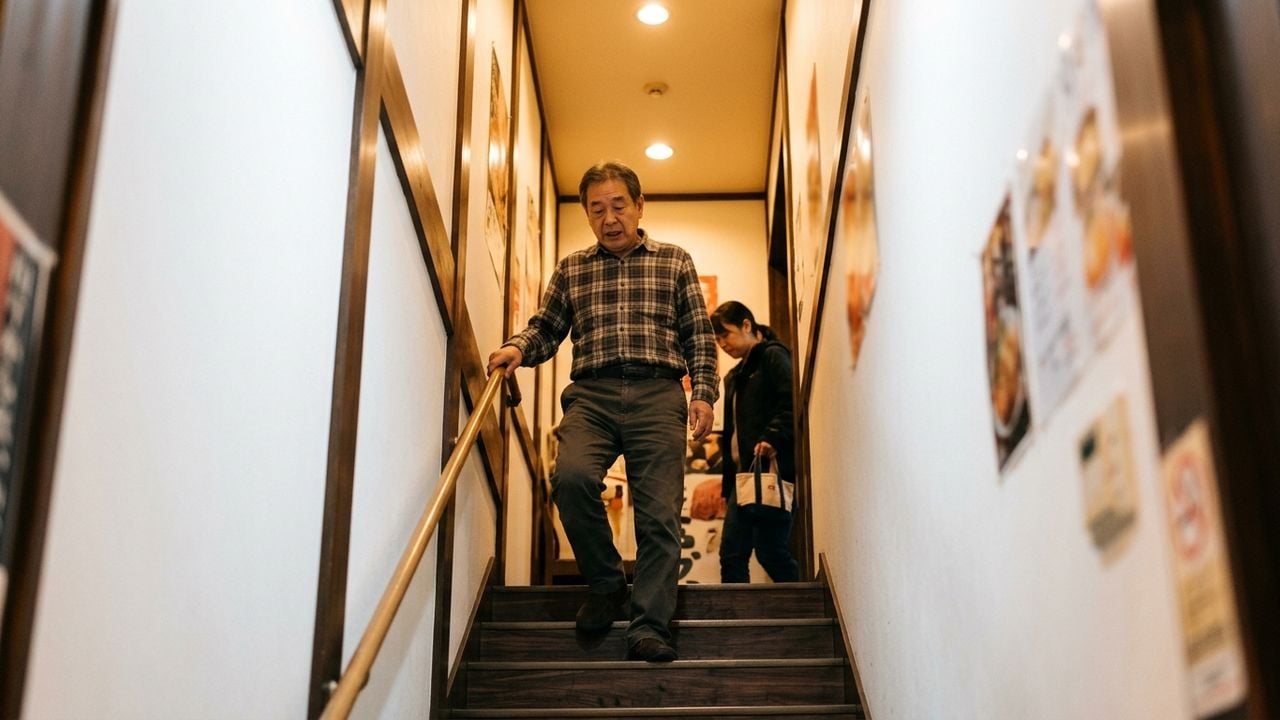
The other classic Osu problem: 2nd-floor restaurants. Many of Osu's best lunch spots are up a staircase, with only a small sign at street level to indicate they exist. If you don't know exactly what you're looking for and where the entrance is, you'll walk past.
The practical solution is to identify a single landmark to orient yourself — Osu Kannon Temple is the most reliable. It anchors the northwest corner of the shopping district and is impossible to miss. From there, the main covered arcade runs south. Most destinations in Osu are expressible as "X minutes from Osu Kannon on foot."
The subway, meanwhile, gives you four different entry points into the district: Osu Kannon Station (Tsurumai Line), Kamimaezu Station (Tsurumai and Meijo Lines), Yabacho Station (Meijo Line), and Sakae Station (Higashiyama and Meijo Lines) is also walkable to Osu's eastern edge. Each puts you in a slightly different part of the neighborhood, so it's worth choosing your entry point based on your first destination.
✓ Key Takeaways
- Osu is the better choice for anime fans, cosplay culture, and subculture shopping — Sakae suits those wanting polished commercial convenience
- Osu's labyrinthine layout rewards preparation: use Osu Kannon Temple as your anchor and choose your subway entrance deliberately
- 2nd-floor restaurants in Osu require knowing the street-level entrance in advance — walking past is extremely easy
Horai Wagyu is limited to 10 bowls per day, and Itadaki's seating tops out at 18 guests — which means arriving without a reservation during peak hours is a real gamble. Tabelog online reservation locks in your seat so the walk from Yabacho Exit 4 ends with a bowl waiting, not a full house.
Finding Itadaki in Osu: A Step-by-Step Walk from the Station
Itadaki — Nagoya's original Rare Wagyu Gyudon specialty restaurant — sits on the 2nd floor of a building at 4-1-20 Osu, Naka-ku. It's exactly the kind of place that fits Osu perfectly: a small, dedicated specialist with something genuinely unique to offer, tucked up a staircase that first-timers can easily miss.
The easiest way to arrive:
- From Nagoya Station: Take the Higashiyama Line to Sakae (about 5 minutes), then transfer to the Meijo Line and ride one stop to Yabacho Station. Total time: approximately 10 minutes. Use Exit 4 and walk 4 minutes on foot.
- From Sakae Station: Walk south through the Osu area — around 10–12 minutes on foot, or one subway stop on the Meijo Line to Yabacho.
- From Osu Kannon Station or Kamimaezu Station: Both are within walking distance; Yabacho Exit 4 remains the most direct approach.
At street level, look for the sign that reads 「元祖レア牛丼 頂」 (pronounced: Ganso Rea Gyudon Itadaki). Once you spot it, take the stairs to the 2nd floor. That's the whole trick — knowing the sign to look for before you arrive means you won't walk past it.
A direct Google Maps link is available on Itadaki's official English page to make navigation as straightforward as possible.
Itadaki is open for lunch only (11:00–15:00) on Saturdays, Sundays, Mondays, and Tuesdays. On public holidays, service begins at 9:00. There's no dinner service. Since the restaurant runs a limited schedule, it's worth checking the monthly business calendar on Instagram before you go, especially if you're planning around a specific date during your Japan trip.
What Waits at the Top of Those Stairs
Once you're seated — comfortable sofa seating, 18 guests at most — the logic of Itadaki becomes clear. Founder Masayuki Goto built this restaurant around a single, carefully considered question: why does gyudon, Japan's beloved beef bowl, not have a premium version? Every other donburi category does. Katsudon, oyakodon, kaisendon — all have elevated forms. Gyudon was always chain food.
Goto's answer was to source Horai Wagyu directly from farms in Aichi's Okumikawa region — a Japanese black wagyu with only 300 heads raised annually across just 3 farms in Japan, fed on sake lees from the premium local sake Horaisen Sora — and prepare it using a proprietary two-stage cooking technique that meets Japan's Ministry of Health, Labour and Welfare food safety standards while delivering a rare-style mouthfeel unlike anything a fast-food chain could offer.
Every ingredient comes from Aichi Prefecture. The rice. The egg (Nagoya Cochin, from Yamada Poultry Farm). The white soy sauce base for the "magic sauce" (Hekinan City). The pickles (Atsumi Peninsula). The shiso leaves (Toyohashi). The miso soup (Hatcho miso from Okazaki). It's a bowl built to tell you exactly where you are.
The dish also comes with a five-step guide to eating it — printed on the menu in English — that walks you through separating the egg, mixing the yolk, adding condiments in sequence, and finishing with wasabi. One guest put it simply:
"The five-step eating guide made the dish even more enjoyable and memorable."
That guide isn't just a novelty. It's Goto's way of turning a lunch into something you actually remember — and something worth explaining to the people you're traveling with, or to friends back home.
For visitors exploring Osu's anime and subculture scene, Itadaki makes a natural lunch anchor. It's walkable from the main shopping arcade, open during peak sightseeing hours, and completely different from anything else in the neighborhood. You can spend the morning in the shops, sit down for something genuinely special at lunch, and head back out for the afternoon.
If you're also curious how cosplay visitors eat lunch during World Cosplay Summit Nagoya, we've covered that in detail separately.
Osu or Sakae? Here's the Honest Answer
If you're an anime fan or cosplay enthusiast visiting Nagoya, spend your primary time in Osu. The density of subculture shops, the atmosphere of the covered arcade, and the proximity to Osu Kannon Temple make it a richer experience than Sakae for your specific interests.
Use Sakae for what it does best: a polished evening out, department store shopping, or as a transit hub between neighborhoods. It's not a consolation prize — it's just a different tool for a different purpose.
And when you're ready for lunch in Osu, come in through Yabacho Station Exit 4, look for the sign that reads 「元祖レア牛丼 頂」, and take the stairs.
For our complete menu, access details, and store information, visit our official page at https://itadaki8.com/english/
You now know the neighborhood, the entrance sign to look for, and exactly which exit to use — the only thing left is making sure the seat is yours. Reservation is open on Tabelog; Horai Wagyu sells out daily and there's no dinner service to fall back on.