10 Osu Dining Facts Every WCS Participant Should Know
 gotowp
September in Nagoya hits differently. The streets of Osu are buzzing — costumes everywhere, laughter spilling out of arcade doorways, the smell of takoyaki mixing with temple incense. If you are here for the World Cosplay Summit, you already know that Osu is unlike anywhere else on the planet. But here is something that surprises a lot of WCS participants: this neighbourhood that feels built for spectacle is also one of the most quietly extraordinary places in Japan to eat.
Not extraordinary in a Michelin-star, hushed-dining-room way. Extraordinary in the way that matters to travellers who want to carry a story home — a meal they will still be talking about years from now. If that is the kind of experience you are looking for between costume check-ins and stage events, these 10 facts about dining in Osu are written for you.
Who This Is For
- ✅ WCS participants and Osu visitors who want at least one meal during their Japan trip that goes beyond good food into genuine, unforgettable experience
- ✅ Wagyu enthusiasts curious about rare Japanese beef beyond the well-known Kobe and Matsusaka brands
- ✅ Travellers who value the story behind a dish as much as the taste itself
- ✅ Anyone wondering how to plan a special lunch around a packed WCS schedule without the stress of last-minute decisions
- ✅ Solo diners, couples, and small groups looking for a relaxed, welcoming spot where costumes are entirely at home
1. Osu Is Not Just a Subculture District — It Has Real Culinary Depth
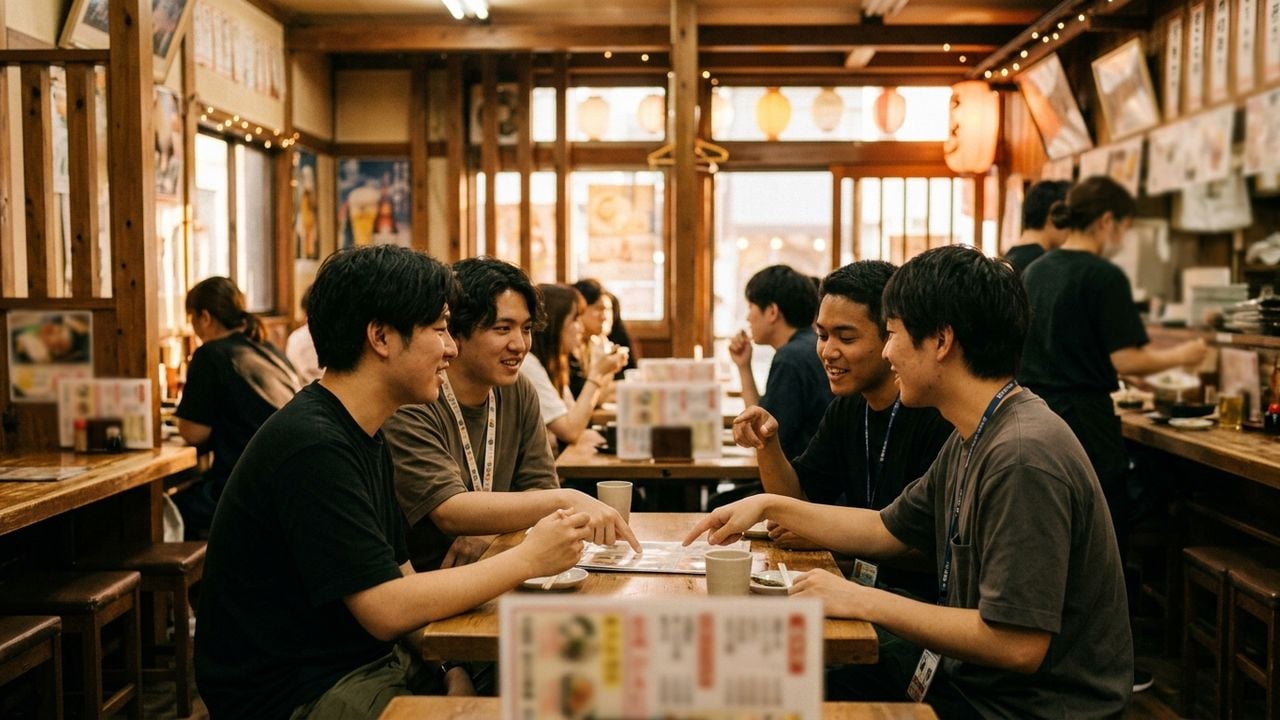
Most international visitors discover Osu through its anime shops, cosplay cafés, and Osu Kannon Temple. What the travel brochures mention less often is that this district has a food culture with more than 400 years of history woven underneath it. The Osu Shopping Street did not grow into 1,200 shops by accident — generations of merchants, craftspeople, and cooks built something genuine here. When you wander off the main covered arcade, you find places that are not performing authenticity — they simply are authentic.
WCSのスケジュールを組みながら、どの日に動けるか確認したいという方は多いはずです。Itadakiの営業日はInstagramで毎月公開されており、9月の予定もそこで確認できます。カレンダーを見るだけなので、数秒あれば十分です。
2. The Neighbourhood Has Its Own Wagyu Story — and It Is Not the One You Know
Ask most travellers what Japanese beef they want to try and the answer is predictable: Kobe, or Matsusaka. Those are extraordinary. But there is a wagyu story unfolding in Aichi Prefecture that most visitors — even repeat Japan travellers — have never heard. It involves a breed called Horai Wagyu, raised in Okumikawa, fed on sake lees from a renowned local brewery called Horaisen Sora, and produced by just three farms in Japan with only 300 heads raised annually. Out of approximately 500,000 wagyu cattle in Japan, 300 is not a marketing number — it is a fact that shapes every bowl.
This is the ingredient at the centre of Itadaki's Rare Wagyu Gyudon, and it is the reason guests who have already eaten Kobe beef and Matsusaka beef walk in looking for something different and walk out speechless. One guest put it simply: 『The rare wagyu was unlike anything I've ever tasted — a life-changing culinary experience.』 That is not the kind of thing people say about a meal they could have had anywhere.
3. 『Rare』 Does Not Mean Unsafe — It Means Thoughtfully Engineered
A common hesitation among first-time visitors is the phrase 『rare wagyu.』 The dish is designed to deliver a silky, rare-style mouthfeel — and food safety questions are completely fair. Here is what matters: Itadaki's two-stage cooking technique heats the beef to over 70°C at the core, fully meeting Japan's Ministry of Health, Labour and Welfare standards. The texture is the result of precision, not risk. Japan's food safety regulations are among the strictest in the world, and this dish was developed specifically to work within them.
Masayuki Goto, the founder, holds a Certified Food Sanitation Supervisor qualification and has spent 18 years in the industry. He did not create a shortcut — he created a technique. That distinction matters.
✓ Key Takeaways
- Osu's food culture runs far deeper than its subculture reputation — it rewards curious visitors who look beyond the obvious
- Horai Wagyu is among Japan's rarest wagyu, with only 300 heads raised annually — an ingredient that creates a genuinely unrepeatable experience
- The 『rare』 texture at Itadaki is achieved through a proprietary two-stage cooking method that fully meets Japanese food safety standards
Horai Wagyuが1日10杯限定と分かった今、WCSの週末に確実に食べるには予約が現実的な選択肢です。TabelogのオンラインからItadakiのRare Wagyu Gyudon体験を予約できます。当日の混雑を気にせず、ステージイベントの前後に安心してランチを組み込めます。
4. The Gyudon Was Once Japan's Most Overlooked Canvas for Premium Cooking
Here is a culinary observation that Goto found himself unable to ignore: katsudon has a premium version. Oyakodon has a premium version. Kaisendon — the seafood bowl — has premium versions served at high-end restaurants across Japan. Only gyudon, the humble beef bowl, had no equivalent. It existed entirely in the world of convenience chains and fast-food counters.
Goto asked a simple question that became the entire premise of Itadaki: why not create the world's first premium gyudon — using rare wagyu, a rare-style preparation, and ingredients sourced entirely from Aichi Prefecture? That question, asked during the pandemic years when the bars he ran were restricted from full operation, led him to open Itadaki in Osu in April 2022. The concept has since been featured on eight major Japanese TV programmes, including NHK, the national public broadcaster.
The name 『Itadaki』 comes from 『itadakimasu』 — the expression of gratitude spoken before every Japanese meal. It is not a brand strategy. It is a philosophy.
5. Everything on the Table Is from Aichi — and That Matters More Than It Sounds
When Itadaki says 『everything from Aichi,』 they mean it precisely. The rice is Aichi no Kaori, grown in Aichi Prefecture. The miso soup uses Hatcho miso from Okazaki City. The pickles are traditional Atsumi Ichō-zuke from the Atsumi Peninsula. The shiso leaves are Aikei No.1 from Toyohashi. The egg is a Nagoya Cochin egg from Yamada Poultry Farm. Even the white soy sauce at the base of the 『magic sauce』 comes from Hekinan City.
For WCS participants who travel to Japan to experience something they genuinely cannot find at home, this kind of hyper-local coherence is rare. Most restaurants draw ingredients from wherever the best option happens to be. Itadaki drew a circle around one prefecture and committed to it — and the result is a bowl that tastes unmistakably of one place.
『I've had Kobe beef and Matsusaka beef, but Horai Wagyu at Itadaki was on another level.』
A guest who made a special trip to Nagoya specifically for this experience
6. The Five-Step Eating Guide Turns Lunch Into a Journey
Itadaki provides all guests with a five-step guide — available in English — that walks you through how to experience the dish. It begins by separating the raw Nagoya Cochin egg, adding the white to the miso soup and placing the yolk atop the beef. From there, you taste the wagyu in its purest form first, then incorporate the yolk for richness, then explore the complimentary condiments (pickled ginger, dried nori from Mikawa Bay, chirimen jako, the original eight-spice blend), and finally finish with wasabi for a clean close.
This is not a gimmick. It is a framework for noticing — and it is why guests who follow it describe the experience as a 『culinary journey』 rather than just a meal. For WCS participants accustomed to performances that reward attention, it resonates in a familiar way.
If you are curious about how Osu caters to the full range of WCS visitors — including those looking for anime-friendly dining alongside more contemplative food experiences — this guide to otaku-friendly dining near WCS venues in Osu covers the wider picture well.
7. Horai Wagyu Is Limited to 10 Bowls Per Day — Plan Accordingly
Because Horai Wagyu is produced in such small quantities, Itadaki can only serve 10 bowls of it each day. On busy WCS weekends, those bowls go quickly. Reservation via Tabelog online is the recommended approach — walk-ins are welcome but availability of the Horai Wagyu cannot be guaranteed.
If the Horai Wagyu has sold out on the day you visit, Itadaki's Mikawa Beef Rare Gyudon — starting from ¥1,800 — uses Aichi's Mikawa Beef and the same proprietary rare preparation. It is a different story, not a lesser one.
8. Cosplay and Kimono Guests Are Genuinely Welcome
Itadaki is located inside the Osu district. The staff have welcomed guests in full cosplay, guests in kimono rentals, and guests in every configuration of travel attire. There is no dress code, no raised eyebrow, no moment of hesitation. The sofa-style seating — 18 seats across counter seats, a five-person sofa table, and smaller sofa tables — is comfortable for guests in elaborate costumes who need room to settle in. This is not a compromise — it is simply how the restaurant works.
For anyone thinking about how the broader Osu district handles the intersection of cosplay culture and food, this comparison of Osu cosplay lunch culture versus Akihabara anime dining offers a useful perspective.
9. Getting There From WCS Venues Is Straightforward
Itadaki is located at 4-1-20 Osu, 2nd floor, Naka-ku, Nagoya. The nearest station is Yabacho (Meijo Subway Line, Exit 4) — a four-minute walk. Osu Kannon Station and Kamimaezu Station are also within walking distance, which makes the restaurant accessible from most WCS event locations in the central Nagoya area. From Nagoya Station, the subway journey takes approximately 10 minutes via the Higashiyama Line to Sakae, then a transfer to the Meijo Line.
Opening hours during WCS weekend (a Saturday and Sunday): 11:00 to 15:00, with last order at 14:30. Itadaki operates on a published monthly schedule — always confirm on their official Instagram before you visit, as irregular closures can apply.
10. The Meal You Will Still Be Talking About on the Flight Home
Japan trips are full of extraordinary moments — temples, landscapes, performances, markets. But the meals that stay with you are rarely the ones you stumbled into without intention. They are the ones where every element was considered: the ingredient with a story, the technique that took years to develop, the bowl that could only exist in this one city.
WCS brings thousands of people to Nagoya who already understand what it means to commit to something with precision and passion. Itadaki was built on exactly that kind of commitment — to one prefecture, one culinary concept, and one very rare animal that most of the world has never heard of.
That is the kind of lunch that becomes the answer when someone back home asks: 『What was the best thing you ate in Japan?』
For our complete menu, access details, and store information, visit our official page at https://itadaki8.com/english/
『一生に一度の食体験』をJapan旅行の中に作りたいという気持ち、この記事で十分伝わったと思います。Horai Wagyuは1日10杯、WCS期間中は特に早い時間に売り切れることがあります。Tabelog予約で席とHorai Wagyu枠を確保してから、Osuの街を楽しんでください。