Comparing Nagoya Lunch Spots for Asian Games 2026 Spectators
 gotowp
You've secured your tickets for the 2026 Asian Games in Nagoya. You've mapped out the venues, planned the transport routes, and figured out roughly when your sessions end. Then comes the question that every spectator eventually faces between events: Where do we actually eat? Not just somewhere convenient — somewhere genuinely worth the detour. Somewhere you'll still be talking about on the flight home.
This is especially true if you've been to Japan before. Chain restaurants and hotel buffets feel like a step backward when you know how extraordinary Japanese food culture can be at the neighborhood level. For repeat visitors from Hong Kong, Taiwan, and beyond, the Asian Games is also a rare opportunity to explore Nagoya — a city that doesn't always make it onto the first-timer's itinerary, but increasingly earns the deepest loyalty from travelers who finally make time for it.
So let's look at how different types of spectators are actually approaching lunch during the Games — and why one district in particular keeps coming up as the place locals point to when asked, "Where do you eat?"
Who This Is For
- ✅ Asian Games 2026 spectators with a free morning or afternoon and a desire to eat somewhere genuinely local
- ✅ Repeat visitors to Japan who want a discovery they can claim as their own, not a guidebook recommendation
- ✅ Travelers from Hong Kong, Taiwan, Singapore, or Korea who already know Japan well and are hunting for a less-charted experience
- ✅ Sports fans who love food culture and want their Nagoya trip to be memorable beyond the arena
- ✅ Anyone wondering whether there's a wagyu experience in Nagoya worth planning a lunch around
The Spectator Who Sticks to the Tourist Trail — and What They Miss
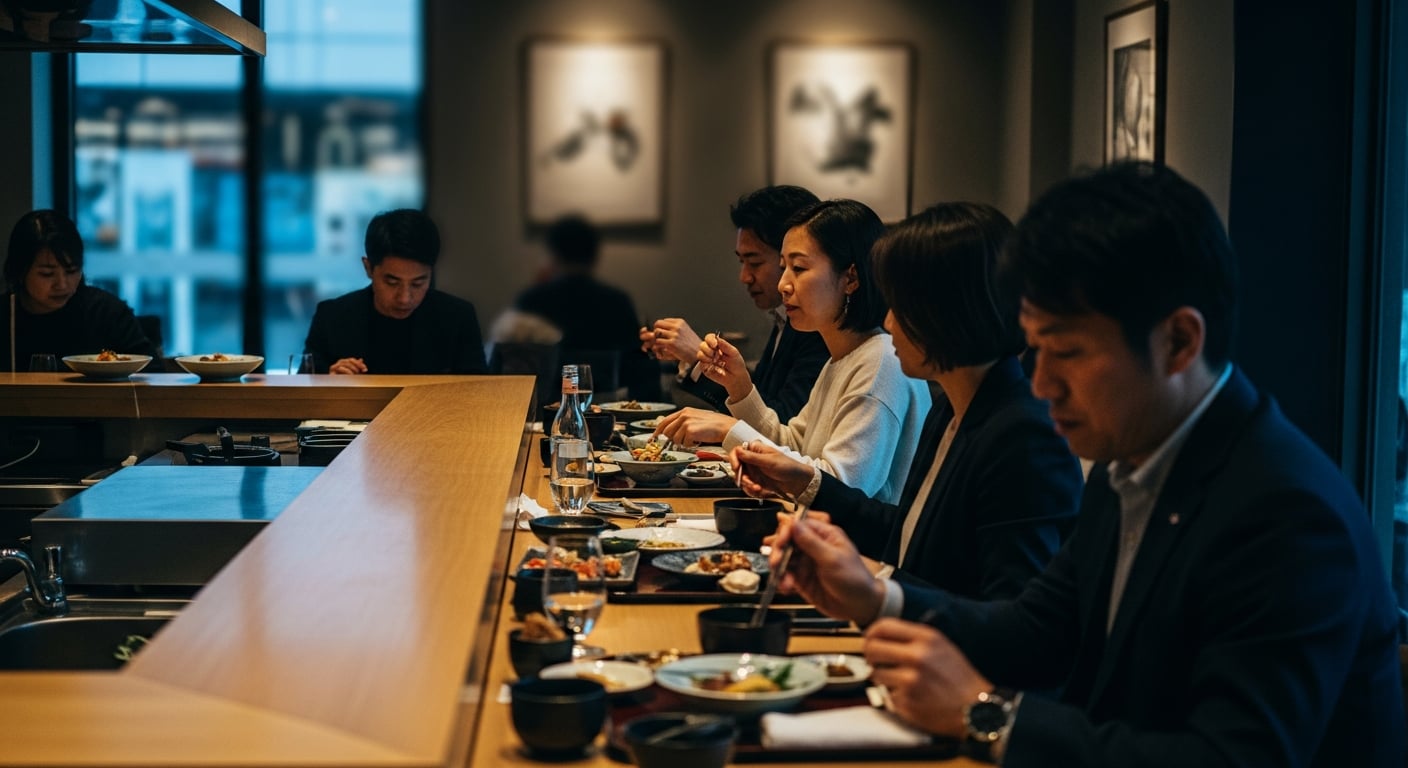
Picture this: a group of four travelers arriving at Nagoya Station after the morning session at IG Arena. They pull up a map, search "lunch near Nagoya Station," and end up at a conveyor-belt sushi chain or a department store food floor. The food is perfectly fine. But by the time they're back at the arena for the afternoon session, they're already struggling to recall what they ate.
This isn't a judgment — it's a pattern. When you're navigating a major international sporting event in an unfamiliar city, the path of least resistance leads to safe, well-signposted options. The problem is that Nagoya's most interesting food experiences tend to be a few stops away from the main tourist infrastructure, in neighborhoods that don't announce themselves with English-language banners.
The travelers who come back from the 2026 Games with a food story worth telling are the ones who used that gap between sessions differently — the ones who took the Meijo Line two stops east and found themselves in Osu.
Why Osu District Becomes the Insider's Answer
Osu is a 10-minute subway ride from IG Arena. It's one of Nagoya's oldest and most layered neighborhoods — a place where a 400-year-old Buddhist temple sits at the center of a 1,200-shop covered shopping arcade, surrounded by vintage electronics stalls, cosplay cafés, Taiwanese street food vendors, and specialty restaurants that have been quietly perfecting a single dish for years.
It's rarely the first place that appears in mainstream English-language travel guides. That's exactly why locals point to it. And during the Asian Games period, when the more obvious lunch spots near major stations fill up quickly, Osu offers something most crowded areas cannot: a neighborhood rhythm that hasn't been rearranged for an international event.
The spectators who discover Osu between sessions often describe the same experience — they came for the food and left feeling like they'd found a version of Nagoya that the crowds haven't touched yet. That sense of personal discovery is difficult to manufacture. In Osu, it's simply how the neighborhood operates.
✓ Key Takeaways
- Spectators who venture beyond Nagoya Station and major tourist hubs consistently find more memorable lunch experiences during the Games period.
- Osu district — a 10-minute subway ride from IG Arena — offers an authentic local food scene that most international guidebooks haven't fully mapped yet.
- The gap between morning and afternoon sessions is the ideal window for a purposeful, unhurried lunch in a neighborhood where locals genuinely eat.
A Case Study: The Repeat Japan Visitor Looking for One More First
Consider the traveler who has visited Japan eight times. They've done Kobe beef in Kobe. They've had Matsusaka beef in Mie. They can name the best ramen shops in three cities. When they arrive in Nagoya for the Asian Games, they're not searching for "best wagyu in Japan." They're searching for something they genuinely haven't seen before — a concept, not just an ingredient.
That kind of traveler tends to find Itadaki.
Itadaki — The Original Rare Wagyu Gyudon — is a specialty lunch restaurant on the 2nd floor of a building in Osu, four minutes on foot from Yabacho Station Exit 4. It was founded in 2022 by Masayuki Goto, who spent years running MAX'S BAR before asking a question that seems obvious only in hindsight: why does every Japanese rice bowl have a premium version except gyudon? Katsudon has its high-end variants. Kaisendon can be a luxurious experience. But the beef bowl — gyudon — had been so thoroughly claimed by fast-food chains that no one had thought to reinvent it from the ground up.
Goto did. Using only ingredients sourced from Aichi Prefecture, including Horai Wagyu — a Japanese black wagyu produced by just three farms with approximately 300 heads raised annually — he developed a proprietary two-stage cooking technique that delivers a rare-style texture while fully meeting Japan's Ministry of Health, Labour and Welfare food safety standards. The result is a dish that doesn't exist anywhere else in quite this form. That's not marketing language. It's simply the description of what took years of sourcing partnerships and culinary development to produce.
The repeat Japan visitor who finds this restaurant doesn't just have a great lunch. They have a story that no one else in their travel circle has told yet.
"The staff were welcoming and made us feel at home even without perfect Japanese."
— Guest review
That experience — of feeling genuinely received, not just processed — is harder to find than a good dish. It's also what turns a single lunch into a recommendation you carry home and pass on.
Practical Comparison: Different Spectator Scenarios at Lunchtime
Let's compare how three different spectator profiles might approach lunch during a Games day, and what each scenario looks like in practice.
Scenario A: The group arriving from overseas for the first time, tight schedule. They have 90 minutes between sessions. They stay near the arena, grab something from a convenience store or a busy restaurant near the station. Efficient. Forgettable. They don't regret it — but they don't remember it either.
Scenario B: The seasoned Japan traveler with a morning session and an open afternoon. They take the subway to Yabacho, walk four minutes to Osu, arrive at Itadaki just as it opens at 11:00. They order the Horai Wagyu Rare Gyudon — limited to 10 bowls per day — with the Teppen beef plate on the side and a Chita Highball. They follow the five-step eating guide printed on the multilingual menu (available in English, Simplified Chinese, and Korean), work through each phase of the dish slowly, and finish before noon. They're back at the arena with an hour to spare and a memory that will outlast the scoreboard.
Scenario C: The family group with a mix of ages, looking for something different but not adventurous to the point of anxiety. They arrive at Itadaki not knowing quite what to expect. The sofa-style table seating is comfortable. The menu has photos and clear English explanations. A staff member smiles and gestures toward the illustrated eating guide. Nobody needs to navigate a language barrier with any urgency. The parents order the Horai Wagyu; the children share a Mikawa Beef Rare Gyudon — always available for walk-in guests — and discover that a bowl of rice and gently prepared wagyu is not intimidating at all. They leave feeling like they found something.
These aren't invented scenarios. They're composites of the kinds of guests Itadaki actually receives — and the reason the restaurant has been featured on eight major Japanese TV programs, including NHK, is precisely because what happens here is difficult to categorize and impossible to replicate at scale.
Planning Your Lunch Around the Games: What to Know in Advance
Itadaki is open for lunch only — Tuesday, Saturday, Sunday, and Monday, from 11:00 to 15:00 (last order 30 minutes before closing). On public holidays, service begins at 09:00. The restaurant operates on a limited schedule, so checking the monthly business calendar on Instagram before your trip is essential.
For the Horai Wagyu — strictly 10 bowls per day — advance reservation via Tabelog Online is strongly recommended, especially during the Asian Games period when visitor numbers across Nagoya will be elevated. When reserving, copy and paste the following into the notes field to request the Horai Wagyu: 鳳来牛希望. Reservations can be made in English on the Tabelog platform.
Walk-in guests who arrive right at opening have the best chance of securing a bowl without a reservation. The Mikawa Beef Rare Gyudon — prepared with the same two-stage cooking technique, equally precise in execution — is always available and never requires advance booking.
Getting there from the main Games venues is straightforward. From IG Arena, take the Meijo Line toward Yabacho and exit at Exit 4. The walk to Itadaki is four minutes. Look for the sign reading 元祖レア牛丼 頂 at street level and take the stairs to the second floor.
The Asian Games brings an extraordinary concentration of people who care deeply about both sport and discovery to Nagoya. Most of them will eat well. A smaller number will eat somewhere they couldn't have found on a first visit, at a restaurant that was built on the belief that even the humblest Japanese comfort food deserves to be taken seriously. That distinction — between eating well and eating somewhere — is what Osu, and Itadaki within it, consistently offers to the travelers who look for it.
For our complete menu, access details, and store information, visit our official page at https://itadaki8.com/english/.
To secure your bowl before the Games crowds arrive, Reserve Your Rare Wagyu Experience via Tabelog Online. And to confirm which days we're open during the Games period, Check Our Monthly Schedule on Instagram — we update it every month so you can plan with confidence.