Aichi Wagyu vs Matsusaka Beef: A Connoisseur's Comparison
 gotowp
Every autumn, Japan's wagyu season quietly reaches its peak. The cattle that spent the warmer months grazing and maturing are ready — and the conversations among serious beef enthusiasts start to shift. The usual names come up: Kobe, Matsusaka, Omi. These are the brands most travelers plan around. They book restaurants months in advance, budget generously, and arrive expecting the defining wagyu experience of their trip.
And often, that experience is exactly as advertised. Japan's renowned wagyu prefectures earned their reputation honestly.
But here's the thing — for a growing number of discerning visitors, the truly memorable meal of their Japan trip didn't happen at a famous Kobe steakhouse or a reservation-only Matsusaka kaiseki counter. It happened somewhere unexpected. Somewhere with a story that no guidebook had told them yet.
This article takes a close look at two wagyu experiences — Matsusaka beef, one of Japan's most celebrated brands, and Horai Wagyu from Aichi Prefecture, one of its most quietly extraordinary secrets — and explores what each one actually offers the traveler who wants more than a great meal. The traveler who wants a story.
Who This Is For
- ✅ Wagyu enthusiasts who have already experienced Kobe or Matsusaka beef and are curious what else Japan has to offer
- ✅ Repeat visitors to Japan seeking genuine discoveries beyond the well-known Golden Route
- ✅ Travelers staying in or passing through Nagoya who want to make their lunch count
- ✅ Food lovers who value the story and craft behind a dish as much as the taste itself
- ✅ Anyone building a Japan itinerary around at least one truly once-in-a-lifetime culinary experience
What Makes Matsusaka Beef So Special
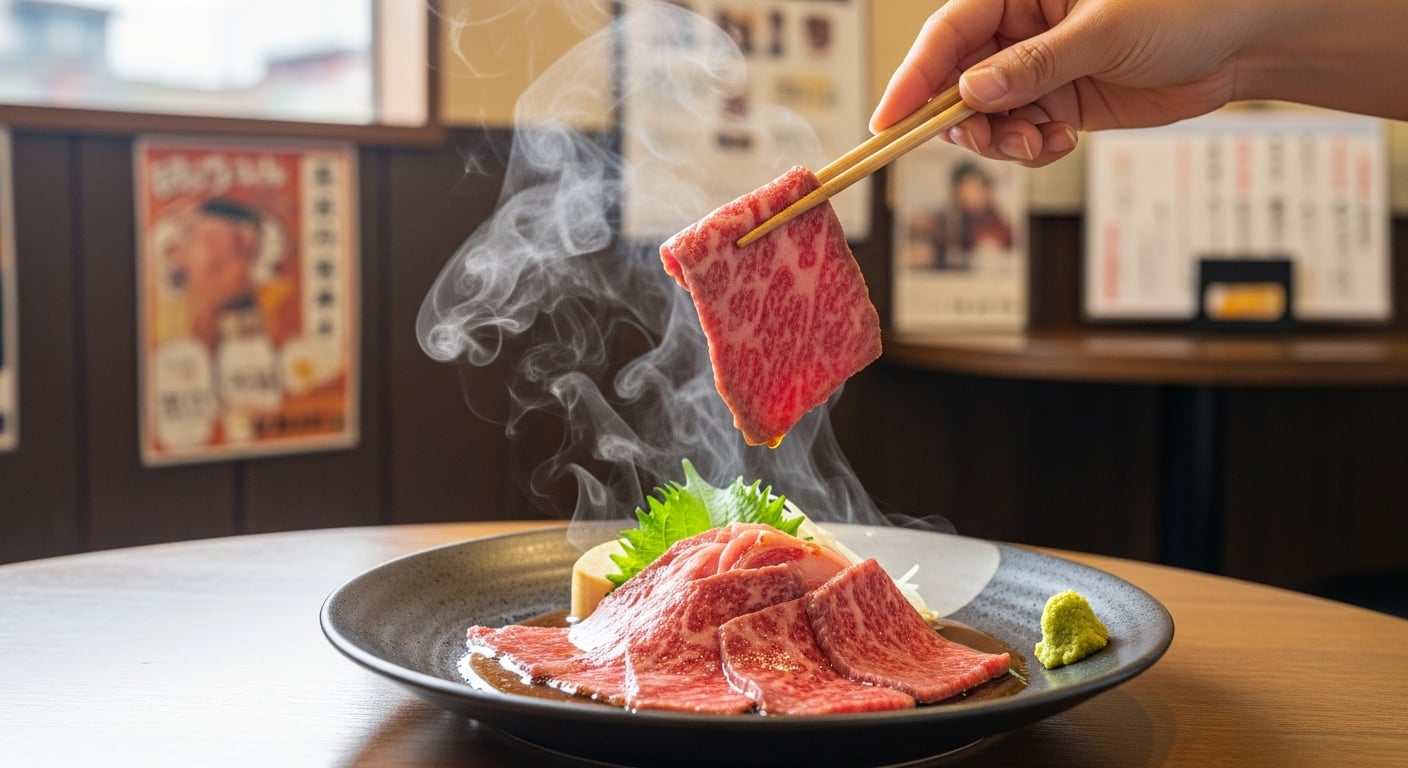
Matsusaka beef — raised in Mie Prefecture, just south of Nagoya — is widely considered one of Japan's three great wagyu brands, alongside Kobe and Omi. Its reputation is built on a very specific foundation: only female Japanese Black cattle (Kuroge Wagyu) are raised, and the feeding and management process is extraordinarily labor-intensive. Farmers have been known to massage their cattle, play music, and carefully control stress levels to encourage the deep, even marbling that Matsusaka is famous for.
The result is beef that is almost architectural in its fat distribution — pale, creamy layers threaded through the meat with an almost symmetrical precision. The flavor is rich, buttery, and lingering. At high-end Matsusaka restaurants, a single meal can approach or exceed ¥30,000 per person.
For the visitor who wants to experience wagyu at its most celebrated, most documented, and most internationally recognized, Matsusaka delivers exactly that. It is a masterclass in marbling, raised and refined over generations of careful breeding.
What it is not, however, is a discovery. Matsusaka beef is featured in virtually every major English-language guide to Japan. It has been written about, photographed, and shared countless times. When you eat it, you are participating in something well-established — and genuinely wonderful. But the story you carry home is one that many others are already telling.
Horai Wagyu: Rarity Earned Through Craft, Not Marketing
In the mountainous Okumikawa region of Aichi Prefecture — far from the tourist maps, raised by just three farming families — a different kind of wagyu story is quietly unfolding.
Horai Wagyu is Japanese Black (Kuroge Wagyu), raised in small numbers under conditions that most wagyu producers simply cannot or will not replicate. Only 300 heads are produced annually across those three farms. To put that into context: Japan raises approximately 500,000 wagyu cattle each year. Horai Wagyu represents a fraction of a fraction.
What makes Horai Wagyu particularly distinctive is its feeding method. The cattle are raised on sake lees — the pressed residue from brewing Horaisen Sora, a premium Aichi sake with a devoted following among Japanese connoisseurs. The fermentation compounds from the sake lees influence the fat composition of the meat, producing a profile that is simultaneously lighter and more complex than typical heavily marbled wagyu. It is not the blanket richness of a Matsusaka steak. It is something more nuanced — lean and marbled in balance, with a clean finish that invites another bite rather than overwhelming the palate.
This isn't a new marketing story invented for export. It's a farming tradition rooted in Okumikawa's geography, its sake culture, and the particular vision of three families who chose depth over volume.
The Preparation Question: Where the Real Difference Lies
Matsusaka beef is most often experienced as steak, shabu-shabu, or sukiyaki — formats that showcase its extraordinary marbling through high heat or light simmering. These are refined, beautiful preparations. But they follow formats that have existed for decades and are now largely standardized across the high-end wagyu dining experience in Japan.
At Itadaki in Osu, Nagoya, founder Masayuki Goto asked a different question entirely. He had spent years watching Aichi's premium ingredients struggle to find recognition beyond the prefecture — farmers with exceptional beef, exceptional rice, exceptional eggs, producing for a market that barely knew their names. When the pandemic years brought those struggles into sharp relief, Goto began building something new: a restaurant concept that existed to serve those farmers as much as it served its guests.
The format he chose was the gyudon — Japan's humble beef bowl, long associated with fast-food chains and quick lunches. Goto's insight was simple and radical at once: every other Japanese bowl dish (katsudon, oyakodon, kaisendon) had a premium, artisan version. Gyudon didn't. Nobody had done it yet.
What emerged is the Rare Wagyu Gyudon — a dish that combines Horai Wagyu with a proprietary two-stage cooking technique that heats the beef to over 70°C at its core, fully meeting Japan's Ministry of Health, Labour and Welfare food safety standards, while preserving the texture and appearance of rare-style beef. Every accompanying ingredient — the rice, the miso, the pickles, the egg, the sauce — comes from Aichi Prefecture, chosen to complement Horai Wagyu's specific flavor profile rather than overpower it.
It is a dish that didn't exist before Itadaki. That is not a marketing claim. It is simply the history of the restaurant, now recognized by NHK and seven other major Japanese broadcasters as the originator of an entirely new culinary category.
✓ Key Takeaways
- Matsusaka beef excels in marbling, reputation, and classic preparation — an impeccable choice for experiencing Japan's most celebrated wagyu tradition.
- Horai Wagyu offers something different: extreme rarity (300 heads/year), a sake-lees feeding distinction, and a flavor profile that balances lean and marbled in a way few wagyu achieve.
- The Rare Wagyu Gyudon at Itadaki is the only preparation in the world that combines Horai Wagyu with a proprietary rare-style cooking technique — creating a culinary experience that is literally impossible to replicate elsewhere.
Connoisseur's Comparison: Which Experience Is Right for You
The honest answer is that Matsusaka beef and Horai Wagyu are not competing for the same traveler — or not quite. They represent different philosophies of what a wagyu experience can be.
If your priority is tasting Japan's most internationally acclaimed, most deeply documented wagyu tradition in a format refined over generations, Matsusaka beef delivered by one of Mie's respected restaurants will reward you fully. It is among the finest examples of what Japanese cattle farming and culinary craft can produce together.
If your priority is discovering something that no guidebook has mapped yet — something built on genuine scarcity, a story that belongs specifically to Aichi Prefecture, and a preparation that was invented at one particular restaurant in Osu, Nagoya — then Horai Wagyu at Itadaki offers something that Matsusaka, for all its magnificence, simply cannot.
One guest who had already made their way through both put it plainly:
"I've had Kobe beef and Matsusaka beef, but Horai Wagyu at Itadaki was on another level."
Guest testimonial, Itadaki
That reaction isn't a statement about marbling scores or price points. It's about encountering something genuinely new — a flavor, a texture, and a story that had no precedent in their wagyu experience up to that point.
Planning Your Visit: What You Need to Know
Itadaki is located on the second floor at 4-1-20 Osu, Naka-ku, Nagoya — a 4-minute walk from Yabacho Station Exit 4 on the Meijo Subway Line. From Nagoya Station, the journey takes approximately 10 minutes: Higashiyama Line to Sakae, then transfer to the Meijo Line and exit at Yabacho. Look for the sign reading 元祖レア牛丼 頂 at street level and take the stairs up.
The restaurant is open for lunch only (11:00–15:00) on Saturdays, Sundays, Mondays, and Tuesdays. Public holidays follow the same schedule with an earlier start at 9:00. Wednesday through Friday are closed. Irregular closures can occur, so checking the monthly calendar on Instagram before your visit is always a good idea.
Horai Wagyu is strictly limited to 10 bowls per day. If your heart is set on it, a reservation via Tabelog Online is strongly recommended. When booking, copy and paste 鳳来牛希望 into the notes field to request Horai Wagyu specifically. For walk-in guests, Mikawa Beef Rare Gyudon — prepared with the same two-stage technique and equally sourced entirely from Aichi — is always available.
The menu is printed in English, Simplified Chinese, and Korean, with a photographic five-step guide explaining exactly how to experience the dish. No Japanese is necessary to navigate the meal.
A Bowl That Carries a Story Home
A once-in-a-lifetime culinary experience isn't defined by its price or the fame of its ingredients. It's defined by the moment when you realize what you're eating couldn't have happened anywhere else — not in any other city, not at any other restaurant, not with any other combination of farmer, founder, and craft.
Matsusaka beef is one of Japan's great culinary treasures, and it will remain so. But the traveler who also finds their way to a second-floor lunch counter in Osu, Nagoya — and tastes a bowl of Rare Wagyu Gyudon made from 300 cattle raised on sake lees in the mountains of Okumikawa — will go home with two stories instead of one. And the second story is the one nobody else at the table will have heard before.
For our complete menu, access details, and store information, visit our official page at https://itadaki8.com/english/
Ready to experience the original? We'd love to welcome you.
Reserve Your Rare Wagyu Experience
And to confirm we're open on the day you're planning to visit:
Check Our Monthly Schedule on Instagram