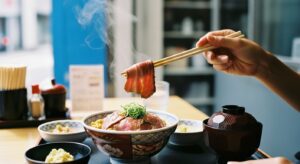
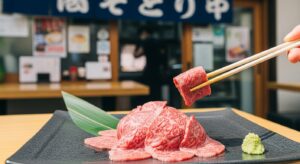
Step-by-Step: How to Enjoy Rare Wagyu Bowl the Right Way
 gotowp
Here's something that might surprise you: according to a Japan Tourism Agency survey, language barriers are consistently ranked as the number one concern among foreign visitors dining at local Japanese restaurants — above unfamiliar ingredients, unfamiliar etiquette, and even payment methods. And yet, countless travelers still end up choosing a familiar international chain over an authentic specialty restaurant, simply because they aren't sure how to order, what to say, or even how to eat what arrives at the table.
If that sounds familiar, this article is for you. At Itadaki in Osu, Nagoya — the original Rare Wagyu Gyudon specialty restaurant — we built the entire guest experience around making sure every visitor, regardless of their Japanese language ability, can walk in, understand exactly what they're ordering, and enjoy the dish exactly the way it was meant to be eaten. Here's how it works, step by step.
Who This Is For
- ✅ Foreign visitors who want to try authentic Japanese specialty restaurants but feel anxious about language barriers
- ✅ Travelers who have never eaten rare-style wagyu gyudon and aren't sure how to approach the dish
- ✅ Anyone wondering whether they need Japanese to dine comfortably at Itadaki
- ✅ First-time visitors to Nagoya planning a memorable lunch during their Japan itinerary
- ✅ Foodies who want to get the most out of a rare, one-of-a-kind culinary experience — not just eat it, but truly understand it
No Japanese Needed: What Itadaki Has Prepared for You
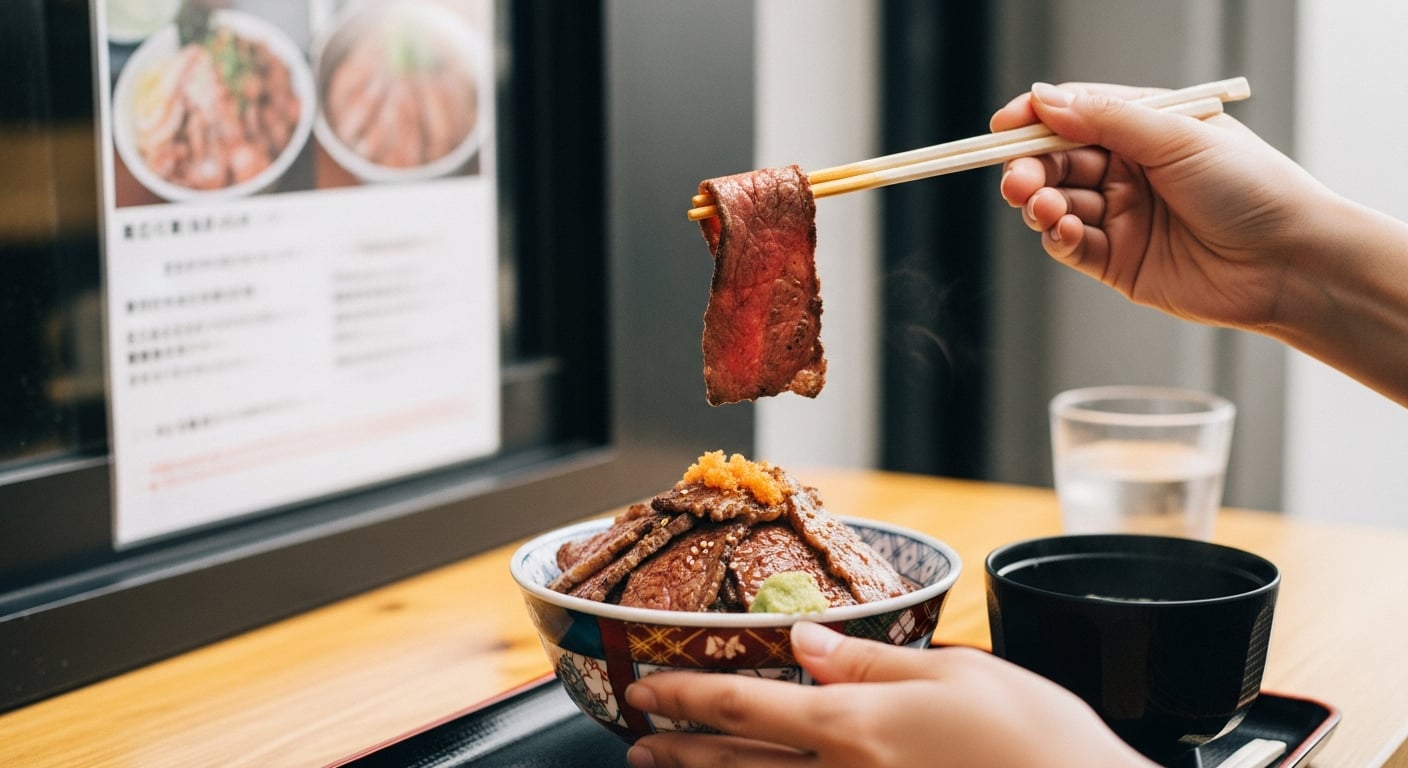
From the moment you walk up the stairs to our second-floor restaurant on Osu's 4-1-20 street, everything at Itadaki is designed with international guests in mind. Our printed menu is fully available in English, Simplified Chinese, and Korean — with clear photographs of every dish, prices listed in yen, and plain-language descriptions of each ingredient.
You don't need to know any Japanese to point at what you want. You don't need to describe your order in broken phrases or rely on a translation app just to figure out what's on the menu. The menu does that work for you.
But more importantly, Itadaki's menu goes one step further than simply listing what's available. It includes a dedicated visual section titled "How to Enjoy Rare Gyudon" — a five-step illustrated guide showing you, in sequence, exactly how to eat the dish from the moment it arrives. This is not standard practice at most Japanese restaurants. We created it specifically because the Rare Wagyu Gyudon is unlike any beef bowl you've encountered before, and we believe that understanding the dish before you eat it makes the experience richer, not just easier.
If you have questions about ingredients or potential allergens, our staff are welcoming to international guests and communication via a translation app is entirely comfortable at Itadaki. You will never feel rushed or out of place.
The Five-Step Guide: How to Eat Rare Wagyu Gyudon the Right Way
The five-step guide printed on our menu is the heart of the Itadaki experience. Here's what each step means, and why it matters.
Step 1 — Separate the Nagoya Cochin Egg
When your bowl arrives, you'll find a raw Nagoya Cochin egg resting on top of the wagyu. The first thing to do is separate it: tip the egg white gently into your miso soup, and place the golden yolk directly onto the beef. The egg white enriches the miso broth, while the yolk waits to coat the wagyu in the steps ahead. Don't stir yet — just separate and pause.
Step 2 — Taste the Wagyu First, Pure and Unadulterated
Before you mix anything, take a few bites of the rare wagyu on its own with a little rice. This is the moment to appreciate the Horai Wagyu (or Mikawa Beef) in its purest form — the texture of our proprietary two-stage cooking technique, the gentle sweetness of the beef, the way it melts without being heavy. Our magic sauce, made with white soy sauce from Hekinan City and wine, has already done its work. Let the beef speak first.
Step 3 — Blend in the Golden Yolk
Now, fold the egg yolk into the beef and rice. The yolk adds a silky richness that softens and deepens the flavor — a contrast to the clean bite of Step 2. This is where the bowl begins to transform into something that feels genuinely indulgent without being overwhelming.
Step 4 — Add the Complimentary Condiments One at a Time
On every table, you'll find a set of complimentary condiments: pickled ginger (from Kimura Farm in Inazawa), chopped dried nori seaweed from Mikawa Bay, chirimen jako (dried whitebait from Minamichita), and Itadaki's original 8-spice blend. Try each one separately before combining — each condiment changes the character of the bowl in a different direction, and layering them allows you to discover your own preferred combination. Everything here, like every ingredient in the restaurant, comes from Aichi Prefecture.
Step 5 — Finish with Wasabi
The final step is a small amount of Itadaki's original wasabi, added at the very end. It clears the palate, provides a sharp counterpoint to the richness of the yolk and beef, and brings the whole experience to a clean, refreshing close. Think of it as the punctuation mark at the end of a very good sentence.
✓ Key Takeaways
- Itadaki's multilingual printed menu (English, Simplified Chinese, Korean) means no Japanese is required to order or understand the dish.
- The five-step guide in the menu shows you exactly how to eat Rare Wagyu Gyudon — from separating the egg to finishing with wasabi — so you can enjoy the dish fully, not just consume it.
- Every condiment and ingredient on the table is from Aichi Prefecture, each one chosen to complement the wagyu at a different stage of the meal.
What Our Guests Actually Say
The five-step approach isn't just a gimmick — it genuinely shapes how guests experience the dish. One guest told us:
"The rare wagyu was unlike anything I've ever tasted — a life-changing culinary experience."
International visitor to Itadaki, Osu Nagoya
That kind of reaction doesn't happen by accident. It happens when a guest understands what they're eating, follows the steps, and allows the dish to unfold the way it was designed. The five-step guide is what makes the difference between "I had beef in Japan" and "I had a meal I'll be telling people about for years."
We've also heard from guests who said they almost didn't come in because they were worried about the language barrier — and then walked out saying it was the smoothest dining experience of their entire Japan trip. That is exactly what we set out to build.
Practical Notes Before You Visit
A few things worth knowing so your visit goes smoothly from start to finish.
Getting Here: Itadaki is a 4-minute walk from Yabacho Station Exit 4 on the Meijo Subway Line. From Nagoya Station, take the Higashiyama Line to Sakae, transfer to the Meijo Line, and get off at Yabacho — approximately 10 minutes total. We're on the 2nd floor; look for the sign reading 元祖レア牛丼 頂 ("Ganso Rea Gyudon Itadaki") at street level and take the stairs up.
Opening Hours: Itadaki is open for lunch only — 11:00 to 15:00 (last order 14:30) on Saturdays, Sundays, Mondays, and Tuesdays. On public holidays, we open at 9:00. We are closed on Wednesdays, Thursdays, and Fridays. Please check our Instagram for the monthly schedule, as irregular closures may apply.
About the Horai Wagyu: Our Horai Wagyu Rare Gyudon is strictly limited to 10 bowls per day. This is not a marketing figure — Horai Wagyu is produced by only 3 farms in Japan, with just 300 heads raised annually. If you want to guarantee your bowl, reservation via Tabelog Online is strongly recommended. When completing your reservation notes, please copy and paste this phrase to request Horai Wagyu: 鳳来牛希望. If you prefer to walk in, our Mikawa Beef Rare Gyudon is always available — prepared with the same two-stage cooking technique and equally worth your time.
Food Safety: A common question from Western visitors is whether rare-style wagyu is safe. The answer is yes — Itadaki's proprietary two-stage cooking technique heats the beef to over 70°C at the core, fully meeting Japan's Ministry of Health, Labour and Welfare food safety standards. The "rare" sensation is a result of technique, not undercooking.
Ready to Experience It for Yourself?
Dining at an authentic Japanese specialty restaurant doesn't have to feel daunting. At Itadaki, we've thought carefully about every step of the experience — from the multilingual menu you hold in your hands to the five-step guide that transforms a bowl of wagyu into something genuinely memorable. You don't need Japanese. You don't need a food encyclopedia. You just need to follow the steps and let the dish do the rest.
For our complete menu, access details, and store information, visit our official page at https://itadaki8.com/english/
When you're ready to secure your seat — especially if you have your heart set on the Horai Wagyu — we'd love to welcome you. Reservations can be made easily in English online:
Reserve Your Rare Wagyu Experience
And to check our current business calendar before you plan your visit:
Check Our Monthly Schedule on Instagram
We look forward to walking you through every step — in the bowl, and in person.