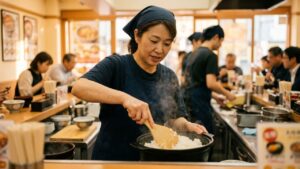
How Itadaki Reinvented the Humble Gyudon Into Fine Dining
 gotowp
Here's a number that surprises most of our visitors: out of roughly 500,000 wagyu cattle raised in Japan each year, only 300 are Horai Wagyu — produced by just three farms hidden in the mountains of Okumikawa, Aichi Prefecture. That's 0.06% of Japan's entire wagyu production. And every morning at Itadaki, we portion exactly 10 bowls from that supply. Once they're gone, they're gone — and the next batch won't arrive until our next scheduled service day.
I'm Masayuki Goto, founder of Itadaki. When we opened in Osu, Nagoya in April 2022, I didn't anticipate how quickly word would travel — or how many guests would arrive mid-afternoon, hopeful, only to hear that the Horai Wagyu had sold out hours earlier. That moment is one I genuinely don't want any visitor to experience, especially someone who has flown halfway across the world and has exactly two days in Nagoya.
This article is my honest, practical guide to making sure that doesn't happen to you.
Who This Is For
- ✅ Travelers planning a short stay in Nagoya who specifically want to try Horai Wagyu
- ✅ Anyone unfamiliar with Japanese reservation platforms like Tabelog and unsure how to book in English
- ✅ Walk-in visitors who want to know their best options if they can't reserve in advance
- ✅ Wagyu enthusiasts who've already experienced Kobe and Matsusaka beef and are ready to discover something rarer
- ✅ Readers curious about why Horai Wagyu is limited to 10 bowls a day — and what makes it worth planning around
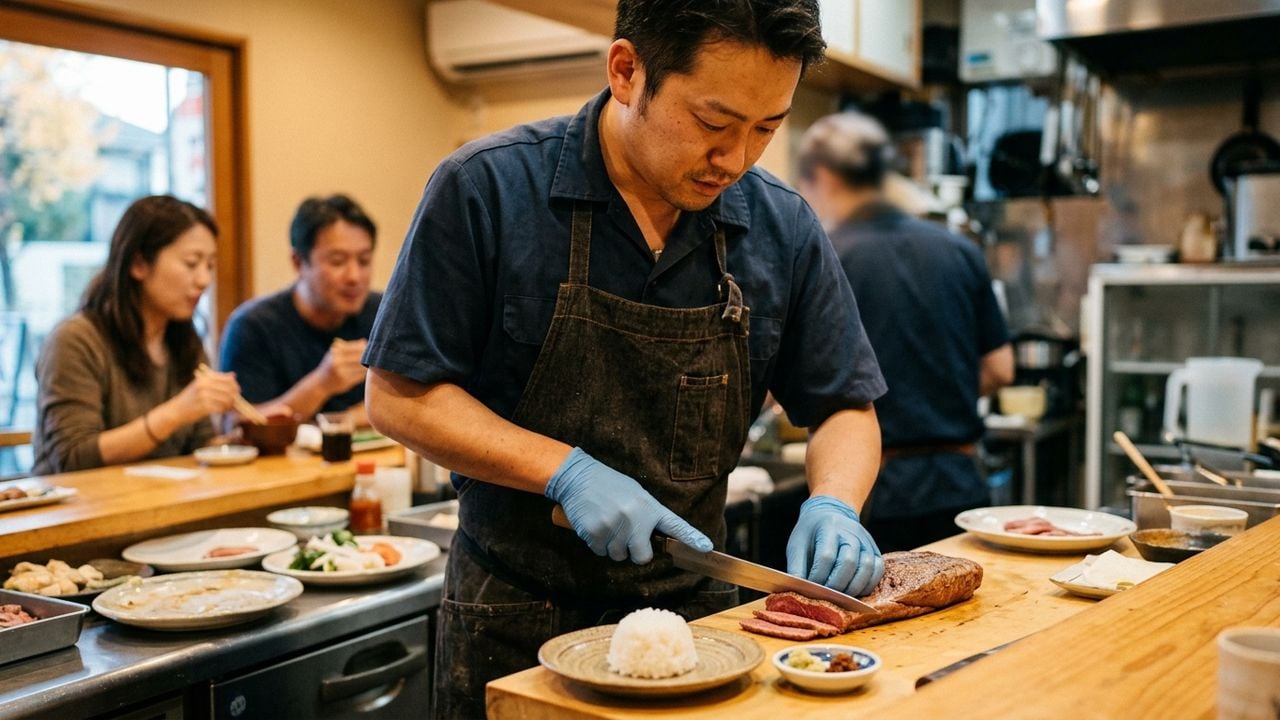
Why 10 Bowls? The Real Reason Behind the Limit
The 10-bowl daily limit isn't a marketing decision. It's an honest reflection of how little Horai Wagyu actually exists.
These cattle are raised in the Okumikawa highlands of Aichi Prefecture using a method that's unusual even by premium wagyu standards: the feed incorporates sake lees from Horaisen Sora, a celebrated local premium sake from the same region. This creates a beef with a distinct character — lighter marbling than Kobe, with lean muscle that carries a clean, layered flavor that builds as you eat. It's not the richest wagyu you'll encounter in Japan. It's arguably the most interesting.
Because production is this limited, the farms can only supply us with enough for a small number of portions each service day. We receive our allocation, we prepare it fresh, and when it's served, that's it. No replenishment, no "we'll check the back" — the bowl you order is the last step in a supply chain that begins months earlier in a mountain village most people have never heard of.
One of our guests, who had already tasted Kobe beef and Matsusaka beef during earlier Japan trips, put it simply: "I've had Kobe beef and Matsusaka beef, but Horai Wagyu at Itadaki was on another level." That comparison stayed with me. Not because it's a compliment to us — the beef deserves most of the credit — but because it captures why Horai Wagyu needs its own audience, not just wagyu enthusiasts in general, but people genuinely ready to encounter something they've never tasted before.
You now know the 10-bowl limit is real — and that the monthly schedule affects which days you can even visit. Our Instagram calendar is updated each month and shows exactly which dates we're open, including any irregular closures during the Asian Games period. Takes 30 seconds to check before you lock in your Nagoya itinerary.
How to Reserve Horai Wagyu — A Step-by-Step Guide for International Visitors
Tabelog is Japan's most widely used restaurant reservation platform — think of it as Japan's version of OpenTable. It's not well known outside Japan, and I understand the hesitation when you land on a Japanese-language site. But here's the good news: reservations can be made entirely in English on the Tabelog website, and the process is simpler than it looks.
Here's exactly what to do:
- Go to Itadaki's Tabelog reservation page. Search for Itadaki on tabelog.com, or use the direct reservation link on our English site at itadaki8.com/english/.
- Select your preferred date and time. We serve lunch only — doors open at 11:00. Last order is 30 minutes before closing at 15:00. We operate on scheduled business days: Saturday, Sunday, Monday, and Tuesday. On public holidays (including the upcoming period around the Asian Games in late September and October 2026), we open from 09:00. Please note that irregular closures do happen — always confirm the current month's schedule on our Instagram before finalizing plans.
- In the notes or special requests field, copy and paste this phrase exactly: 鳳来牛希望 — This tells our team that you're requesting the Horai Wagyu bowl. Without this note, we cannot guarantee your allocation of the limited 10 bowls.
- Complete your reservation in English. You don't need to write anything in Japanese beyond the phrase above. Fill in your name and contact details as you normally would.
That's the whole process. The Japanese phrase — 鳳来牛希望 — is the one piece you need, and you don't need to type it yourself. Copy, paste, submit.
If you'd like to understand more about what makes Itadaki the originator of Rare Wagyu Gyudon and why this concept is genuinely new, that context makes the reservation feel even more meaningful.
✓ Key Takeaways
- Horai Wagyu is limited to 10 bowls per day due to genuine scarcity — 300 heads raised annually across 3 farms in Japan.
- Reservations via Tabelog can be made in English. The one Japanese phrase you need in the notes field is: 鳳来牛希望
- Itadaki is open lunch-only on Saturdays, Sundays, Mondays, and Tuesdays — always check the monthly Instagram calendar before visiting.
You have the Japanese phrase — 鳳来牛希望 — and the step-by-step process. The one thing left is placing the reservation itself before someone else claims one of the 10 daily Horai Wagyu bowls on your target date. The Tabelog reservation form accepts English throughout.
What If You Can't Reserve in Advance?
Life doesn't always allow for advance planning. Maybe your itinerary shifted. Maybe you discovered Itadaki while exploring Osu on foot — walked past Osu Kannon Temple, turned into the shopping street, and found us by chance. This happens more often than you might think.
If you're visiting without a reservation, your best move is to arrive right at 11:00 when we open. At that point, the Horai Wagyu allocation hasn't been claimed yet, and walk-in guests who arrive at opening have a genuine chance. The bowls tend to go faster on weekends, public holidays, and peak travel periods — so the earlier you arrive, the better.
If Horai Wagyu has already sold out by the time you arrive, please don't leave. Our Mikawa Beef Rare Gyudon is always available for walk-in guests, and it's prepared using the exact same proprietary two-stage cooking technique that gives the Horai Wagyu bowl its signature rare texture. Mikawa Beef is raised in Aichi's Mikawa region on okara feed with lactic acid bacteria gut management — it's a lean, clean-tasting cut with real depth. Every ingredient alongside it comes from Aichi Prefecture, same as the Horai bowls. Guests who visit for Mikawa Beef frequently tell us it exceeded what they expected.
The experience of discovering a dish you hadn't originally planned for — and finding it extraordinary — is one of the things I love most about running Itadaki. But if Horai Wagyu is specifically what you came for, please reserve.
"I've had Kobe beef and Matsusaka beef, but Horai Wagyu at Itadaki was on another level."
— A guest who visited as part of a Japan wagyu exploration trip
One More Thing: Checking Our Schedule Before You Go
Itadaki operates on a scheduled business calendar that we publish each month on our official Instagram — @itadaki_gyudon.08. Irregular closures do occur occasionally, and the Instagram calendar is always the most current source of information on which days we're open.
This is especially important for visitors traveling during busy periods. If you're in Nagoya for the 2026 Asian Games or exploring the Osu area during a long weekend, a quick check of the monthly calendar before finalizing your lunch plans takes less than a minute and saves real disappointment.
We open at 09:00 on public holidays — earlier than our standard 11:00 — which is worth knowing if you're building a full-day itinerary. Some guests combine an early Itadaki lunch with an afternoon stroll through Osu Shopping Street or a visit to the castle town areas of Nagoya — both within easy reach from our location near Yabacho Station.
A Final Word on Planning Your Visit
When I named this restaurant Itadaki — drawn from the Japanese word itadakimasu, the expression of gratitude spoken before a meal — I wanted every aspect of the experience to carry that sense of appreciation. Appreciation for the farmers in Okumikawa who raise 300 cattle a year with exceptional care. Appreciation for the land that makes Aichi's ingredients taste the way they do. And appreciation for every guest who plans their day around a bowl of rice and wagyu in a second-floor restaurant in Osu.
That planning matters. The 10-bowl limit isn't a restriction I enjoy imposing — it's simply the truth of what we can offer while honoring the farmers who make it possible. Reserving in advance is the most straightforward way to honor that truth from your side.
For our complete menu, access details, and store information, visit our official page at itadaki8.com/english/.
300 heads a year, 3 farms, 10 bowls a day — you've read why this limit is real and exactly how to get around it. If Horai Wagyu is on your Nagoya list, the reservation is the one step that makes the rest of the plan work.