5 Reasons Families Choose Itadaki Before or After Theme Parks
 gotowp
Here's the short answer: Itadaki gives families a lunch story worth telling long after the theme park photos have faded into the camera roll. That's the reason families who've already ticked Legoland Nagoya, Ghibli Park, and Nagoya Port Aquarium off their list keep mentioning this one small restaurant in Osu as the single most memorable moment of their Japan trip.
In today's travel culture, a spectacular day at a theme park is something millions of families share every year. A bowl of ultra-rare wagyu in a tiny restaurant above a backstreet in Nagoya, sourced from only 300 cows raised annually across three farms in all of Japan? That's the kind of story your followers ask about — and the kind your kids will still talk about years from now.
Let me walk you through exactly why families — including those with young children — choose Itadaki before or after their theme park day, and what changed for the families who did.
Who This Is For
- ✅ Families traveling to Nagoya to visit Ghibli Park, Legoland, Nagashima Spa Land, or Nagoya Port Aquarium
- ✅ Parents who want a lunch experience that genuinely excites the whole family — not just the adults
- ✅ Travelers who want their Japan trip content to stand out from the standard sushi-and-ramen posts
- ✅ Families unsure whether a specialty wagyu restaurant is actually suitable for children
- ✅ Anyone who discovered Itadaki on Google Maps and wants to know if it's worth working into a theme park day
Reason 1: The Dish Becomes the Story — Before You Even Leave the Restaurant
Before visiting Itadaki, many families describe their lunch plans in Nagoya the same way: "We'll just grab something quick near the park." Lunch is functional — fuel before the next activity.
After visiting, the conversation shifts completely. The family meal at Itadaki becomes the thing they talk about on the train, in the hotel that night, and in messages to friends back home. One guest put it simply:
"I discovered Itadaki through Google Maps and it became the best meal of our Japan trip."
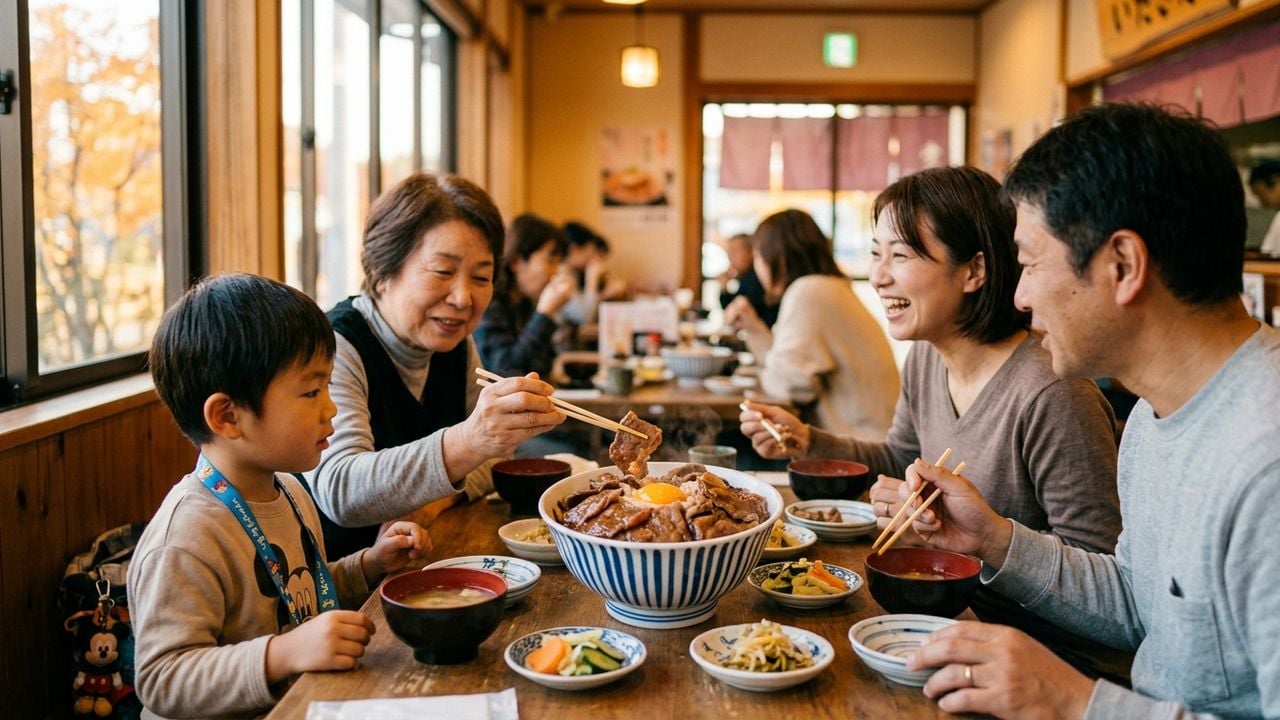
That shift — from "just lunch" to "the best meal of the trip" — happens because Itadaki's Rare Wagyu Gyudon is genuinely unlike anything most families have encountered. The dish arrives in a traditional Japanese ceramic bowl: thinly-sliced wagyu arranged over steaming Aichi-grown rice, a raw Nagoya Cochin egg placed on the side, delicate shiso leaves from Toyohashi, and a range of complimentary condiments lined up on the table. Before the first bite, even children who "don't like Japanese food" are leaning in to get a better look.
The five-step eating guide — included in the menu in English — turns the meal into a shared activity. Step one: separate the egg yolk from the white. Step two: place the yolk over the beef. Step three through five introduce condiments, spices, and finally wasabi. It's interactive, it's theatrical, and it naturally produces the kind of table photos that make your Japan travel content stand out.
You're building a theme park itinerary for Nagoya and wondering whether to fit Itadaki in — but the Horai Wagyu is limited to 10 bowls a day, and September 2026 means the city is busier than usual during the Asian Games. Our monthly business calendar shows exact open days so you can plan around your park day without guessing. It takes about 30 seconds to check.
Reason 2: The Story Behind the Bowl Gives Your Photos Context
A stunning photo needs a caption worth reading. This is where Itadaki does something most restaurants — even excellent ones — simply cannot.
Horai Wagyu is produced by just three farms in Japan, raising only 300 heads annually. To put that in perspective: Japan raises approximately 500,000 wagyu cattle each year. Horai Wagyu represents roughly 0.06% of that total. These cattle are raised in the Okumikawa mountains of Aichi Prefecture and fed on sake lees from Horaisen Sora, a premium local sake brewed in the same region. The result is a distinctive beef — light marbling, clean finish, and a flavor profile that stops you mid-bite.
When your followers ask "What is that?" — and they will — you'll have a story that goes three paragraphs deep before you even get to what it tasted like. That's rare in travel content. Most food photos just show beautiful plating. This one carries a complete narrative: the farm, the sake lees feed, the mountain region, the 300 heads, the proprietary cooking technique that delivers a rare texture while fully meeting Japan's food safety standards.
Itadaki was founded in 2022 by Masayuki Goto, who built this restaurant specifically to bring Aichi's hidden agricultural treasures — producers who struggled to find markets during the pandemic — directly to guests who'd never otherwise encounter them. Every ingredient on the table comes from Aichi Prefecture. Every supplier has a story. That philosophy, expressed in the restaurant's name — Itadaki, drawn from itadakimasu, Japan's expression of gratitude before eating — comes through in every detail.
This is not generic wagyu content. This is specifically the kind of experience that wagyu enthusiasts seek when they've already tried Kobe and Matsusaka and want something genuinely new. Families who happen to stumble onto it while planning a theme park trip walk away feeling like they made a real discovery.
✓ Key Takeaways
- Itadaki's Rare Wagyu Gyudon transforms an ordinary lunch stop into the most talked-about experience of a Nagoya family trip — before the food even arrives, the presentation and five-step eating ritual give everyone something to do and photograph together.
- Horai Wagyu — 300 heads per year across three farms in Aichi — gives your trip content a story that goes far deeper than a beautiful photo, and the English-language menu means the whole experience is accessible for international families without needing Japanese.
The five-step eating ritual and the Horai Wagyu story are exactly the kind of shareable content you've been reading about — but 10 bowls a day means walk-ins during peak season carry real risk of missing out. Securing your spot via Tabelog takes just a few minutes and locks in the specific experience that makes this lunch worth planning around.
Reason 3: The Restaurant Is Genuinely Comfortable for Families with Children
Before visiting, many families hesitate. A specialty wagyu restaurant sounds like a quiet, formal place where children would feel out of place. The reality is quite different.
Itadaki seats 18 guests across sofa-style table seats — including a sofa table for five, ideal for families traveling together. The atmosphere is warm, unhurried, and relaxed. Past guests have brought infants, used the sofa seats for bottle feeding during the meal, and found the space genuinely comfortable for extended family lunches rather than quick chain-restaurant stops.
For younger children who may not be ready for the wagyu, the Mikawa Beef Rare Gyudon (from ¥1,800 for the Fumoto size, 100g beef with 200g rice) offers a gentler introduction at a smaller portion. Parents can make their own call based on their child's eating habits. The English menu — available in print, covering ingredient details, allergen information, and the five-step eating guide — makes that decision easier without needing to ask staff to explain everything from scratch.
One practical note for families traveling with strollers: Itadaki is located on the second floor and requires a staircase. Strollers can be brought into the restaurant, and staff may be able to assist depending on how busy the floor is at the time of your visit.
Reason 4: The Timing Works Around Your Theme Park Day
Itadaki is open for lunch only — Tuesday, Monday, Saturday, Sunday, and public holidays, from 11:00 to 15:00 (last order 30 minutes before close). This schedule fits naturally into the rhythms of a theme park day in Nagoya.
Ghibli Park, Legoland Japan, Nagashima Spa Land, and Nagoya Port Aquarium are all accessible from central Nagoya. A common itinerary sees families arriving in Nagoya the night before their park day, spending the following morning exploring the Osu district — Osu Kannon Temple, the shopping street, Hisaya-odori Garden Flarie (a free-admission urban garden just three minutes from Yabacho Station) — and stopping at Itadaki for lunch before the afternoon at the park. Or the reverse: park day first, then a meaningful lunch in Osu on the way back before the evening train.
The restaurant is a four-minute walk from Yabacho Station Exit 4 on the Meijo Subway Line. From Nagoya Station, the journey takes approximately ten minutes by subway. No car needed, no complicated transfer — just one line change at Sakae.
If you're planning to try the Horai Wagyu — limited to just 10 bowls per day — reservations via Tabelog are strongly recommended, especially on weekends and public holidays when it can sell out during peak hours. The September timing of your visit puts you right in the middle of the 2026 Asian Games period in Nagoya, when the city is busier than usual. Booking ahead is the straightforward way to guarantee the experience you came for.
For families who've already planned a trip around the Nagoya–Shirakawa-go itinerary, Itadaki works equally well as a first or last stop in the city — the Osu location sits close enough to central Nagoya that it doesn't require a separate day.
Reason 5: The Memory Outlasts the Theme Park
This is the one families don't expect until after it happens. Theme park experiences are wonderful — immersive, joyful, and worth every moment. But the photographs all look broadly similar to thousands of others taken the same day at the same park. The content blends in.
The Itadaki bowl doesn't blend in. The ceramic presentation, the yolk-over-rare-wagyu arrangement, the story of the 300-head-per-year cattle from the Aichi mountains — it produces content that makes followers stop scrolling. More than that, it produces a memory the family can return to by telling the story: "We found this tiny restaurant above a backstreet in Nagoya that only makes 10 of this dish a day, and the beef comes from literally 300 cows in all of Japan..."
That story travels further than any photo. It becomes the answer to "What was the best thing you ate in Japan?" at dinner parties years from now.
Families who visited Itadaki before we published this article found us through Google Maps, through friends' recommendations, or simply by wandering past the building in Osu. They didn't necessarily come expecting the best meal of their trip. That's exactly what makes the discovery feel genuine — and why the stories travel so far.
For our complete menu, access details, and store information, visit our official page at https://itadaki8.com/english/
You've read through all five reasons — the dish, the story, the setting, the timing, and the memory it leaves behind. The one thing left between your family and that bowl is a reservation. Horai Wagyu sells out on busy days, and the 2026 Asian Games period is one of the busiest Nagoya has seen.
Reserve Your Table at Itadaki — Only 10 Horai Wagyu Bowls Daily