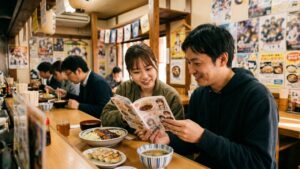
Is There Otaku-Friendly Dining Near WCS Venues in Osu?
 gotowp
Yes — and the short answer is: Osu already has exactly what WCS visitors are looking for, including a lunch destination that welcomes cosplayers, anime fans, and first-timers to Nagoya's food scene without any awkwardness. The more important question, though, is one we hear from nearly every foreign visitor who plans to dine here: Will the Horai Wagyu sell out before I get there? That's the one we want to tackle head-on.
Who This Is For
- ✅ World Cosplay Summit participants and anime/subculture fans spending time in Osu district
- ✅ Foreign visitors planning a short Nagoya stay who want to guarantee their Horai Wagyu experience
- ✅ Travelers unfamiliar with Japanese reservation platforms like Tabelog who are worried about language barriers
- ✅ Walk-in diners who want to know what to do if the ultra-rare bowl is already sold out
- ✅ Anyone curious about what makes Osu a genuinely otaku-friendly dining neighborhood
What Makes Osu a Good Fit for WCS and Subculture Visitors?
Osu is, in many ways, the natural home base for World Cosplay Summit visitors. The district has long been Nagoya's most eclectic neighborhood — a place where Buddhist temple incense mingles with the sounds of retro game shops, where vintage streetwear stores stand next to maid cafés, and where nobody gives you a second glance regardless of what you're wearing. For the past few years, WCS has brought thousands of international participants and their families to this part of Nagoya, and the neighborhood has absorbed all of it without losing its character.
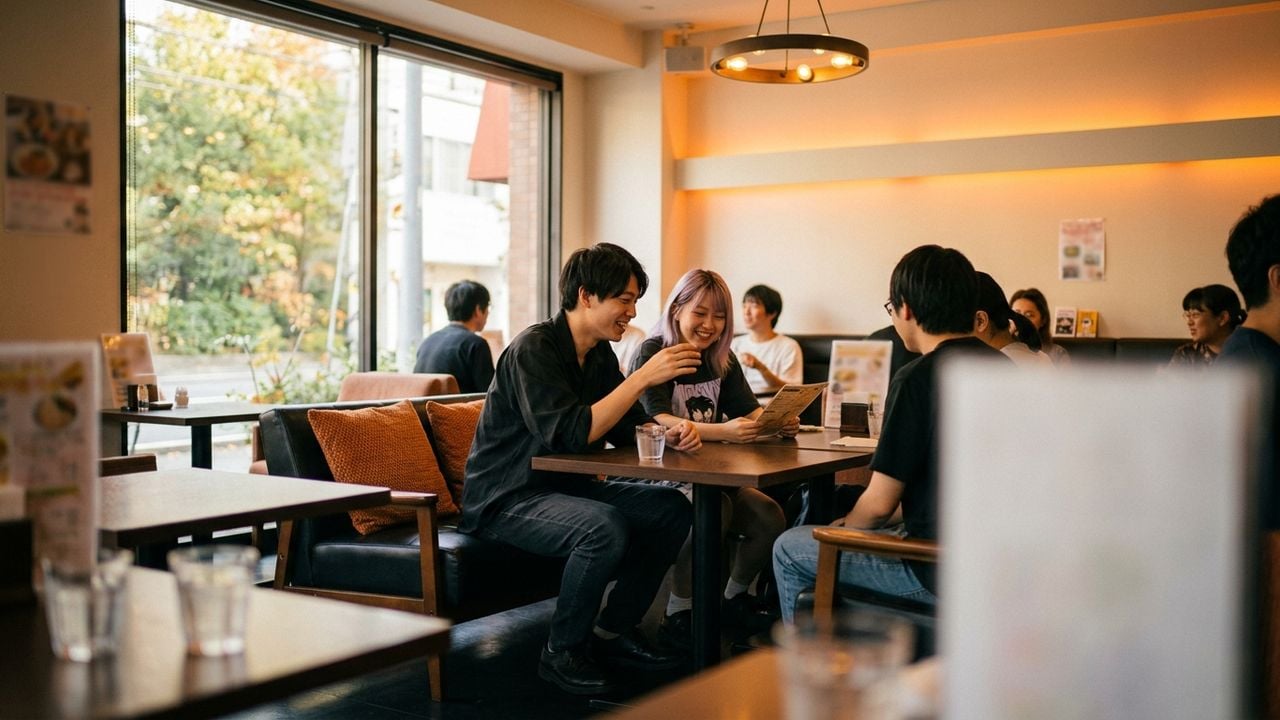
Itadaki sits right in this pocket of the city, on the second floor of a building in Osu, a four-minute walk from Yabacho Station Exit 4. You're welcome to arrive in cosplay, kimono, or any outfit you've put together for your Japan trip. The staff greet every guest the same way — with genuine warmth and no dress code judgment. Several of our regular WCS-season visitors have told us the relaxed atmosphere felt like a refreshing contrast to the excitement of the event halls.
What pulls people in specifically — beyond the neighborhood vibe — is the food itself. Itadaki is the originator of Rare Wagyu Gyudon, a concept that reimagines Japan's humble beef bowl using ultra-rare wagyu sourced exclusively from Aichi Prefecture farms. It's a lunch experience unlike anything available in Tokyo or Kyoto, and for WCS visitors with only a day or two in Nagoya, it tends to become the meal they talk about for the rest of their trip.
If you're also traveling for the anime dining scene more broadly, Osu and Akihabara offer genuinely different flavors — and Osu's food culture goes well beyond the subculture theme.
You now know that Horai Wagyu sells out at 10 bowls daily — but knowing our exact schedule before you finalize your Nagoya plans is the step that makes the difference. Our monthly business calendar (including any irregular closures during WCS season) is posted before each month begins. Takes seconds to check.
Will the Horai Wagyu Sell Out Before I Arrive?
Honestly? It might. And we'd rather tell you that clearly than have you arrive disappointed.
Horai Wagyu is among the rarest wagyu produced in Japan — 300 heads raised annually across just three farms in Okumikawa, Aichi, fed on sake lees from the regional premium sake Horaisen Sora. Out of approximately 500,000 wagyu cattle raised in Japan every year, only 300 are Horai Wagyu. At Itadaki, we serve it as our signature Rare Wagyu Gyudon, and we limit it to exactly 10 bowls per day. That cap is not a marketing decision — it reflects the actual supply we receive from the farms we source directly from.
During WCS season, peak lunch periods on weekends can see those 10 bowls spoken for by 11:30 or even earlier. For visitors with a one- or two-day Nagoya schedule, arriving to find the bowl sold out is genuinely painful — and entirely avoidable with a little advance planning.
How Do I Reserve the Horai Wagyu Without Getting Lost in a Japanese App?
The good news: Tabelog — Japan's major restaurant reservation platform — supports English-language reservations. The process is more straightforward than most foreign visitors expect.
Here's how to do it step by step:
- Visit the Tabelog reservation page for Itadaki and select your preferred date and time.
- In the notes or special requests field, copy and paste this phrase exactly as written: 鳳来牛希望
- This tells our team that you'd like the Horai Wagyu bowl reserved for your visit. You don't need to write anything else in Japanese — the rest of the form can be completed in English.
That single phrase — 鳳来牛希望 — is all you need. You can copy it directly from this article onto your phone, then paste it when you fill in the form. Our team will confirm your Horai Wagyu allocation when we receive the reservation.
Reservations are available for our open days: Saturday, Sunday, Monday, and Tuesday, 11:00–15:00 (last order 14:30). We don't currently offer dinner service. On public holidays, we open from 09:00. Since our schedule can shift, we recommend checking our monthly calendar on Instagram before finalizing your plans.
✓ Key Takeaways
- Horai Wagyu is capped at 10 bowls daily — early arrival or advance reservation is the only reliable way to secure it
- Tabelog reservations work in English; paste 鳳来牛希望 in the notes field to request Horai Wagyu
- Itadaki is open Sat, Sun, Mon, Tue only — confirm the schedule on Instagram before visiting
You've got the phrase ready — 鳳来牛希望 — and you know the form works in English. The only thing left is actually locking in your date before those 10 bowls are claimed by someone else who read this first. The Tabelog reservation page is in English and the process takes under five minutes.
What If the Horai Wagyu Is Already Gone When I Walk In?
Don't leave. Seriously.
Our Mikawa Beef Rare Gyudon is always available for walk-in guests, and it's prepared using the exact same proprietary two-stage cooking technique that makes the Horai Wagyu bowl so distinctive. Mikawa Beef comes from the Mikawa region of Aichi Prefecture, raised on okara feed with careful gut health management — a different character from Horai Wagyu's sake lees flavor, but equally considered and equally rare in the context of a gyudon.
The Fumoto size (100g beef, 200g rice) starts at ¥1,800 and gives you the full Itadaki experience: house-made magic sauce built on white soy from Hekinan City, Nagoya Cochin egg, Atsumi Ichō-zuke pickles, and all the complimentary condiments at your table. The dish arrives with an English-language five-step guide that walks you through how to enjoy it — and more than one guest has told us that having a clear guide in hand made the experience feel immediately accessible.
"The English menu with clear serving instructions made the experience stress-free."
— A guest at Itadaki
If you're visiting without a reservation and set your heart on Horai Wagyu, arriving right at 11:00 when we open gives you the best chance of claiming one of the 10 bowls. Early mornings during WCS weekends fill quickly — the neighborhood is already lively by the time we unlock the door.
For WCS visitors who are also part of the Asian Games 2026 program later in September and October, it's worth noting that dining in Osu during major events has its own timing considerations worth planning around.
Is the Restaurant Comfortable for First-Timers Who Don't Speak Japanese?
Itadaki was built with international guests in mind from day one. Masayuki Goto, who founded the restaurant in 2022 after more than 18 years in the hospitality industry, has always believed that language should never be a barrier between a guest and a great meal. The menus are printed in English, Simplified Chinese, and Korean. The five-step serving guide uses photographs rather than text, so even without reading a word, you can follow the full ritual of the dish — from separating the Nagoya Cochin egg to finishing with wasabi.
The restaurant seats 18 across comfortable sofa-style tables, which makes it well-suited to family groups, pairs, and solo diners alike. The five counter seats are a natural fit for solo visitors who want a front-row view of the kitchen side of the experience. All seats are table seats — no kneeling, no floor seating, no awkward situations for guests wearing elaborate costumes or kimono.
If you've been wondering whether a wagyu specialty restaurant in Japan would feel intimidating to navigate on your own, Itadaki is specifically designed to answer that concern with a no. The team has welcomed guests from across Asia, Europe, North America, and beyond — and the feedback we hear most often is that the experience felt warm and stress-free rather than formal.
For visitors who want a broader picture of English-friendly wagyu dining options near Nagoya Station, that's a useful companion read before you finalize your lunch plans.
When Is the Best Time to Visit During WCS Season?
World Cosplay Summit brings Osu to life every August — and while the main event days are behind us as of this September, the energy of the neighborhood often carries into the early weeks of September as participants extend their Japan stays or return for quieter exploration. If you're here now as part of a longer Japan trip, September is actually a lovely time to visit Osu: the crowds from peak WCS weekend have settled, the weather is transitioning, and the shopping street still has the residual atmosphere of the event.
For the Horai Wagyu specifically: weekday visits (Monday or Tuesday, which are among our open days) tend to have slightly more availability than weekend rushes. If your Nagoya schedule gives you any flexibility on the day of the week, a Monday or Tuesday lunch at 11:00 is perhaps the quietest window to enjoy the dish without pressure.
Our complete menu, access details from Yabacho Station and Nagoya Station, and the most current store information are all on our official page at https://itadaki8.com/english/. Our monthly business calendar — including any irregular closures — is posted on Instagram before each month begins.
Whether you're winding down after WCS, squeezing Nagoya into a longer Japan itinerary, or simply following your curiosity into one of the city's most characterful neighborhoods, a bowl at Itadaki makes for a memorable midday stop. The story behind every ingredient — from 300-head Horai Wagyu to Hatcho miso from Okazaki — is one worth hearing over lunch.
If there's one thing this article came down to, it's this: the 10-bowl daily limit on Horai Wagyu is real, and WCS weekends are exactly when those bowls go fastest. Paste 鳳来牛希望 into the notes field on Tabelog and your seat — and your bowl — will be waiting.