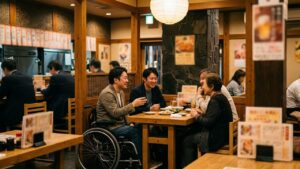
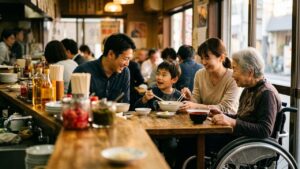
How I Discovered Osu Restaurants Welcome Para Games Visitors
 gotowp
You've probably been there before. You're standing somewhere in Japan, phone in hand, searching for a place to eat — and the results are either famous chains you already know, or restaurants with zero English on the menu and no photos to go by. You scroll, you hesitate, you settle for something familiar. And later, looking back at your trip photos, that meal is the one you can't quite remember.
Or maybe the other version: you find something that looks incredible online, arrive at the restaurant, and realize the staff look unsure how to help you. No English menu. No one quite knows how to explain the dish. You order by pointing and hoping for the best.
I'm Masayuki Goto, founder of Itadaki in Osu, Nagoya. With the Asian Para Games 2026 just weeks away, I've been thinking a lot about these moments — and about what it actually means for a restaurant to welcome visitors from around the world, not just in theory, but in practice.
Let me share what I've discovered, as someone who loves exploring restaurants on my own travels just as much as I love running one.
Who This Is For
- ✅ Travelers visiting Nagoya for the Asian Para Games 2026 who want a lunch experience worth posting and talking about
- ✅ Anyone who's felt the frustration of finding "accessible-looking" restaurants that fall short in practice
- ✅ Visitors to Osu district curious about what the neighborhood actually offers beyond shopping and temples
- ✅ Foodies who want their Japan trip content to tell a story, not just show a plate of food
- ✅ Solo travelers and small groups looking for a welcoming, low-pressure lunch in central Nagoya
A Habit I Can't Turn Off — Even on Days Off
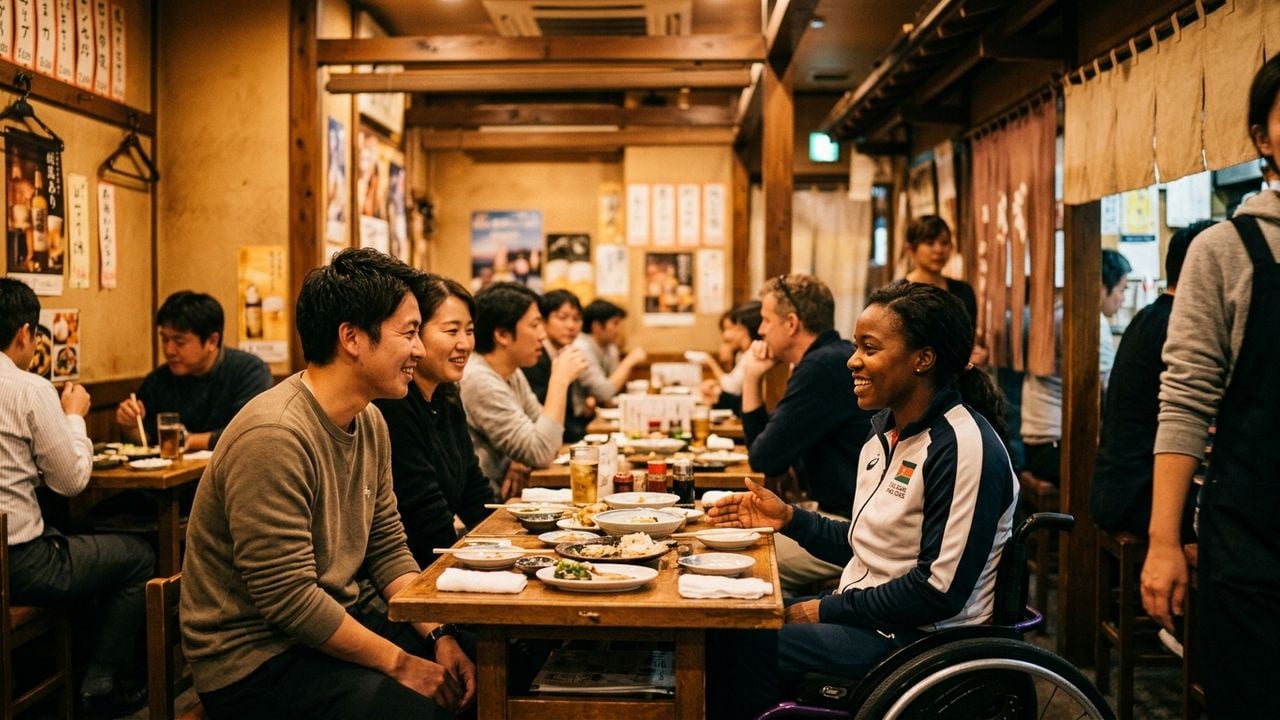
I'll be honest: I don't really have a clean separation between work life and personal life when it comes to food. Restaurants are my hobby as much as my profession. Whether I'm at IG Arena watching the Nagoya Diamond Dolphins play basketball, wandering through the cobblestone lanes of Shikemichi on a quiet afternoon, or traveling abroad, I'm always noticing how restaurants handle the moment a guest walks in who doesn't speak the local language.
That moment is everything. It's the difference between a meal that becomes a story and a meal that disappears from memory by the following morning.
What I've seen in my own travels — discovering food I've never encountered before, sitting in restaurants where I'm clearly not the target customer, navigating menus in languages I don't read — is that the restaurants that stay with me aren't necessarily the most expensive or the most famous. They're the ones where the welcome felt genuine, where the dish came with a story I could actually understand, and where I left with something to say beyond "it tasted good."
That experience shaped everything about how I designed Itadaki. And it's exactly what I think Osu, as a neighborhood, does better than people expect.
You're planning around the Para Games schedule and want to know which days Itadaki is actually open before you build your lunch stop into your itinerary. Our monthly business calendar — including any irregular closures during the Para Games period — is posted on Instagram so you always have the current picture. A quick follow means you'll have it on hand exactly when you need it.
What I Noticed Walking Around Osu With a Visitor's Eyes
Osu has always had an unusual energy. It's one of those rare places where a 400-year-old Buddhist temple sits at the center of a shopping street packed with vintage clothing, anime shops, and international food — and somehow it all makes sense. The neighborhood has been multicultural for longer than most people realize.
But what strikes me now, heading into the Para Games period, is how much the area has quietly evolved in terms of practical accessibility and visitor-friendliness. Wider walkways along the main shopping arcade. More restaurants with photo menus visible from the entrance. Shops and cafés where the staff's instinct, when they see a visitor pause at the door, is to step forward rather than look away.
This isn't accidental. Osu attracts the kind of restaurant operators who have always served a mixed crowd — locals, tourists, cosplay enthusiasts, temple visitors, people from every part of Japan and beyond. That diverse daily reality has quietly trained the neighborhood to be more welcoming than most.
If you're planning your meals around Para Games venues, it's worth knowing that Osu is within easy reach and offers something the more obvious options near major sporting venues often don't: genuine neighborhood character. For a deeper look at how Osu dining compares to other Nagoya options for Para Games visitors, this breakdown of accessible Osu dining versus Sakae options covers the practical differences well.
The Google Maps Discovery That Says Everything
One of the pieces of feedback that has stuck with me most since we opened Itadaki in April 2022 came from a visitor who found us the way a lot of our international guests do — not through a travel guide, not through a recommendation from a hotel concierge, but through Google Maps.
"I discovered Itadaki through Google Maps and it became the best meal of our Japan trip."
When I read that, I thought about all the moments that had to go right for that sentence to be true. The photo had to stop the scroll. The description had to answer the questions forming in that person's mind before they even knew they were asking them. And then — most importantly — the actual experience had to deliver something more than what the photo promised.
That's the standard I hold myself to. Not "good enough for a tourist." Not "they won't know the difference." But: will this person leave with a story worth telling?
The dish that generates this response at Itadaki is our Rare Wagyu Gyudon — specifically the version featuring Horai Wagyu, produced by just three farms in Aichi Prefecture, with only 300 heads raised annually across all of Japan. It's a bowl that looks striking, comes with an ingredient story that genuinely surprises people, and involves a five-step eating guide that turns a lunch into something interactive and memorable. When your followers ask "what is that?" — and they will — you have an actual answer, not just a caption.
✓ Key Takeaways
- Osu's long history of welcoming diverse visitors makes it a naturally accessible neighborhood for Para Games travelers — not by design but by daily practice
- The most memorable travel meals are ones where the presentation, the story, and the welcome all align — the dish alone isn't enough
- A single unexpected restaurant discovery found through Google Maps can become the highlight of an entire Japan trip
Horai Wagyu is limited to 10 bowls per day, and the Para Games period is exactly when those bowls disappear earliest. A Tabelog reservation locks in your bowl and your seat before you arrive — so the only thing left to decide is which size you want.
What "Welcome" Actually Looks Like in Practice
At Itadaki, we've made specific choices that I think matter for visitors who are navigating Japan without Japanese language confidence. Printed menus in English, Simplified Chinese, and Korean. A photographic five-step guide that shows exactly how to eat the dish — not because the dish is complicated, but because understanding the sequence genuinely changes the experience. Staff who default to warmth before language.
We're also honest about our limitations. We're on the second floor, accessed by a staircase — something we always communicate clearly so visitors can plan accordingly. For those researching barrier-free dining options in the Osu area more broadly, this guide on finding accessible restaurants in Nagoya's Osu area is a useful resource. And if you want a comprehensive overview of accessible dining options across Para Games venues in Nagoya, The Complete Accessibility Guide for Asian Para Games 2026 Dining covers the full picture.
Horai Wagyu is limited to 10 bowls per day, and during peak periods like the Para Games, those bowls go quickly. Reservation via Tabelog is the most reliable way to secure a seat — and knowing that in advance is exactly the kind of honest communication I'd want from a restaurant I was visiting for the first time in a city I didn't know well.
The Story You'll Want to Tell
Nagoya in September 2026 is going to be full of moments worth capturing. The Para Games bring an energy to a city that already has more going on than most visitors expect — from Nagoya Castle to the Osu temple complex to Aichi's food culture, which runs deeper than its reputation suggests.
What I hope for every visitor who sits down at Itadaki is not just a good meal, but a conversation starter. A photo that prompts questions. A dish they can describe in detail three years from now to someone who asks "so what did you actually eat in Nagoya?"
That's what I was chasing when I built this place. And every time I hear that someone found us on Google Maps and called it the best meal of their Japan trip, I know the answer was worth pursuing.
For our complete menu, access details, and store information, visit our official page at https://itadaki8.com/english/
You've read about what makes a meal worth remembering — and you know that 300-heads-a-year Horai Wagyu found through Google Maps by someone who called it the best meal of their Japan trip is worth planning around. Tabelog reservations take a few minutes and make the difference between securing your bowl and arriving to find it sold out.