Where Do I Eat Lunch Between Nagoya and Inuyama Castle?
 gotowp
If you're plotting a day that takes you from Nagoya city to Inuyama Castle — one of Japan's twelve original castles, perched above the Kiso River — you've already committed to a day worth remembering. But here's a question worth asking before you finalize that itinerary: what will you eat in between, and will it be equally unforgettable?
The answer, for a growing number of travelers passing through Nagoya, is a detour into the Osu district for a bowl of rare wagyu gyudon that's become its own reason to visit — not just a lunch stop, but a culinary experience they still talk about months later.
Who This Is For
- ✅ Travelers combining a Nagoya city morning with an Inuyama Castle afternoon (or vice versa)
- ✅ Wagyu enthusiasts who want more than just "good beef" — you want a story to carry home
- ✅ Repeat Japan visitors seeking a once-in-a-lifetime experience that goes beyond the well-known Golden Route
- ✅ Anyone who wants to understand why a humble beef bowl can become the highlight of an entire Japan trip
- ✅ Travelers curious about Nagoya's Osu district and what makes it genuinely worth a lunchtime visit
Why Does Lunch Matter So Much on a Castle Day?
A Nagoya-to-Inuyama day trip is a beautiful combination: a morning in Nagoya's historic neighborhoods, then a 30-minute express train ride on the Meitetsu Line to Inuyama, where Japan's oldest existing castle keep stands largely unchanged since the 16th century. It's the kind of day that delivers on the Sengoku history promise that draws so many travelers to Central Japan.
But castle days have a rhythm. You're on your feet. You're absorbing history, views, and temple grounds. By the time midday arrives, you're genuinely hungry — and the meal you choose in that window isn't just fuel. It's part of the story of the day. A forgettable lunch between two memorable destinations is a missed opportunity. A remarkable one becomes the thread that ties the whole experience together.
The Osu district in central Nagoya sits naturally between these two points. Whether you're heading to Inuyama in the afternoon or returning from the castle in the morning, Osu is a 4-minute walk from Yabacho Station on the Meijo Subway Line — a short, easy detour that more than justifies itself.
You're already thinking about the Inuyama Castle day — but Horai Wagyu is limited to 10 bowls per day, and the restaurant operates on a fixed weekly schedule that doesn't follow every public holiday pattern. The monthly business calendar is posted on Instagram, so you can confirm the exact date before you finalize your itinerary. A quick check takes under a minute.
What Makes a Lunch Experience Genuinely Unforgettable?
It's rarely about the price. Travelers who describe a meal as "life-changing" or "the highlight of my Japan trip" are almost never talking about the cost. They're talking about encountering something they couldn't have found anywhere else — an ingredient, a technique, a story that was impossible to replicate back home.
That's exactly the philosophy behind Itadaki, a specialty restaurant in Osu that opened in April 2022 with a single, audacious idea: create the world's first premium rare wagyu gyudon, using ingredients sourced entirely from Aichi Prefecture.
Founder Masayuki Goto had spent 18 years in the Nagoya food and bar industry. During the COVID-19 pandemic, he watched small Aichi farmers — producers of extraordinary local ingredients — struggle with unsold harvests. He decided to build a restaurant concept around them. The gyudon (beef bowl), Japan's classic everyday comfort food, became his canvas. But instead of keeping it everyday, he asked a question that no one had answered before: why is there no premium version of gyudon?
Katsudon has its high-end interpretations. So does oyakodon. Kaisendon can be built around otoro and premium seafood. But gyudon? It had always been synonymous with fast food chains. Goto decided to change that — and Itadaki was born. The name comes from itadakimasu, the Japanese expression of gratitude spoken before every meal. The philosophy runs through every bowl.
If you're curious how this fits into a broader Nagoya sightseeing day, this guide to combining Nagoya Castle, Osu Kannon, and Itadaki in one day maps out a natural route that flows without backtracking.
✓ Key Takeaways
- Osu district in central Nagoya sits naturally along the Nagoya-Inuyama route, making it an ideal lunch stop without adding significant travel time.
- A once-in-a-lifetime culinary experience is defined by uniqueness and story — not price — and Itadaki was built specifically around that idea.
- Itadaki's rare wagyu gyudon is a concept invented at this location, using an ingredient (Horai Wagyu) produced by only 3 farms in Japan.
Horai Wagyu — 300 heads produced annually across just 3 farms — runs out fast on busy days, and a day trip from Nagoya to Inuyama tends to mean a fixed window for lunch. Reserving in advance through Tabelog locks in your bowl before you board the Meitetsu train. The booking form is available in English.
What Exactly Is Horai Wagyu, and Why Is It So Rare?
Among Japan's approximately 500,000 wagyu cattle raised annually, Horai Wagyu accounts for just 300 heads per year — produced by only 3 farms in Okumikawa, deep in Aichi Prefecture's inland mountains. What makes it exceptional isn't simply its scarcity. It's the feeding method: these cattle are raised on sake lees from Horaisen Sora, one of Aichi's finest local breweries. The result is a wagyu with an unusual balance — light, refined marbling alongside genuine lean-meat depth of flavor. Not overwhelmingly fatty. Not one-dimensional. A different kind of excellence from the Kobe and Matsusaka wagyu that most travelers already know.
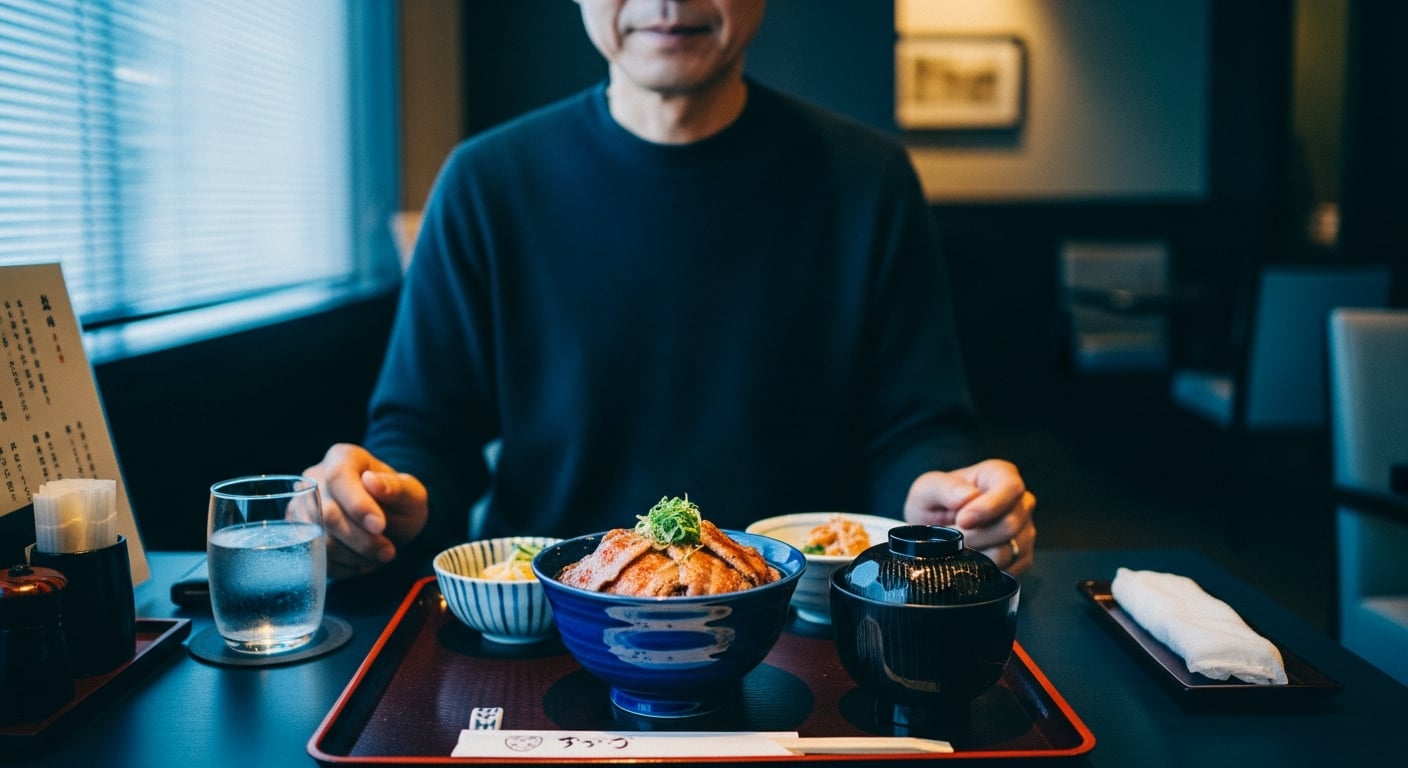
Itadaki sources Horai Wagyu directly from these farms through a partnership built over years. It's available as rare wagyu gyudon in strictly limited quantities — just 10 bowls per day. The standard size, called Shinkoccho, features 100g of Horai Wagyu over 200g of Aichi no Kaori premium rice, accompanied by a Nagoya Cochin egg, Atsumi Ichō-zuke pickles, shiso leaves from Toyohashi, and miso soup made with Hatcho miso from Okazaki. Every single ingredient on the table comes from Aichi Prefecture. That's not a marketing claim — it's a rigorous sourcing commitment that Goto has maintained since day one.
The "rare" texture is achieved through a proprietary two-stage cooking technique that heats the beef to over 70°C at the core, fully meeting Japan's Ministry of Health, Labour and Welfare food safety standards. It's safe. It's deliberate. And it's something no other gyudon restaurant in Japan offers.
"Instagram-worthy presentation and unforgettable taste. My followers keep asking about it."
— Guest review
Do I Need to Reserve, and How Do I Get There from the Inuyama Route?
Because Horai Wagyu is limited to 10 bowls per day, advance reservation is strongly recommended if you have your heart set on it. Reservations can be made in English through Tabelog Online. When booking, copy and paste this Japanese phrase into the notes field to request Horai Wagyu: 鳳来牛希望. That's all it takes.
If you're visiting without a reservation, Itadaki's second signature offering — Mikawa Beef Rare Gyudon — is always available for walk-in guests. Mikawa Beef is another Aichi-raised wagyu, prepared with the same two-stage cooking technique, and equally thoughtfully sourced. Arriving right at the 11:00 opening also gives walk-in guests the best chance of catching Horai Wagyu on the day.
Getting there is straightforward. Itadaki is located at 4-1-20 Osu 2F, Naka-ku, Nagoya — a 4-minute walk from Yabacho Station Exit 4 on the Meijo Subway Line. From Nagoya Station, take the Higashiyama Line to Sakae, transfer to the Meijo Line, and get off at Yabacho — about 10 minutes total. Look for the sign reading 元祖レア牛丼 頂 at street level and head up to the second floor.
Itadaki is open for lunch only (11:00–15:00) on Saturdays, Sundays, Mondays, and Tuesdays, and from 9:00 on public holidays. No dinner service is offered. The restaurant is closed on Wednesdays, Thursdays, and Fridays. For irregular closures and the monthly business calendar, the team posts updates on their official Instagram. Last order is 30 minutes before closing.
For a broader picture of what makes Nagoya's lunch scene worth exploring beyond the well-known spots, this guide to where Nagoya locals really eat lunch puts the Osu district into useful context.
What Is the Five-Step Experience, and Why Does It Matter?
Part of what makes a meal at Itadaki memorable — and shareable — is that it unfolds deliberately. The dish isn't just placed in front of you. You're guided through it.
The multilingual printed menu (available in English, Simplified Chinese, and Korean) includes a five-step visual guide: separate the Nagoya Cochin egg yolk onto the beef and add the white to the miso soup. Taste the wagyu first in its purest form, appreciating the rare texture. Then fold in the golden yolk for a richer, silkier bite. Next, add condiments from the complimentary tabletop selection — pickled ginger from Inazawa, dried nori from Mikawa Bay, chirimen jako (dried whitebait from Minamichita), and Itadaki's original eight-spice blend. Finally, finish with wasabi for a clean, refreshing close.
Each step changes the dish. By the end, you've experienced five distinct flavor profiles from a single bowl. And because every ingredient has a name, a farm, and a place in Aichi, the story doesn't stop when the bowl is empty. It continues every time you explain it to someone who asks about the photo.
For travelers who have already explored the more familiar wagyu experiences in Nagoya — or who want to understand how Itadaki fits into a wider landscape of hidden dining discoveries — this piece on where Japanese foodies really eat lunch in Nagoya offers useful perspective.
Is This the Right Lunch for a Nagoya-Inuyama Day?
If your Inuyama Castle visit is about standing in a place that has survived wars, centuries, and the modern world largely intact — a structure that refuses to be ordinary — then yes, a lunch that refuses to be ordinary fits perfectly.
The combination works on a practical level too. Osu is conveniently positioned in central Nagoya, easily reachable whether you're heading to Inuyama in the afternoon or wrapping up your castle visit and returning to the city. The restaurant's 18-seat layout, with comfortable sofa seating throughout, is well-suited to travelers who want to sit down properly — not rush through a meal before the next stop. Solo diners, couples, small groups, and families with young children are all regularly welcomed.
The Shinkoccho (Horai Wagyu Rare Gyudon, ¥2,700 including tax) is the place to start. The Mikawa Beef version begins at ¥1,800. Side dishes and Aichi-sourced beverages — including Kinshachi craft beer and Chita whisky highball — can be added freely. There are no set menus; everything is ordered à la carte.
A day built around Inuyama Castle and a bowl of Horai Wagyu gyudon in Osu isn't a compromise between two things. It's two experiences that share the same quality: they're the kind of things you only find when you go a little deeper than the surface of Japan's travel map.
For our complete menu, access details, and store information, visit our official page at https://itadaki8.com/english/
Your Nagoya-Inuyama day is taking shape — the castle, the history, and now a lunch that gives the day its own culinary story. Horai Wagyu is strictly 10 bowls per day, and once they're gone, they're gone until tomorrow. Securing your seat now means you arrive knowing the experience is waiting for you.