Why This Osu Restaurant Became My Cosplay Summit Highlight
 gotowp
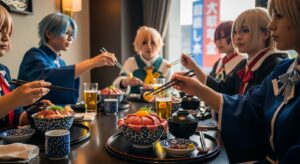
A few weeks ago, a visitor slid into our Instagram DMs with a message I wasn't expecting. She had come to Nagoya for the World Cosplay Summit, fully costumed and ready to explore Osu — and she'd had Itadaki on her list for lunch. But she almost didn't come.
"I kept reading 'rare wagyu' and getting nervous," she wrote. "Back home, we're always told not to eat undercooked beef. I wasn't sure if it was safe."
She did come. She sat down in her costume, ate the whole bowl, and then sent me that message. She said her followers on social media wouldn't stop asking about the photo she posted: "Instagram-worthy presentation and unforgettable taste. My followers keep asking about it."
That exchange stuck with me — because she's not alone. This concern comes up more than almost any other question we receive from international visitors. And it deserves a real, honest answer.
Who This Is For
- ✅ Cosplay Summit attendees or Osu visitors who want a memorable lunch but feel uncertain about rare-style wagyu
- ✅ Travelers from Western countries cautious about food safety when eating beef in Japan
- ✅ Anyone comparing whether to visit Itadaki or play it safe with a more familiar lunch option in Osu
- ✅ First-time visitors to Japan curious about how "rare" wagyu is actually prepared and regulated
- ✅ Foodies who want the full picture before committing to a reservation

The Real Reason Western Visitors Hesitate — And Why Japan Is Different
Let's be direct about where this concern comes from. In the United States, the UK, and much of Europe, public health agencies advise against consuming undercooked beef. The risk of E. coli O157:H7 and other pathogens in beef from those supply chains is a legitimate concern — and it's been drilled into the public consciousness through decades of food safety campaigns.
So when a foreign visitor reads "rare wagyu," the brain immediately triggers that same warning signal. That's completely understandable.
But Japan's food system operates under a different set of conditions. The Ministry of Health, Labour and Welfare sets strict regulations for how beef can be prepared and served — including specific core temperature requirements. Any restaurant serving beef in a rare-style format must meet these standards. There is no legal grey area here.
At Itadaki, I take this even further. As a Certified Food Sanitation Supervisor, food safety isn't a checkbox for me — it's the foundation everything else is built on. Without it, there is no dish.
The concern about rare-style wagyu is real — and one article can only go so far in explaining a technique you haven't seen yet. Our Instagram shows the dish, the preparation process, and the monthly business calendar so you can plan your Cosplay Summit lunch with confidence. No sign-up needed — just a quick scroll.
How Itadaki's Two-Stage Cooking Technique Actually Works
This is where the comparison gets interesting — because what we do at Itadaki is genuinely different from what most people imagine when they hear "rare beef."
Our proprietary two-stage cooking technique heats the wagyu to over 70°C at the core. That temperature fully meets Japan's Ministry of Health, Labour and Welfare food safety requirements. The beef is not raw. It is not undercooked in any medically meaningful sense.
What the technique preserves is texture — the silky, almost melting quality that makes wagyu a completely different eating experience from a grilled steak. The marbling in Horai Wagyu and Mikawa Beef responds to heat in a way that creates a sensation of tenderness that would be lost at higher temperatures. The two-stage process controls exactly how that marbling behaves, delivering the experience without compromising safety.
This took time and genuine culinary research to develop. It's not something another restaurant can replicate simply by copying the idea. The technique is Itadaki's own — and it's the reason this dish exists at all.
Compare this to the alternative: ordering a medium-rare burger at a casual restaurant abroad, where the core temperature is rarely monitored and the beef supply chain is far less controlled. The irony is that Itadaki's rare-style wagyu involves far more precision than most "normal" cooked beef dishes visitors eat without thinking twice.
The Ingredient Side of Food Safety: Why Source Matters
Cooking technique is only half the picture. The other half is the beef itself.
Itadaki uses only two beef sources — both from Aichi Prefecture, both raised under rigorous quality control by local farms I source from directly. Horai Wagyu comes from just three farms in Okumikawa, raising only 300 heads per year. Mikawa Beef comes from Aichi's Mikawa region, raised on okara feed with lactic acid bacteria gut management.
These aren't anonymous commodity products. I know where the beef comes from. I have direct supply partnerships with the farms. The traceability is real, not a marketing claim.
For a visitor weighing their options in Osu — whether to try somewhere familiar or to try something genuinely singular — this is the relevant comparison. A chain restaurant offering "beef" tells you very little about where that beef has been. At Itadaki, the provenance of every ingredient is specific, documented, and deliberate.
And it's not just the beef. The Nagoya Cochin egg that comes with every bowl is from Yamada Poultry Farm. The rice is Aichi no Kaori, grown in Aichi Prefecture. The miso soup uses Hatcho miso from Okazaki. Everything from Aichi — not as a marketing slogan, but as a quality system.
✓ Key Takeaways
- Itadaki's rare-style wagyu is cooked to over 70°C at the core — fully meeting Japan's Ministry of Health, Labour and Welfare food safety standards. "Rare" refers to texture, not temperature.
- The two-stage cooking technique is a proprietary method developed specifically to deliver the wagyu's natural silkiness without compromising safety — not a shortcut, but a precision process.
- Every ingredient is sourced directly from Aichi Prefecture farms with known provenance — Horai Wagyu (300 heads/year, 3 farms), Mikawa Beef, Nagoya Cochin eggs, and more.
You now know how the two-stage technique works and why Horai Wagyu is limited to 10 bowls a day — which means the next real question is whether your bowl will be waiting when you arrive. Reserving via Tabelog takes just a few minutes and lets you specify Horai Wagyu in the notes field using the phrase above. The reservation form is available in English.
Cosplay Summit Visitors: A Surprisingly Perfect Fit
Here's a comparison that might not be obvious at first: Cosplay Summit attendees and wagyu enthusiasts share something in common. Both groups care deeply about authenticity.
Cosplay is not just wearing a costume — it's an expression of craft, attention to detail, and commitment to something you genuinely love. The visitors who come to Osu for the World Cosplay Summit are not tourists looking for the easiest option. They're people who traveled internationally because they care about doing something properly.
That same quality of attention translates naturally into appreciating what Itadaki offers. The story of Horai Wagyu — 300 out of the approximately 500,000 wagyu raised in Japan each year, fed on sake lees from Horaisen Sora, one of Aichi's finest breweries — isn't background noise. It's the kind of detail that a Cosplay Summit visitor, accustomed to researching and valuing craft, actually wants to know.
And then there's the visual element. The bowl arrives with the raw Nagoya Cochin egg yolk resting on top of the carefully arranged rare wagyu, in a traditional Japanese ceramic bowl. The presentation is deliberate, the colors vivid, the composition considered. It photographs beautifully — which is why visitors keep posting it, and why their followers keep asking questions.
"Instagram-worthy presentation and unforgettable taste. My followers keep asking about it."
— Guest who visited Itadaki during the World Cosplay Summit
If you're in Osu for the Cosplay Summit and weighing your lunch options — the familiar comfort of a café versus something you'll still be talking about six months later — the question worth asking is: which story do you want to bring home?
Osu is a district that rewards curiosity. How one visitor wove Itadaki into their Cosplay Summit Nagoya story is a good read if you want a first-person account of what that day actually looked like. And if you're exploring what makes Osu's food scene genuinely different from Akihabara's, this comparison of Osu cosplay dining versus Akihabara anime restaurants covers the distinctions honestly.
Making the Decision: When to Reserve vs. When to Walk In
Here's the practical comparison that matters for planning.
Horai Wagyu is strictly limited to 10 bowls per day. During peak periods — including World Cosplay Summit weekends — those bowls go quickly. If Horai Wagyu is your target, reserving via Tabelog Online is strongly recommended. When filling in the notes field, copy and paste this phrase to request it: 鳳来牛希望
If you're a walk-in visitor, or if Horai Wagyu has sold out by the time you arrive, Mikawa Beef Rare Gyudon is always available — and prepared with the same two-stage cooking technique, the same Aichi-sourced ingredients, and the same care. The Fumoto size (100g beef, 200g rice) starts at ¥1,800. It is not a consolation prize. Many guests who came for Horai Wagyu and ended up with Mikawa Beef leave equally satisfied.
Itadaki is open for lunch only — Tuesday, Saturday, Sunday, and Monday, from 11:00 to 15:00 (last order 14:30). On public holidays, we open at 9:00. Because the schedule can vary, checking our monthly calendar on Instagram before you visit is always a good idea.
Getting here from Osu Kannon Temple or the main Osu Shopping Street is a short walk. We're four minutes from Yabacho Station Exit 4 on the Meijo Subway Line, on the 2nd floor — look for the sign that reads 元祖レア牛丼 頂 at street level and take the stairs up.
Bringing It All Together
The visitor who almost didn't come — the one in costume who ended up posting a photo her followers couldn't stop asking about — made her decision once she understood what "rare" actually means at Itadaki. Not raw. Not risky. Precisely cooked, safely prepared, and unlike anything available elsewhere in Nagoya.
If the World Cosplay Summit brings you to Osu, you're already in the right neighborhood. The question is whether lunch becomes a quick stop or the part of the trip you keep telling people about.
For our complete menu, access details, and store information, visit our official page at https://itadaki8.com/english/
Cosplay Summit weekends fill those 10 daily Horai Wagyu bowls faster than any other day of the year. If this is the lunch you're building your Osu day around, locking in a reservation now is the one step that makes everything else easier. Tabelog Online accepts reservations in English.