Why Global Executives Now Choose Osu for Their Nagoya Lunch
 gotowp
Here's the short answer: business travelers and discerning global visitors are choosing Osu for their Nagoya lunch because they've learned — often through a fellow executive's recommendation — that Itadaki's Rare Wagyu Gyudon is exactly the kind of lunch you don't stumble upon twice. And then the follow-up question arrives almost immediately: "But will the Horai Wagyu still be available when I get there?" That's the right question to ask, and this article gives you the honest, practical answer.
Who This Is For
- ✅ Business travelers visiting Nagoya for Toyota-related meetings, MICE events, or technical visits who want one exceptional lunch in the city
- ✅ Repeat visitors to Japan who have already tried Kobe and Matsusaka beef and are now seeking something genuinely new
- ✅ Anyone planning a short stay in Nagoya (one or two days) who cannot afford to miss their target dish
- ✅ Travelers who want to understand how to reserve Horai Wagyu at Itadaki — step by step, in English
- ✅ Walk-in visitors wondering whether it's still worth visiting if Horai Wagyu is sold out
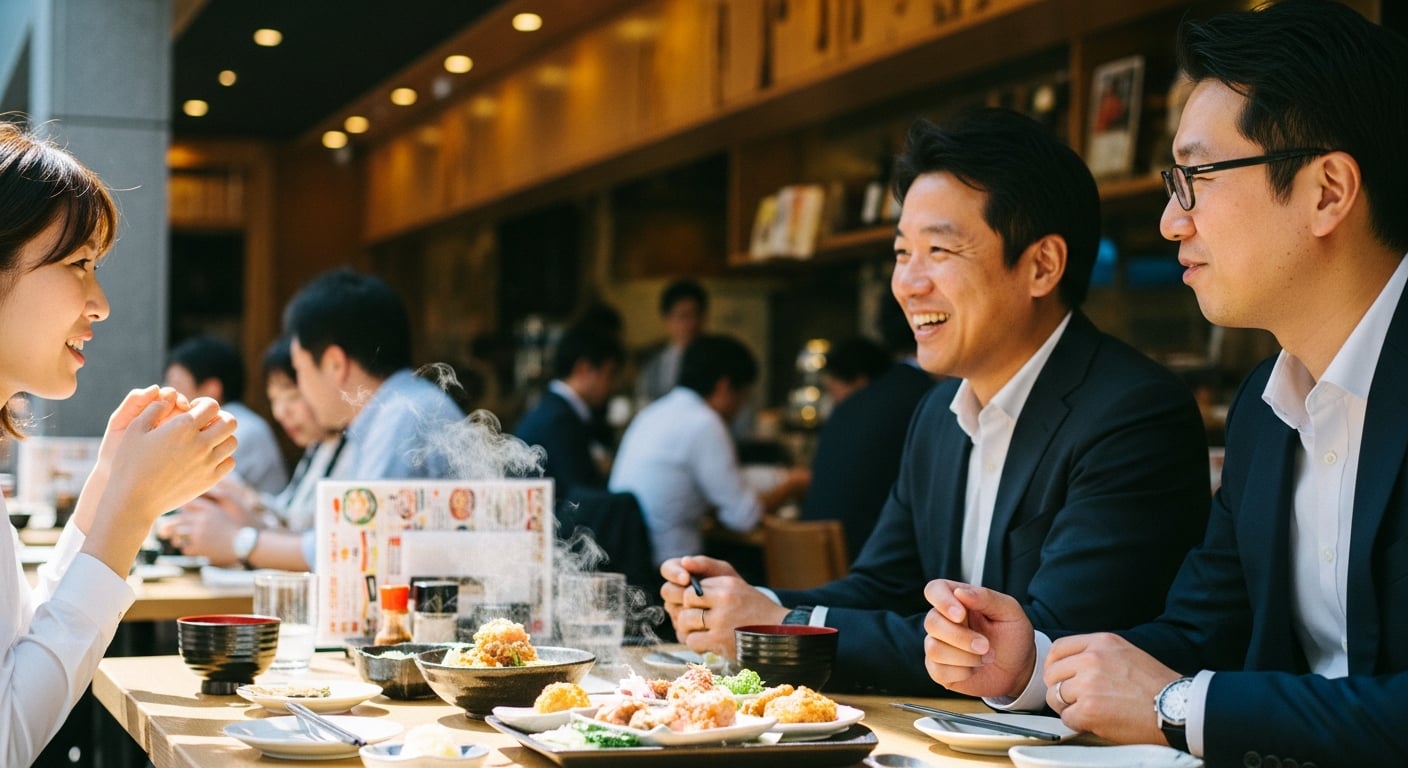
The Pattern We See Again and Again: Short Stay, High Stakes
Nagoya is rarely the primary destination on a business itinerary — it's often a two-day stop between Tokyo and Osaka, or a base for visiting Toyota's facilities in the surrounding region. That time pressure changes everything about how a traveler plans their meals.
Consider a scenario we hear regularly: a senior executive arrives in Nagoya on a Tuesday afternoon, has meetings until midday Wednesday, and flies out Thursday morning. That's one lunch window. They've done their research, found Itadaki through a colleague's recommendation or a Google search for wagyu Nagoya, and they've identified the Horai Wagyu Gyudon as the dish they want. They arrive at 12:30 — right in the middle of peak hour — and the Horai Wagyu is gone. All ten bowls, sold by 12:15.
This isn't a hypothetical. It happens. And it's entirely preventable with one step taken in advance.
Why Horai Wagyu Is Limited to Ten Bowls a Day — and Why That Number Won't Change
Horai Wagyu is not scarce because of a marketing strategy. It's scarce because the production is genuinely, structurally limited. Across all of Japan, only three farms raise this breed, producing approximately 300 heads annually. To put that in perspective: Japan raises around 500,000 wagyu cattle each year. Horai Wagyu represents 300 of those.
These cattle are raised in the Okumikawa mountains of Aichi Prefecture and fed on sake lees from Horaisen Sora — one of Aichi's finest local sake breweries. The result is a wagyu with a flavor profile unlike anything you'll find from more commercially scaled brands: lighter marbling than Kobe or Matsusaka, with a clean, nuanced finish that comes precisely from that distinctive feeding method. It's not a beef that can be produced in larger quantities without fundamentally changing what it is.
Itadaki founder Masayuki Goto sources directly from these farms — a partnership built on the same philosophy that created the restaurant. During the COVID-19 pandemic, when small Aichi producers found themselves with unsold harvests and no restaurants to supply, Goto felt compelled to act. Itadaki was conceived as a long-term commitment to these farms, not just a supplier relationship. Which is also why the daily limit is fixed. There is no "extra" Horai Wagyu to be had on a busy Saturday.
✓ Key Takeaways
- Horai Wagyu is limited to 10 bowls per day — not as a marketing tactic, but because Japan produces only 300 heads annually across 3 farms
- Peak lunch hours (12:00–13:00) are when walk-in guests most commonly miss out on Horai Wagyu
- Advance reservation via Tabelog Online is the only guaranteed way to secure your bowl
How to Reserve Horai Wagyu: A Step-by-Step Guide for International Visitors
Tabelog is Japan's most widely used restaurant reservation and review platform — the equivalent of OpenTable or Resy in Western markets, but more dominant in daily Japanese dining culture. If you haven't used it before, the process is straightforward, and reservations can be made entirely in English.
Here is the exact process to follow:
- Visit the Tabelog reservation page for Itadaki using the link at the end of this article, or search "Itadaki Osu" on the Tabelog website.
- Select your date and time. Itadaki is open Tuesday, Saturday, Sunday, and Monday from 11:00 to 15:00 (last order at 14:30). On public holidays, doors open at 9:00. Check the monthly business calendar on Instagram before booking, as irregular closures do apply.
- Complete the reservation form in English. The site supports English-language input.
- In the notes or special requests field, copy and paste the following phrase:
鳳来牛希望
This is the Japanese text for "Horai Wagyu requested" — and it is the key step that most international visitors miss. Without this note, your reservation does not guarantee Horai Wagyu availability specifically.
That's it. With that phrase in the notes field, your Horai Wagyu bowl is held for you. You arrive, you're seated, and your dish is already accounted for.
If you're hesitant about using a Japanese platform, the effort is genuinely worth it. As one guest put it after making the journey from outside Nagoya specifically for this experience:
"I traveled to Nagoya specifically to eat here — it was 100% worth it."
Guest review
That kind of certainty starts with a reservation.
What Happens If You Arrive Without a Reservation?
You still have excellent options — and this is worth knowing if you're the type of traveler who prefers to keep plans flexible.
Itadaki's second signature dish, the Mikawa Beef Rare Gyudon, is always available for walk-in guests. Mikawa Beef is another premium Aichi Prefecture wagyu — raised in the Mikawa region using an okara feed blend with lactic acid bacteria gut management, and prepared using the identical two-stage cooking technique that defines Itadaki's rare wagyu experience. It is not a fallback dish. It is a genuine destination in its own right.
For walk-in guests specifically targeting Horai Wagyu, the single best strategy is to arrive at 11:00 exactly — when the restaurant opens. At that moment, all ten Horai Wagyu bowls are still available. Arriving even twenty minutes later during a busy Saturday is a gamble. Arriving at noon is likely too late.
The honest reality is this: if your Nagoya schedule offers only one lunch window and Horai Wagyu is the reason you're visiting, a reservation isn't just convenient — it's the difference between the experience you planned and a missed opportunity. The ten-minute effort of reserving via Tabelog is the most efficient thing you can do with those ten minutes.
The Osu Factor: Why This Neighborhood Makes the Lunch Even Better
Executives and repeat Japan visitors who choose Osu for their Nagoya lunch often discover that the neighborhood itself becomes part of the story. Itadaki is located a four-minute walk from Yabacho Station Exit 4 on the Meijo Subway Line — a ten-minute journey from central Nagoya Station via two subway lines — and the surrounding Osu district rewards the brief detour.
Osu's 1,200-shop shopping street runs alongside a 400-year-old history anchored by Osu Kannon Temple, one of Central Japan's most important Buddhist sites. Three minutes from the same station, Hisaya-odori Garden Flarie offers free-admission themed gardens — a quiet contrast to the energy of the shopping street, and a natural stopping point before or after lunch. For the business traveler with two hours between meetings, or the executive spouse exploring the city independently, Osu offers exactly the kind of authentic, layered experience that a hotel restaurant cannot.
Itadaki itself is on the second floor — look for the sign reading 元祖レア牛丼 頂 (Ganso Rea Gyudon Itadaki) at street level, and take the stairs up. The restaurant seats 18 guests across sofa-style table seating and counter seats, with a fully multilingual printed menu in English, Simplified Chinese, and Korean. A five-step visual guide walks you through exactly how to enjoy the dish — separating the Nagoya Cochin egg yolk, experiencing the wagyu in sequence, adding condiments progressively. No Japanese required.
Securing the Lunch That Becomes the Story You Tell
There's a certain category of business meal that stops being a meal and starts being a reference point — the lunch your colleague asks about three months later at a conference in another city. Itadaki's Rare Wagyu Gyudon earns that status not through spectacle, but through specificity. The story of Horai Wagyu — 300 heads per year, sake lees from a mountain brewery, direct sourcing from Aichi farms — is the kind of detail that travels well in conversation.
But that story requires showing up. And showing up for the Horai Wagyu means reserving in advance.
Take sixty seconds to copy 鳳来牛希望 into the notes field of your Tabelog reservation. That single action is the only thing standing between you and a bowl of wagyu that fewer than 3,650 people in the world will experience this year.
For our complete menu, access details, and store information, visit our official page at https://itadaki8.com/english/
Ready to secure your bowl? Reserve Your Rare Wagyu Experience — and don't forget to include 鳳来牛希望 in the notes field to request Horai Wagyu specifically.
Not sure which day works yet? Check Our Monthly Schedule on Instagram for the latest business calendar before you book. We look forward to welcoming you.