Step-by-Step: Making an English Reservation in Nagoya
 gotowp
A few weeks ago, I received a message through Instagram that stayed with me. A visitor from Australia had been planning a Nagoya stop as part of their Japan trip, and they wrote: "I really want to try your restaurant, but I'm scared I won't be able to communicate. Is it okay if I come even though I don't speak Japanese?"
I read that message and felt a familiar mix of emotions — gratitude that they'd found us, and genuine concern that language anxiety might stop someone from experiencing something they'd remember for years. That question, in different forms, reaches me more often than you might think. And it's always honest: the fear of sitting down at a Japanese restaurant and not knowing what you're eating, how to order it, or whether you'll accidentally offend anyone.
So let me walk you through exactly what to expect — step by step — from the moment you decide to visit Itadaki to the moment you lift your first bite of rare wagyu.
Who This Is For
- ✅ First-time visitors to Nagoya who are worried about language barriers at authentic local restaurants
- ✅ Travelers who have previously avoided non-touristy restaurants because the menu was in Japanese only
- ✅ Anyone planning a Nagoya lunch stop and wondering whether they need to speak Japanese to enjoy it
- ✅ Visitors curious about rare wagyu gyudon but unsure how the dish works or how to eat it
- ✅ Solo travelers and small groups looking for a stress-free, memorable lunch in Osu district
Step 1 — Make Your Reservation in English (No Japanese Required)
The first step is the one that trips most people up: the reservation itself. If you've ever opened a Japanese restaurant booking page and been greeted by a wall of kanji, you'll understand the hesitation.
At Itadaki, reservations are made through Tabelog — Japan's most widely used restaurant reservation platform. The good news is that Tabelog's booking form can be navigated in English with the help of your browser's built-in translation function (Google Chrome's "Translate this page" works well). You'll be asked to enter your name, contact details, number of guests, and your preferred date and time. No Japanese-language input is required from your side.
A few practical things to know before you book:
- We are open Monday, Tuesday, Saturday, and Sunday from 11:00 to 15:00. On public holidays, we open from 09:00. Wednesday through Friday we are closed.
- Last order is 30 minutes before closing.
- Irregular closures do happen — always check our monthly business calendar on Instagram before finalising your plans.
- If you want to try our Horai Wagyu — the ultra-rare breed produced by only three farms in all of Japan, with just 300 heads raised annually — it's strictly limited to 10 bowls per day. Reservations for this make a meaningful difference, especially during peak hours.
If you get stuck partway through Tabelog, our step-by-step guide to reserving your table at Itadaki in English walks through each screen in detail.
You now know the reservation steps — but Itadaki's schedule isn't fixed week to week, and an irregular closure on the wrong day could mean arriving to a closed door. Our monthly business calendar is posted directly to Instagram, showing exactly which days we're open before you finalise your plans. Takes less than a minute to check.
Step 2 — Getting to Itadaki Without Confusion
Once your reservation is confirmed, getting here is straightforward — and this is one area where Nagoya actually surprises international visitors with how easy the subway system is.
Itadaki is located on the 2nd floor of a building at 4-1-20 Osu, Naka-ku, Nagoya. The closest station is Yabacho Station (矢場町駅), Exit 4 on the Meijo Subway Line — a four-minute walk. From Nagoya Station, take the Higashiyama Line to Sakae, transfer to the Meijo Line, and get off at Yabacho. Total travel time is around 10 minutes.
Sakae Station, Kamimaezu Station, and Osu Kannon Station are all within walking distance as well — so if you're already exploring the Osu Shopping Street or visiting Osu Kannon Temple, we're naturally along the way. For a broader picture of navigating this part of the city, this guide to Nagoya subway stops for international diners covers the key lines clearly.
There is no dedicated parking, but coin lots are scattered within a few minutes' walk through the Osu district. Public transport is genuinely the easier choice here.
✓ Key Takeaways
- Tabelog reservations can be completed in English using browser translation — no Japanese input needed from you.
- Horai Wagyu is limited to 10 bowls per day, so booking ahead protects your access to it.
- Yabacho Station Exit 4 is the closest stop — roughly 10 minutes from Nagoya Station by subway.
You've seen the five-step eating guide and know the Horai Wagyu is limited to 10 bowls a day — which means the reservation step isn't optional if that's what you're coming for. Tabelog is where your spot gets confirmed, and the form is navigable in English with browser translation. No Japanese input required on your end.
Step 3 — What Happens When You Arrive
This is the moment the anxiety tends to peak for many visitors. You walk up the stairs to the second floor, open the door, and — what next?
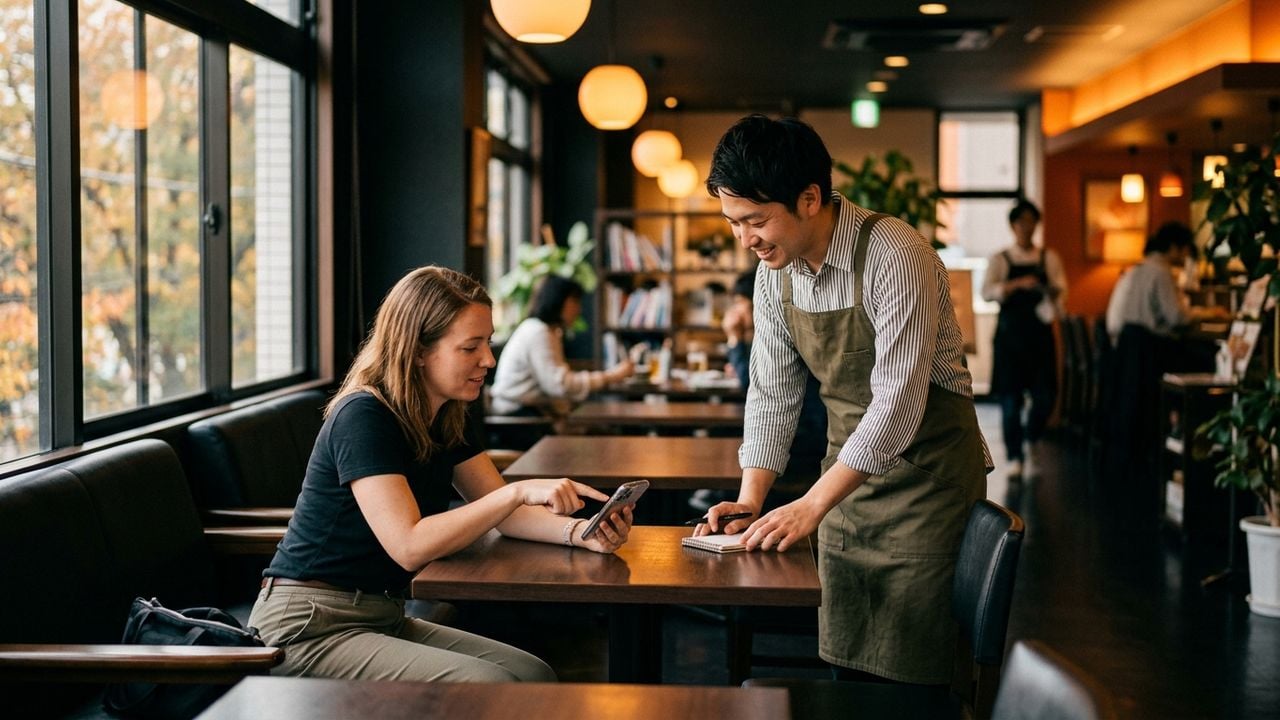
Our staff will greet you warmly, check your reservation, and show you to your seat. You don't need to say anything in Japanese. A simple smile and showing your reservation confirmation on your phone is enough. Our team is accustomed to welcoming guests from around the world, and we genuinely enjoy it.
The restaurant seats 18 people across a combination of counter seats and sofa-style tables — comfortable for solo travelers, couples, and groups. The sofa seating makes a longer, relaxed lunch feel natural, and there's no pressure to eat quickly and leave.
"The staff were welcoming and made us feel at home even without perfect Japanese."
— Guest review, Itadaki
That feedback reflects something I've always believed: hospitality doesn't require a shared language. It requires attention, patience, and genuine care. Those things, our team has.
Step 4 — Navigating the Menu in English
Once you're seated, you'll receive our printed menu — available in English, Simplified Chinese, and Korean. Every dish includes a photo, a clear price (tax included), and a description of the ingredients. You can point to what you want; that's entirely fine and something we welcome.
The menu is organised simply. Our two main categories are:
- Horai Wagyu Rare Gyudon — starting from ¥2,700 for the standard size (Shinkoccho: 100g beef, 200g rice). Limited to 10 bowls daily.
- Mikawa Beef Rare Gyudon — starting from ¥1,800 for the standard size (Fumoto: 100g beef, 200g rice). Always available.
Customisation options — extra rice, swapping to barley rice from Toyohashi, adjusting the Nagoya Cochin egg — are listed with clear pricing. Side dishes and Aichi-region beverages appear on separate sections of the menu.
All ingredients come from Aichi Prefecture. That's not a marketing phrase — it's a commitment I made when I founded Itadaki in 2022, and it shapes every component of every bowl: the white soy sauce from Hekinan City that forms the base of our signature sauce, the Aikei No.1 shiso leaves from Toyohashi, the Atsumi Ichō-zuke pickles from the Atsumi Peninsula. The menu explains these origins, because the story behind the food is part of the meal itself.
If you have specific allergy concerns, our menu notes key allergens including soy, wheat, and egg. Guests with severe allergies are encouraged to mention this at the time of reservation. Translation apps work well in our space if you need to communicate something specific at the table — there's good light and the environment is calm enough for a phone conversation.
Step 5 — How to Actually Eat Rare Wagyu Gyudon (The Five-Step Guide)
Here is something that genuinely matters and that most restaurant guides skip entirely: knowing how to eat the dish.
Rare wagyu gyudon is not like anything most visitors have encountered before — not a standard beef bowl, not a steak, not sashimi. It's its own culinary experience, and eating it with intention makes it significantly more memorable. Our printed English menu includes a visual five-step guide, and I'll walk through it here:
- Separate the Nagoya Cochin egg — slide the white into the miso soup, and place the golden yolk directly atop the beef.
- Taste the wagyu first, on its own — before mixing anything. Let the rare-style texture and the distinct character of the beef speak without interference.
- Mix the yolk into the beef and rice — the richness of the Nagoya Cochin egg transforms the dish into something silkier and more enveloping.
- Add the complimentary condiments gradually — pickled ginger from Kimura Farm in Inazawa City, chopped seaweed from Mikawa Bay, chirimen jako (dried whitebait from Minamichita), and our original 8-spice blend. Each addition opens a different dimension of flavor.
- Finish with wasabi — a small amount on the final bites delivers a clean, refreshing contrast that brings the meal to a natural close.
One question that comes up often: is rare-style wagyu actually safe? Yes — our proprietary two-stage cooking technique heats the beef to above 70°C at the core, fully meeting Japan's Ministry of Health, Labour and Welfare food safety standards. The "rare" sensation comes from the preparation method, not from undercooked meat. This is Itadaki's original culinary innovation, developed specifically to make this experience safe without sacrificing what makes it special.
For a broader look at what makes Osu district worth building a lunch plan around, this personal account of exploring Osu as a Nagoya neighborhood captures the atmosphere well — from Osu Kannon Temple to the shopping street and beyond.
One Last Thing: Payment and Practical Details
We accept credit cards, IC cards (like Suica and Manaca), as well as Apple Pay and Google Pay — so cash is not required, though it's also welcome.
The restaurant is non-smoking throughout. Take-out and delivery are not available — the rare-style preparation is designed to be experienced immediately at the table. Dinner service is not offered; we operate lunch only.
For visitors with mobility considerations: Itadaki is on the second floor and is accessed by staircase. If you're traveling with a stroller, strollers can be brought into the restaurant — staff may be able to assist depending on availability at the time, though we ask for your understanding that this cannot always be guaranteed.
The language barrier that so many visitors worry about turns out, in practice, to be much smaller than anticipated. A multilingual menu, a clear visual eating guide, and a team that genuinely wants you to enjoy yourself — that combination does most of the work. You bring the curiosity. We'll handle the rest.
For our complete menu, access details, and store information, visit our official page at https://itadaki8.com/english/
The language barrier turned out smaller than expected — and the bowl waiting at the end of these steps is unlike anything you'll find elsewhere in Nagoya. Horai Wagyu, 300 heads a year across three farms, 10 bowls per day at Itadaki: your reservation is the one thing standing between you and that seat. Secure it now through Tabelog before the date fills.