A Day at Itadaki: Serving Samurai City Visitors Aichi Wagyu
 gotowp
You've photographed Nagoya Castle at golden hour. You've stood where Oda Nobunaga once stood at Atsuta Shrine. You've wandered through the lantern-lit corridors of Inuyama. Your camera roll is filling up — but somewhere in the back of your mind, a question nags: Is there one meal on this trip that will make people stop scrolling?
That question is exactly why we built Itadaki.
Nagoya is Japan's Samurai City — birthplace of Nobunaga, Hideyoshi, and Ieyasu, three warlords who shaped the entire nation. It deserves a food story that matches its weight. Not just another beef bowl. Not just another wagyu plate. Something that makes your followers ask, "Wait — what is that?"
Who This Is For
- ✅ Travelers visiting Nagoya Castle, Atsuta Shrine, or Inuyama Castle who want a lunch that completes their Samurai City story
- ✅ Japan visitors looking for Instagram-worthy food content that goes beyond sushi and Kobe beef posts
- ✅ Repeat visitors to Japan who want an authentic discovery that most tourists have never heard of
- ✅ Anyone who wants to come home from Japan with a dish story — not just a dish photo
- ✅ Food enthusiasts curious about ultra-rare Aichi wagyu and how it differs from better-known Japanese beef brands
Why Nagoya's Samurai Legacy Deserves a Dish Worth Sharing
Nagoya doesn't always make the short list. Tokyo for sushi. Kyoto for kaiseki. Osaka for takoyaki. Kobe for beef. The Golden Route has its script, and most travelers follow it faithfully — and post the same photos as everyone else.
But Nagoya is where Japan's history was actually decided. The three great unifiers of Japan — Nobunaga, Hideyoshi, Ieyasu — all came from this land. That's not a footnote. That's the whole story. And yet, when visitors finish their day at Nagoya Castle or Atsuta Shrine and open Google Maps looking for lunch, they often face a choice between the familiar and the unknown.
Here's what I've noticed after years of welcoming visitors from around the world: the travelers who remember Nagoya most vividly are always the ones who found something here they couldn't find anywhere else. Not just a good meal — a meal with a story. One that they're still explaining to friends months later.
That's the gap Itadaki was built to fill. I'm Masayuki Goto, founder of Itadaki, and when I opened this restaurant in Osu in April 2022, my goal wasn't to serve the most expensive wagyu in Japan. It was to create a bowl that carries an entire region's story in a single bite — the farms of Okumikawa, the sake breweries of the mountains, the rice fields of Aichi's plains — and serve it in a way that no other restaurant in the world offers.
The Photo vs. The Story: What Makes Content Actually Last
There's a real difference between a dish that photographs well and a dish that travels well — meaning, the story keeps spreading long after the meal ends.
Let me be direct about this, because I think about it a lot. A beautiful wagyu platter photographs well. A marbled beef bowl photographs well. But when a follower comments "Wow, what is that?" — the photo alone can't answer them. What answers them is the story behind the dish.
Here's what Itadaki's story sounds like when our guests tell it:
"Out of 500,000 wagyu raised in Japan every year, only 300 heads of this particular breed are produced — fed on sake lees from one of Aichi's finest mountain breweries. There are only 3 farms in all of Japan raising them. And the restaurant I found serves only 10 bowls a day."
That's not just a caption. That's a conversation starter. That's the kind of story that makes people say, "I'm going to Nagoya."
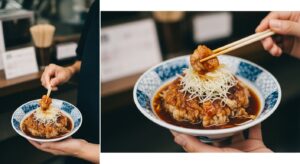
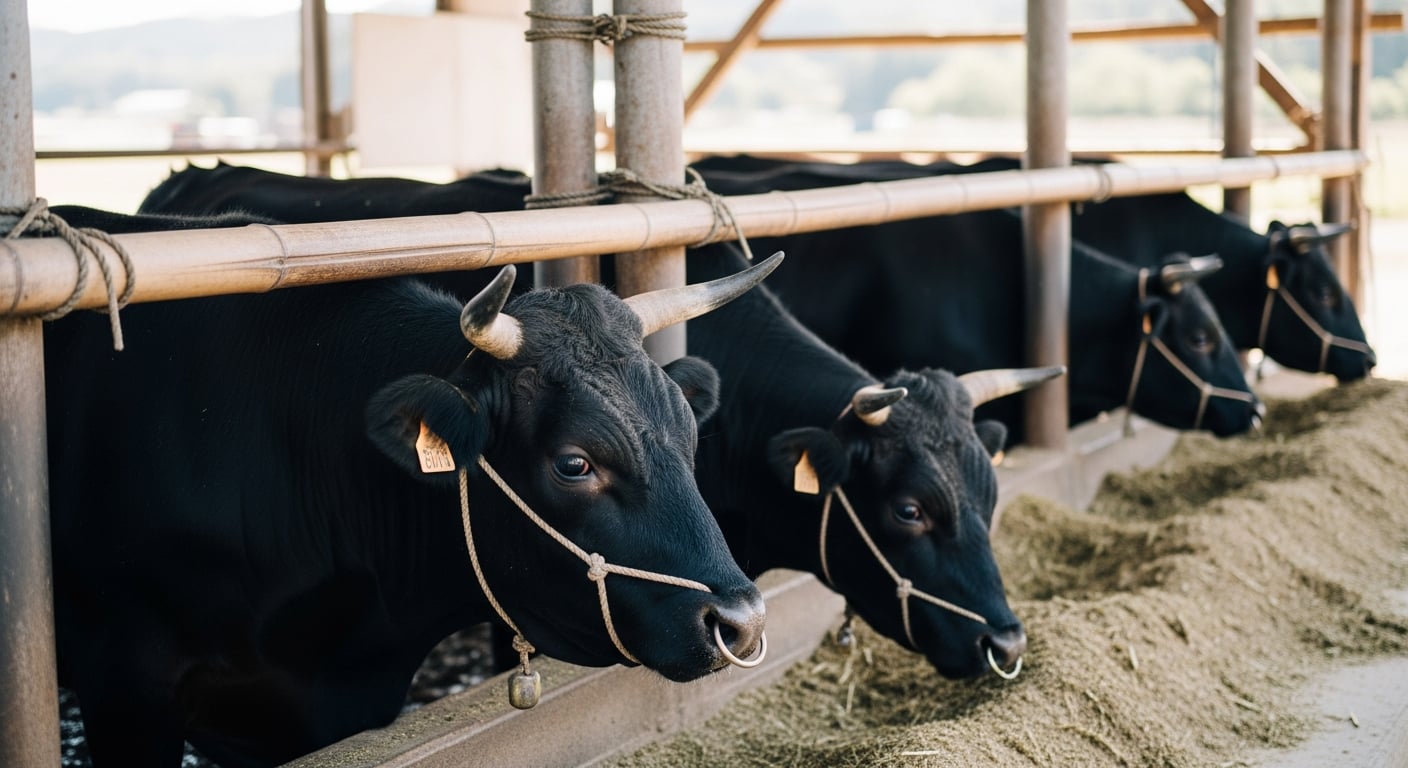
The beef in question is Horai Wagyu — a Japanese black wagyu (Kuroge Wagyu) raised in the Okumikawa highlands of Aichi Prefecture, fed on the sake lees of Horaisen Sora, a renowned local premium sake. The result is a beef with a flavor profile unlike anything in the standard wagyu conversation: lighter marbling than Kobe, with a clean lean-meat depth that surprises even experienced wagyu enthusiasts.
And then there's the preparation. Our proprietary two-stage cooking technique heats the beef to over 70°C at the core — fully meeting Japan's Ministry of Health, Labour and Welfare food safety standards — while preserving what we call the "rare texture": silky, tender, and unlike anything you've experienced in a beef bowl. The result looks raw. It's not. It's a technical achievement that took years to develop, and it's impossible to replicate without the specific knowledge behind it.
"I discovered Itadaki through Google Maps and it became the best meal of our Japan trip."
— Visitor review
That review says something important. It wasn't a pre-planned pilgrimage. It was a discovery. And the discovery became a story.
✓ Key Takeaways
- Horai Wagyu is one of Japan's rarest beef breeds — 300 heads annually across just 3 farms — with a flavor story rooted in Aichi's sake brewing tradition
- Itadaki's two-stage cooking technique delivers a rare-style texture while fully meeting Japanese food safety standards
- The story behind the dish is what makes it genuinely shareable — not just the photo
Comparing Your Options: Which Bowl Fits Your Story?
At Itadaki, there are two paths — and both tell a great story. The right choice depends on your visit.
If you want the rarest experience possible — and you're planning ahead:
The Horai Wagyu Rare Gyudon (Shinkoccho, standard size: 100g beef, 200g rice, ¥2,700) is Itadaki's most iconic bowl. Strictly limited to 10 bowls per day, it sells out during peak lunch hours — especially on weekends and public holidays. For this one, advance reservation via Tabelog Online is strongly recommended. When booking, copy and paste this phrase into the notes field to request Horai Wagyu: 鳳来牛希望. The reservation process is available in English on the Tabelog website.
If you're walking in on the day — or visiting as part of a Samurai City morning tour:
The Mikawa Beef Rare Gyudon (Fumoto, standard: 100g beef, 200g rice, ¥1,800) is always available for walk-in guests and prepared with the same proprietary two-stage cooking technique. Mikawa Beef is raised in Aichi's Mikawa region on okara feed with lactic acid bacteria management — another hyperlocal Aichi story that your followers won't find anywhere else. It's a different narrative, equally rooted in this prefecture's craft.
Both bowls arrive with everything sourced from Aichi Prefecture: Aichi no Kaori rice, a magic sauce built on white soy sauce from Hekinan City, Hatcho miso soup from Okazaki, Atsumi Peninsula pickles, Toyohashi-grown shiso, and a Nagoya Cochin egg from Yamada Poultry Farm. Every element on the table carries a place name. Every place name is in Aichi.
For the most photogenic experience, the five-step serving guide (available in our printed English menu) walks you through exactly how to enjoy the bowl — separating the egg yolk, resting it atop the wagyu, and building the flavors incrementally. The visual transformation from the first step to the last is genuinely striking. More than one guest has told us the guide made them slow down and actually taste each stage — which, in the end, is exactly the kind of story worth sharing.
Osu: Where Samurai History Meets Your Best Nagoya Post
Itadaki is located in Osu — a neighborhood that doesn't get enough credit in most travel itineraries, but absolutely should. It's a 4-minute walk from Yabacho Station Exit 4 (Meijo Subway Line), easily reachable from Nagoya Station in about 10 minutes via the Higashiyama Line to Sakae, then one stop on the Meijo Line to Yabacho.
Osu is one of those rare places where a 400-year-old shopping street runs alongside anime shops, cosplay cafés, and Taiwanese food stalls — all in the shadow of Osu Kannon Temple, one of Central Japan's most significant Buddhist sites. Three minutes from Yabacho Station, Hisaya-odori Garden Flarie offers free-admission themed gardens that make a natural photo stop before or after lunch.
A morning spent at Nagoya Castle or Atsuta Shrine followed by an afternoon wandering Osu and sitting down for a bowl of Horai Wagyu Rare Gyudon — that's a Nagoya day that tells a complete story. Samurai history in the morning. A once-in-a-lifetime culinary discovery at lunch. That's the kind of itinerary that earns the caption.
"Instagram-worthy presentation and unforgettable taste. My followers keep asking about it."
— Visitor review
Planning Your Visit: What to Know Before You Arrive
Itadaki is open for lunch service only — no dinner. Our scheduled business days are Saturday, Sunday, Monday, and Tuesday (11:00–15:00), with last orders 30 minutes before closing. On public holidays, we open at 9:00. Wednesday, Thursday, and Friday are regular closures, and occasional irregular closures do apply — so checking our monthly calendar before you plan is important.
Our full printed menu is available in English, Simplified Chinese, and Korean, with photos, prices, and the five-step visual guide for enjoying Rare Gyudon. You don't need Japanese to navigate the experience — and our staff genuinely enjoys welcoming international visitors.
Look for the sign that reads 元祖レア牛丼 頂 (Ganso Rea Gyudon Itadaki) at street level, and take the stairs to the second floor. 18 seats total, sofa-style tables, comfortable for solo travelers, couples, families, and small groups alike.
For complete menu details, access information, and store hours, visit our official page at https://itadaki8.com/english/
Your Nagoya Story Is Waiting
Samurai City has given the world three of Japan's greatest historical figures. It gave Japan its automotive heartland. And now, quietly, in a second-floor restaurant in the Osu district, it's giving the world something entirely new: the Original Rare Wagyu Gyudon.
Out of 500,000 wagyu raised in Japan every year, only 300 heads of Horai Wagyu exist. Ten bowls a day. One restaurant. One story that your followers will not have seen before.
When you sit down at Itadaki, you're not just eating lunch. You're adding a chapter to your Japan story that nobody else in your circle has written yet.
We'd love to be part of that chapter. Reserve your bowl in advance — especially if Horai Wagyu is your goal — and check our monthly schedule to confirm we're open on your travel dates.
Reserve Your Rare Wagyu Experience — and don't forget to add 鳳来牛希望 in the notes to secure your Horai Wagyu bowl.
Check Our Monthly Schedule on Instagram — we post our confirmed business calendar each month so you can plan your Nagoya day with confidence.
See you in Osu.