Guest Story: How a Golden Route Traveler Fell for Nagoya
 gotowp
Here's a number that surprises most first-time visitors to Japan: according to travel surveys, fewer than 15% of Golden Route travelers — those following the classic Tokyo→Kyoto→Osaka path — include Nagoya in their itinerary. And yet, among repeat visitors to Japan, Nagoya has quietly become one of the most talked-about detours on the circuit. The city doesn't shout for attention. It simply rewards the ones who look a little closer.
We hear this story often at Itadaki. A traveler plans the Golden Route, adds a Nagoya day on impulse, wanders into Osu, and ends up saying it was the best meal of the entire trip. One guest put it simply: "I traveled to Nagoya specifically to eat here — it was 100% worth it." But before that moment of discovery comes a very practical challenge: actually finding us.
Osu is extraordinary. It is also, by honest admission, a maze. If you've never navigated the covered shopping arcades, the temple forecourt, and the side streets of this district before, it can feel disorienting — especially when you're hungry, jet-lagged, and relying on Google Maps that occasionally places you one block off. This article exists to make sure you arrive confidently, not flustered.
Who This Is For
- ✅ Travelers on the Golden Route (Tokyo–Kyoto–Osaka) who are adding Nagoya as a one- or two-day detour
- ✅ First-time visitors to Osu district who find the covered arcade streets confusing to navigate
- ✅ Anyone who wants step-by-step directions to Itadaki from Nagoya Station or a central hotel
- ✅ Visitors wondering whether Itadaki is worth a deliberate trip — not just a stumbled-upon lunch
- ✅ Travelers who want to understand the Osu neighborhood context before they arrive
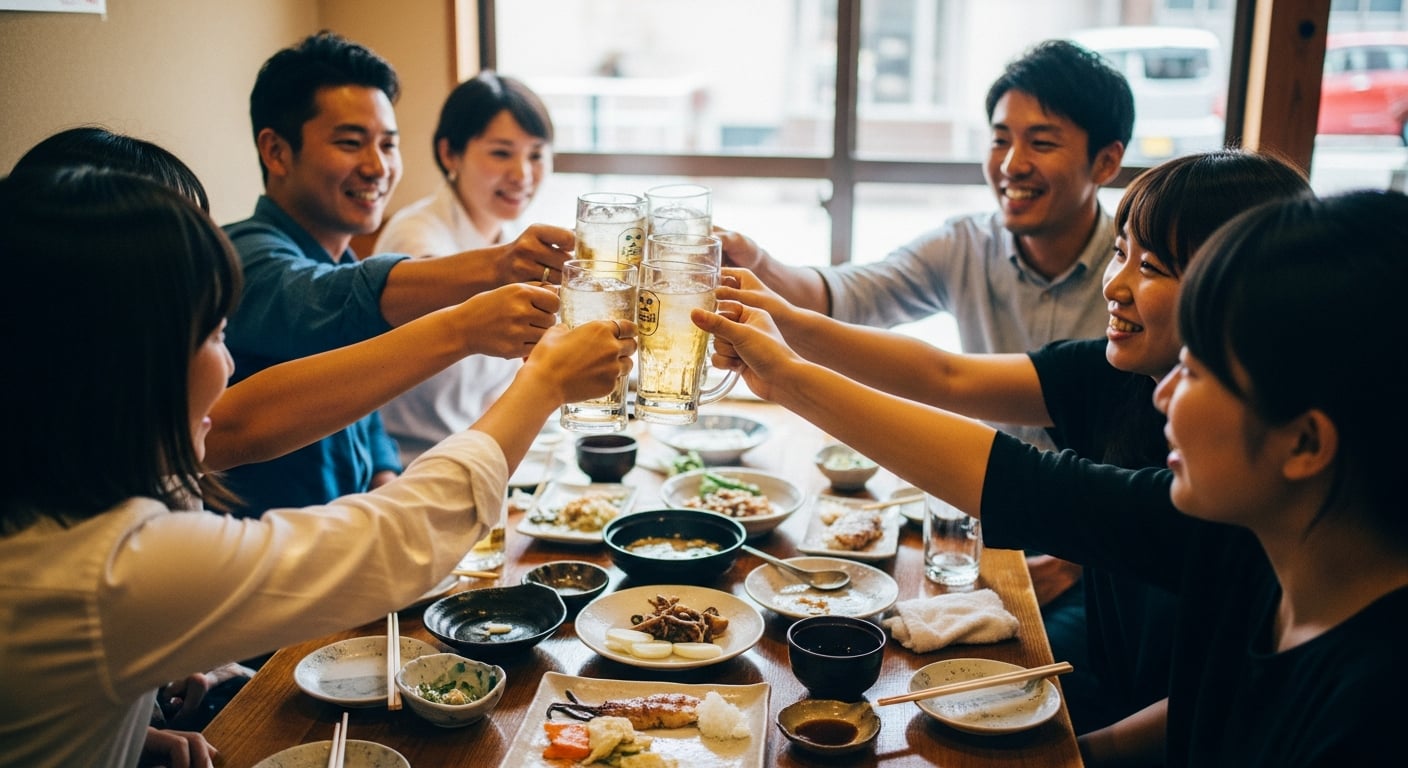
Why Nagoya Keeps Surprising Golden Route Travelers
Most visitors who add Nagoya to the Golden Route do so expecting a half-day of Nagoya Castle, a bowl of miso katsu, and a shinkansen connection. What they don't expect is to find a neighborhood like Osu — a 400-year-old shopping district that somehow contains Buddhist temples, cosplay cafés, vintage electronics, Taiwanese street food, and specialty restaurants that have been featured on NHK, all within a few hundred meters of each other.
Osu is often described as Nagoya's answer to Akihabara, but that comparison only captures part of it. There's a lived-in quality to the district — locals actually shop, eat, and worship here — that makes it feel genuinely different from Tokyo's tourist-facing neighborhoods. It's the kind of place where a centuries-old temple and a maid café share the same block without irony.
Itadaki opened here in April 2022, in part because founder Masayuki Goto wanted the restaurant to be embedded in this energy — accessible, full of life, but rooted in something specific and real. The concept he built, the Original Rare Wagyu Gyudon, was designed to reflect Aichi Prefecture's finest ingredients in a format humble enough to feel approachable and extraordinary enough to justify a dedicated trip. Four years later, that combination is exactly why visitors reroute their itineraries to come here.
The Honest Truth About Navigating Osu
Let's address the friction directly. Osu's covered shopping arcades — the Osu Shopping Street — branch in multiple directions and are not always clearly signed in English. The streets leading off the arcade are narrow, and building numbers follow a Japanese system that doesn't always correspond to physical proximity. Google Maps is useful for orientation but can place your blue dot a full block away from your actual position, which is disorienting when every alley looks similar.
Itadaki is located on the 2nd floor of a building at 4-1-20 Osu, Naka-ku. This means it is invisible from street level unless you know what to look for. The sign at ground level reads 元祖レア牛丼 頂 (pronounced: Ganso Rea Gyudon Itadaki). That kanji combination — particularly 頂 (Itadaki) — is your landmark. Once you see it, you take the staircase up to the 2nd floor.
Missing this sign, and therefore walking straight past the entrance, is the single most common navigation mistake visitors make. Knowing it exists before you arrive eliminates it entirely.
✓ Key Takeaways
- Osu's covered arcades can be disorienting — navigating by subway station exit is more reliable than relying solely on Google Maps within the district.
- Itadaki is on the 2nd floor: look for the street-level sign reading 元祖レア牛丼 頂 and take the stairs up.
Step-by-Step: Getting Here from Nagoya Station
The most straightforward route from Nagoya Station takes roughly 10 minutes by subway and requires a single transfer.
Step 1: At Nagoya Station, take the Higashiyama Line (the yellow line) heading east. Ride two stops to Sakae Station.
Step 2: At Sakae, transfer to the Meijo Line (the purple/violet line). Take the Meijo Line one stop south to Yabacho Station.
Step 3: Exit from Exit 4 at Yabacho Station. From Exit 4, Itadaki is a 4-minute walk.
Step 4: Head toward the Osu district. As you approach the building at 4-1-20 Osu, look at street level for the sign reading 元祖レア牛丼 頂. Take the stairs to the 2nd floor. You've arrived.
For those coming from Sakae, Kamimaezu, or Osu Kannon Station, all three are also within comfortable walking distance. If you're exploring Osu Kannon Temple beforehand — which many visitors do — you'll find Itadaki naturally on your route back toward Yabacho Station.
A direct Google Maps link is available on our official website for easy navigation: itadaki8.com/english/.
What to Do Once You've Found Us
Walking through a new city, transferring subway lines, and decoding street-level signage is real effort — and we want that effort to be rewarded from the moment you step inside.
Itadaki seats 18 guests across sofa tables and counter seats. The space is small and intentional: lunch service only, no dinner, with Horai Wagyu limited to 10 bowls per day. If your goal is to try the Horai Wagyu — an ultra-rare Japanese black wagyu produced by only 3 farms in Aichi Prefecture, with just 300 heads raised annually — a reservation via Tabelog is strongly recommended. When making your reservation, paste the following into the notes field to request Horai Wagyu: 鳳来牛希望.
For walk-in guests, or for those who prefer not to reserve in advance, the Mikawa Beef Rare Gyudon is always available and prepared using the same proprietary two-stage cooking technique. Either way, the English-language menu — with photos, ingredient notes, and a five-step visual guide for enjoying the dish — means you'll know exactly what you're eating and how to experience it fully.
"I traveled to Nagoya specifically to eat here — it was 100% worth it."
— Guest review
"The English menu with clear serving instructions made the experience stress-free."
— Guest review
Planning Your Osu Morning Before Lunch
If you're building a half-day around your visit — which many Golden Route travelers do — here's a natural sequence that works well. Start at Hisaya-odori Garden Flarie, a free-admission urban garden just a 3-minute walk from Yabacho Station that features six themed gardens including a European-style Harmony Garden and a Crystal Garden greenhouse. It's a quiet, unhurried way to begin the morning, and it's featured in most major English travel guides for Nagoya.
From there, walk toward Osu Kannon Temple, then drift through the covered shopping arcade for as long as curiosity takes you. By the time 11:00 arrives — our opening time — you'll be oriented, relaxed, and ready. Follow the sign reading 元祖レア牛丼 頂, climb the stairs, and the rest takes care of itself.
The Story Worth Telling When You Get Home
What begins as a navigation exercise ends as one of those travel moments you actually remember. Nagoya doesn't perform for visitors the way that some cities do — it simply exists, confidently, on its own terms. Osu is the best expression of that quality. And within Osu, finding a specialty restaurant that invented an entirely new category of Japanese cuisine — where every ingredient comes from Aichi Prefecture and the wagyu on your bowl was produced by one of three farms in the entire country — is exactly the kind of discovery that justifies adding a city to your itinerary.
The Golden Route is a wonderful journey. Nagoya is the unexpected chapter that makes it yours.
For our complete menu, access details, and store information, visit our official page at https://itadaki8.com/english/.
Ready to make the detour official? Secure your bowl before the day's allocation runs out — especially if Horai Wagyu is on your list.
Reserve Your Rare Wagyu Experience
And since our schedule varies month to month, it's worth a quick check before you finalize your Nagoya day:
Check Our Monthly Schedule on Instagram