Nagoya vs Osaka Food Scene: A Foodie's Honest Comparison
 gotowp
Here's the honest answer upfront: Osaka wins on volume and variety. Nagoya wins on exclusivity and discovery. If you're trying to decide which city deserves a spot on your Japan food itinerary — or whether Nagoya is even worth a detour — this comparison will give you a clear picture. And if you're already planning a Nagoya stop, there's one practical detail about a particular lunch spot you'll want to read before you arrive.
Who This Is For
- ✅ Foodies comparing Osaka and Nagoya as Japan food destinations
- ✅ Repeat Japan visitors who want authentic discoveries beyond the Golden Route
- ✅ Travelers planning a Nagoya stopover and wondering if the food scene is worth their time
- ✅ Wagyu enthusiasts researching where to find rare, hard-to-access beef experiences
- ✅ Anyone who wants to know: do I need to reserve, and will my target dish sell out?
The Big Picture: What Each City Does Best
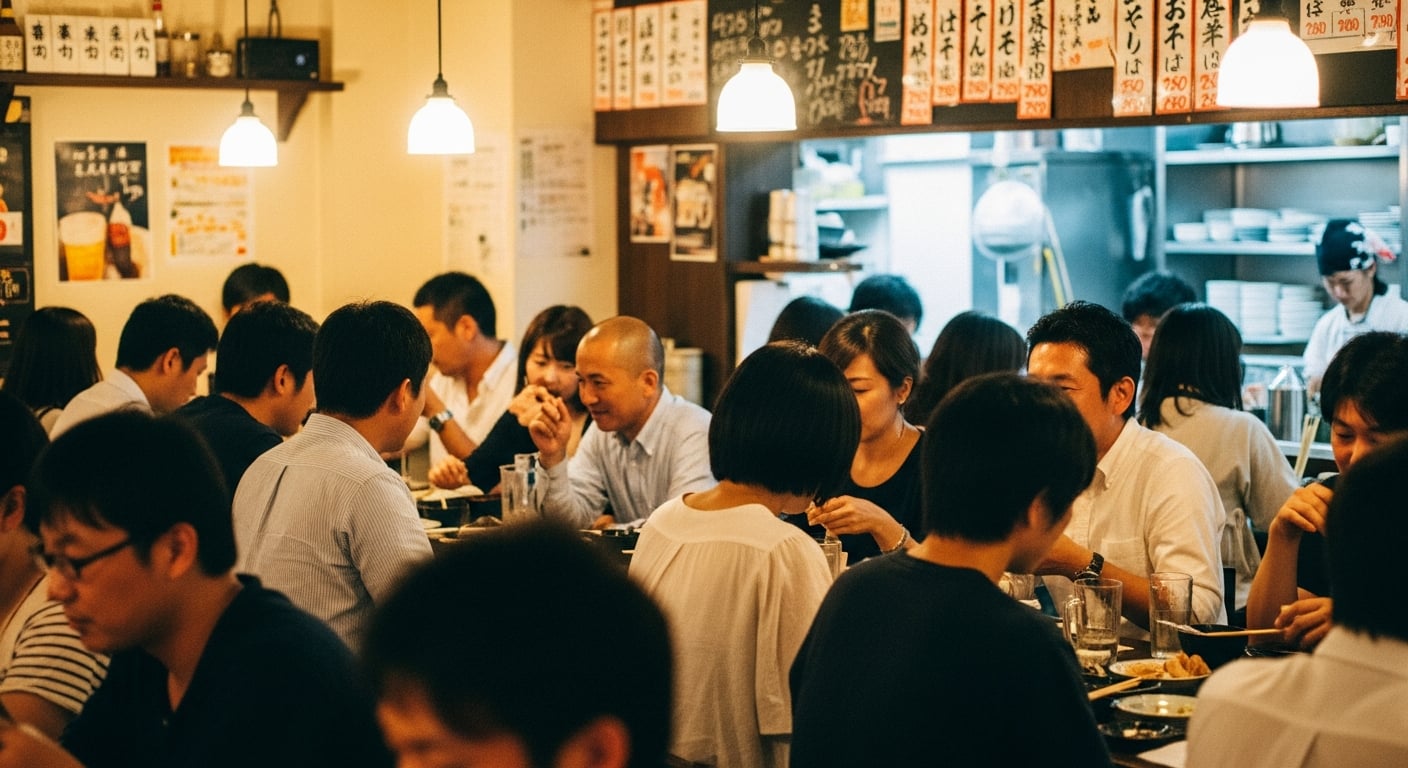
Osaka's food identity is built around abundance and accessibility. Kuidaore — the phrase meaning "eat until you drop" — captures it perfectly. Dotonbori alone offers takoyaki stalls, kushikatsu counters, ramen shops, and izakayas stacked shoulder to shoulder. For first-time visitors to Japan, Osaka is an overwhelming sensory feast, and that's precisely its appeal. You don't need a plan. You wander, you eat, you repeat.
Nagoya operates on a different logic entirely. The food culture here is quieter, more regional, and far less covered in English-language travel media. Hitsumabushi (eel over rice, eaten three ways), miso katsu, and kishimen noodles are Nagoya staples — but the more interesting story is what's happening in pockets like the Osu district, where specialty restaurants are doing genuinely original things with Aichi Prefecture's premium ingredients. Not adaptations of other regions' cuisine. Original concepts, built from scratch.
For a first-time Japan visitor with two weeks and a packed itinerary, Osaka is the natural choice. For a repeat visitor who has already done the Golden Route and is actively hunting for experiences that don't appear in mainstream guidebooks — Nagoya is where the conversation gets interesting.
The Specialty Dish Argument: Depth vs. Breadth
Osaka's strength is breadth. You can eat brilliantly for four days and barely repeat a cuisine. Nagoya's strength is depth — individual dishes and individual restaurants that have been refined to a point where they're genuinely difficult to find elsewhere in Japan, let alone the world.
The clearest example of this is Itadaki, a lunch-only specialty restaurant in the Osu district that invented an entirely new culinary category: the Rare Wagyu Gyudon. Founder Masayuki Goto — who has 18 years of industry experience and opened Itadaki in April 2022 — took Japan's most humble everyday dish and rebuilt it from the ground up using Aichi-only ingredients, a proprietary two-stage cooking technique, and ultra-rare beef that most people in Japan have never heard of. Featured on 8 major Japanese TV programs including NHK, Itadaki has been recognized as the originator of the Rare Wagyu Gyudon concept.
Osaka has nothing quite like this. Not because Osaka lacks quality — it absolutely doesn't — but because this specific dish, this specific ingredient, and this specific story exist only here, in Nagoya's Osu neighbourhood.
✓ Key Takeaways
- Osaka excels at variety and accessibility — ideal for first-time visitors who want to explore broadly without a plan
- Nagoya excels at depth and discovery — particularly rewarding for repeat Japan visitors seeking regional specialties impossible to find elsewhere
- The Osu district is Nagoya's most distinctive food neighbourhood — lively, multicultural, and home to original culinary concepts not found in mainstream travel guides
The Practical Question Nagoya Food Visitors Always Ask
Here's where Nagoya and Osaka diverge most sharply in terms of visitor experience: scarcity.
In Osaka, if a restaurant is full or a dish sells out, there are fifty other options within a five-minute walk. Dotonbori doesn't run out of food. But in Nagoya, when you're targeting a specific dish at a specific specialty restaurant — particularly one with a strict daily limit — the calculus changes completely.
Itadaki's signature offering, the Horai Wagyu Rare Gyudon, is limited to 10 bowls per day. That's not a marketing decision. It's a direct consequence of how rare Horai Wagyu actually is: produced by only 3 farms in Japan, with just 300 heads raised annually. Out of approximately 500,000 wagyu cattle in Japan, only 300 are Horai Wagyu. During peak lunch hours — and Itadaki is open lunch only, Tuesday through Monday (Wednesday, Thursday, and Friday are closed) — those 10 bowls can disappear before noon.
Foreign visitors planning a short Nagoya stay, often just one or two days before continuing to Shirakawa-go or Takayama, genuinely cannot afford to arrive and find the dish gone. This is the question we hear most often: Do I need to reserve? And how do I even do that?
How to Guarantee Your Horai Wagyu Before You Arrive
The answer is straightforward, but it requires a small step most foreign visitors don't know about.
Reserve via Tabelog Online. Tabelog is Japan's leading restaurant reservation platform — well-known domestically but largely unfamiliar to international travelers. The good news: reservations can be made entirely in English on the Tabelog website. No Japanese required for the reservation process itself.
There is one important detail. When completing your reservation, copy and paste the following phrase into the notes or request field to confirm you want Horai Wagyu:
鳳来牛希望
(This means "Horai Wagyu, please" — paste it exactly as written into the notes field when booking)
Without this note, your reservation secures a seat but not the specific dish. Adding this phrase ensures the kitchen holds a Horai Wagyu bowl for your arrival.
For guests who prefer to walk in without a reservation: arriving at exactly 11:00 opening time gives you the best chance of securing one of the 10 daily Horai Wagyu bowls. The restaurant also always has Mikawa Beef Rare Gyudon available — the second signature offering, prepared with the identical two-stage cooking technique and sourced from Aichi's Mikawa region. It is not a consolation option. It's a genuinely outstanding dish in its own right, starting from ¥1,800 for the standard size (Fumoto: 100g beef, 200g rice).
Also worth noting: Itadaki operates on a scheduled calendar rather than fixed weekly days. The restaurant is open Monday, Tuesday, Saturday, and Sunday, plus public holidays (from 9:00 on those days). Wednesday through Friday are closed. Irregular closures do apply. Before you travel, check the monthly business calendar on Instagram to confirm operating days — the link is at the end of this article.
"I discovered Itadaki through Google Maps and it became the best meal of our Japan trip."
— Guest review
That discovery-via-Google-Maps story is something we hear often. And it also contains a quiet caution: someone found Itadaki by chance during their trip. For those who plan in advance and reserve, the experience is guaranteed. For those who find it by accident and arrive mid-afternoon on a busy Saturday — the Horai Wagyu may already be gone.
Osaka or Nagoya? The Honest Recommendation
If you're choosing between the two cities for food alone, the answer depends on where you are in your Japan journey.
Choose Osaka if: This is your first or second trip to Japan. You want maximum variety with no planning required. You thrive on sensory overload and spontaneous street food. You're traveling with a group that has widely different tastes.
Choose Nagoya if: You've done Tokyo, Kyoto, and Osaka and you're looking for the next layer. You care more about authenticity and story than Instagram familiarity. You want to eat something that genuinely doesn't exist anywhere else in the world. You're willing to plan one meal carefully in exchange for a genuinely rare experience.
For the wagyu enthusiast specifically — someone who has tried Kobe beef, Matsusaka beef, and wants to understand what's next — Nagoya offers something Osaka simply cannot: direct access to Horai Wagyu, one of Japan's most obscure and tightly produced wagyu breeds, prepared in a way that was invented at a single restaurant in the Osu district and has since been featured on Japan's national broadcaster.
That's not something you stumble into. That's something you plan for.
For complete menu details, access from Nagoya Station, and everything you need to plan your visit, head to the official English page: https://itadaki8.com/english/
When you're ready to lock in your seat — and your Horai Wagyu — reservations are open now:
Reserve Your Rare Wagyu Experience
And to confirm operating days before you travel:
Check Our Monthly Schedule on Instagram