Perfect Lunch Scene: Nagoya Stay Before Shirakawa-go Adventure
 gotowp
You've mapped out the route. Tomorrow morning, you're heading to Shirakawa-go — those iconic thatched-roof farmhouses, the mountain air, the sense of stepping back five hundred years. You have one full day in Nagoya today, and you want to make it count. But somewhere between Google Maps and your notes app, there's a question you haven't quite answered yet: where do you actually eat?
Not just "a place to grab lunch." Something that feels like Nagoya. Something you'd tell people about later — not just your food-obsessed friends, but anyone who asks how the trip was.
That's exactly where this story begins. And it ends in Osu, on the second floor of a modest building, in front of a bowl that quietly rearranges your expectations.
This is what a Nagoya afternoon looks like before and after Itadaki.
こんな方におすすめ
- ✅ Travelers spending a day in Nagoya before heading to Shirakawa-go or Takayama
- ✅ Visitors looking for a memorable, story-worthy lunch in Nagoya's Osu district
- ✅ Wagyu lovers curious about rare Aichi beef beyond Kobe and Matsusaka
- ✅ Anyone who wants to experience something distinctly Nagoya — not just pass through it
- ✅ Repeat Japan visitors seeking authentic local discoveries off the main tourist trail
Before: A Day in Nagoya That Feels Like It's Missing Something
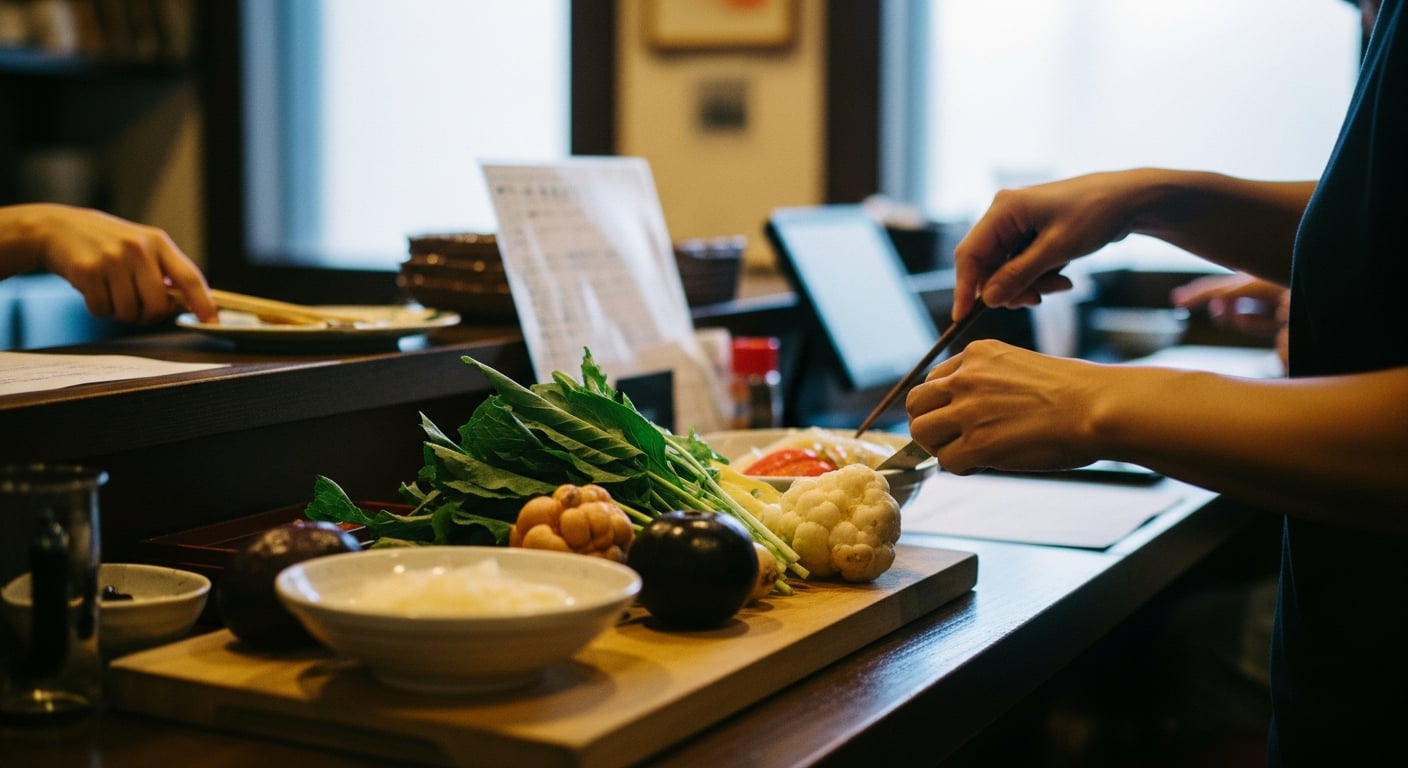
Many travelers arrive in Nagoya with a full sightseeing checklist — Nagoya Castle, Atsuta Shrine, Osu Kannon Temple, the long shopping arcades — but without a clear plan for where lunch fits in. The city has no shortage of restaurants, but finding one that genuinely reflects what Nagoya is — its agricultural heritage, its pride in local ingredients, its quiet confidence — takes a little more than a casual search.
The Osu district is particularly easy to underestimate. Walk through its covered shopping streets and you'll see anime shops, vintage clothing, Taiwanese food stalls, and a Buddhist temple that's been drawing pilgrims for centuries. It can feel scattered, almost random. First-time visitors sometimes walk past Itadaki without noticing it at all — it's on the second floor, marked by a sign in Japanese: 元祖レア牛丼 頂.
That sign, if you know to look for it, is the beginning of a very different kind of Nagoya afternoon.
The Dish That Changed the Concept of a Beef Bowl
Itadaki was founded in April 2022 by Masayuki Goto, who had already spent over a decade running MAX'S BAR in Nagoya. During the COVID-19 pandemic, Goto watched as small Aichi farmers — producers of rare, carefully raised ingredients — struggled to find buyers for their harvests. He felt a responsibility to act, and the result was a new restaurant concept built entirely around direct sourcing from those farms.
The idea was simple but had never been done: take the gyudon — Japan's most humble everyday dish — and rebuild it from scratch using the finest ingredients Aichi could offer, prepared with a technique that had never been applied to a beef bowl before.
That technique is Itadaki's proprietary two-stage cooking method. It heats the wagyu to over 70°C at the core, fully meeting Japan's Ministry of Health, Labour and Welfare food safety standards, while preserving a texture that feels — unmistakably — rare. The result is something that exists nowhere else: a Rare Wagyu Gyudon that is both completely safe and completely unlike anything you've encountered in a bowl.
The star of that bowl, on days when it's available, is Horai Wagyu — a Japanese black wagyu raised in Okumikawa, Aichi Prefecture. Only three farms in Japan produce it, raising just 300 heads per year. The cattle are fed on sake lees from Horaisen Sora, a renowned local premium sake, which contributes to a flavor profile that balances light marbling with genuine lean-meat depth. Out of approximately 500,000 wagyu raised annually across Japan, 300 are Horai Wagyu. The math alone is worth sitting with for a moment.
Every ingredient on the table — the rice, the miso soup, the pickled radish, the shiso leaves, the Nagoya Cochin egg — comes from Aichi Prefecture. This isn't a marketing claim. It's a logistical commitment that Goto built into Itadaki's identity from day one, and one that earned the restaurant features on eight major Japanese TV programs, including NHK.
✓ ここまでのポイント
- Itadaki invented the "Rare Wagyu Gyudon" concept — a completely new category of Japanese cuisine born in Osu, Nagoya
- The two-stage cooking technique delivers a rare-style texture while fully meeting Japanese food safety standards
- Every ingredient is sourced directly from Aichi Prefecture, including ultra-rare Horai Wagyu (300 heads/year across 3 farms)
After: What the Experience Actually Feels Like
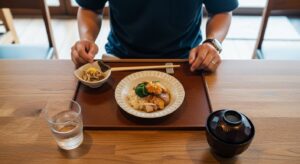
The dish arrives in a traditional Japanese ceramic bowl. The wagyu is arranged carefully over rice, topped with a raw Nagoya Cochin egg, surrounded by shiso leaves and the Atsumi Ichō-zuke pickles that have been made on the Atsumi Peninsula for generations. The colors are vivid. The presentation is composed without being fussy.
Then comes the printed guide — five steps, in English, explaining exactly how to enjoy the bowl. Separate the egg white into the miso soup. Place the yolk on the beef. Taste the wagyu first, on its own. Mix. Then layer in the condiments at the table — pickled ginger, dried seaweed from Mikawa Bay, chirimen jako, the restaurant's own eight-spice blend. Finish with a small amount of wasabi.
Each step changes the bowl. It isn't one dish — it's a sequence of them, occupying the same ceramic vessel.
"Perfect lunch during our Nagoya stay before our Shirakawa-go trip the following day."
— Guest review
"The five-step eating guide made the dish even more enjoyable and memorable."
— Guest review
The sofa seating — all 18 seats, no hard chairs — makes it easy to settle in, take your time, and actually be present for the meal. There's no rush. The lunch service runs until 15:00, with last order at 14:30. For a day that begins with sightseeing and ends with an early night before a Shirakawa-go departure, the rhythm fits naturally.
Planning Your Visit: A Few Things Worth Knowing
Itadaki is open for lunch only — Tuesday, Monday, Saturday, and Sunday from 11:00 to 15:00, and on public holidays from 09:00 to 15:00. Wednesday through Friday are closed. The monthly schedule is posted on Instagram, so it's worth checking before you plan your day.
Horai Wagyu is limited to 10 bowls daily. If you're specifically hoping to try it, a reservation through Tabelog Online is strongly recommended. When booking, you can copy and paste 鳳来牛希望 into the notes field to request it. If you prefer to walk in, Mikawa Beef Rare Gyudon is always available — prepared with the same two-stage technique, equally considered, and a dish worth traveling for in its own right.
Getting there is straightforward. Itadaki is a 4-minute walk from Yabacho Station Exit 4 on the Meijo Subway Line. From Nagoya Station, take the Higashiyama Line to Sakae, transfer to the Meijo Line, and get off at Yabacho — about 10 minutes total. Look for the Japanese signage at street level and take the stairs to the second floor.
The menu is fully available in English, with photos and ingredient explanations. The five-step guide is printed and visual. No Japanese is required to enjoy the meal comfortably.
The Day Comes Together
There's a version of a Nagoya day that you'll remember as "the one where we walked around and grabbed something to eat." And there's a version where you sat down in a small restaurant in Osu, ate something that genuinely surprised you, and left with a story — about a beef that 300 animals a year produce, about a technique that took years to develop, about a chef who built a restaurant because he wanted to help the farmers he believed in.
The next morning, you're on your way to Shirakawa-go. The thatched rooftops, the mountain villages, the long views across the valley — they'll be everything you hoped for.
But the lunch the day before? That stays with you too.
For our complete menu, access details, and store information, visit our official page at https://itadaki8.com/english/
Horai Wagyu is limited to 10 bowls per day. If you'd like to secure your bowl before your Nagoya stay, we'd love to have you — Reserve Your Rare Wagyu Experience through Tabelog Online at your convenience.
And to stay current on which days we're open each month, Check Our Monthly Schedule on Instagram — we post our business calendar there regularly so you can plan with confidence.